Co-Governance: Rebalancing Forms of Power in a Broken Democracy
People feel chewed up by systems of government and power that show no empathy. It's high time we changed that.

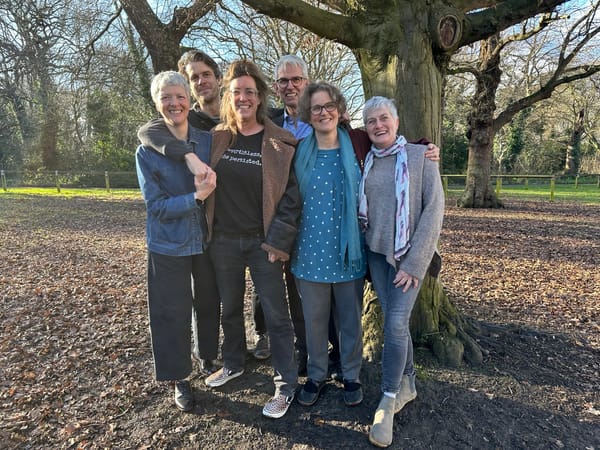
A guest post by Nick Gardham, founder of the Centre for Participation and Action, on what systems get wrong about power, and how a new approach – co-governance – could put that right.
One of the defining challenges facing our democracy today is not simply participation, turnout, or trust, but power. More specifically, the imbalance between different forms of power, and our collective failure to create systems where those forms can work together in healthy and productive ways.
If democracy is to function well, we need to be honest about the different kinds of power that exist within it, and the roles they play. Broadly, I see three forms of power that must coexist:
- Relational power – the power of people and communities to act together, built through relationships, shared experience, and collective agency.
- Representative power – the power vested in elected officials to act on behalf of the public.
- Unilateral power – the power held by institutions, bureaucracies, and systems to make decisions, allocate resources, and enforce rules.
In theory, these forms of power are meant to be complementary. Representative power seeks to act in the interests of relational power, while using its authority to shape and steer unilateral power so that institutions work in service of the public good. But in practice, these interests are often misaligned. The result is power imbalance, dysfunction, and a growing sense of distance between people and the systems that govern their lives.
If we are serious about addressing this imbalance, we need new ways for these forms of power to work together, not merely coexist. One promising route is co-governance which is a term that myself and colleagues have picked up from the work of Ben Palmquist in the US.
Co-Governance as Empathy in Practice
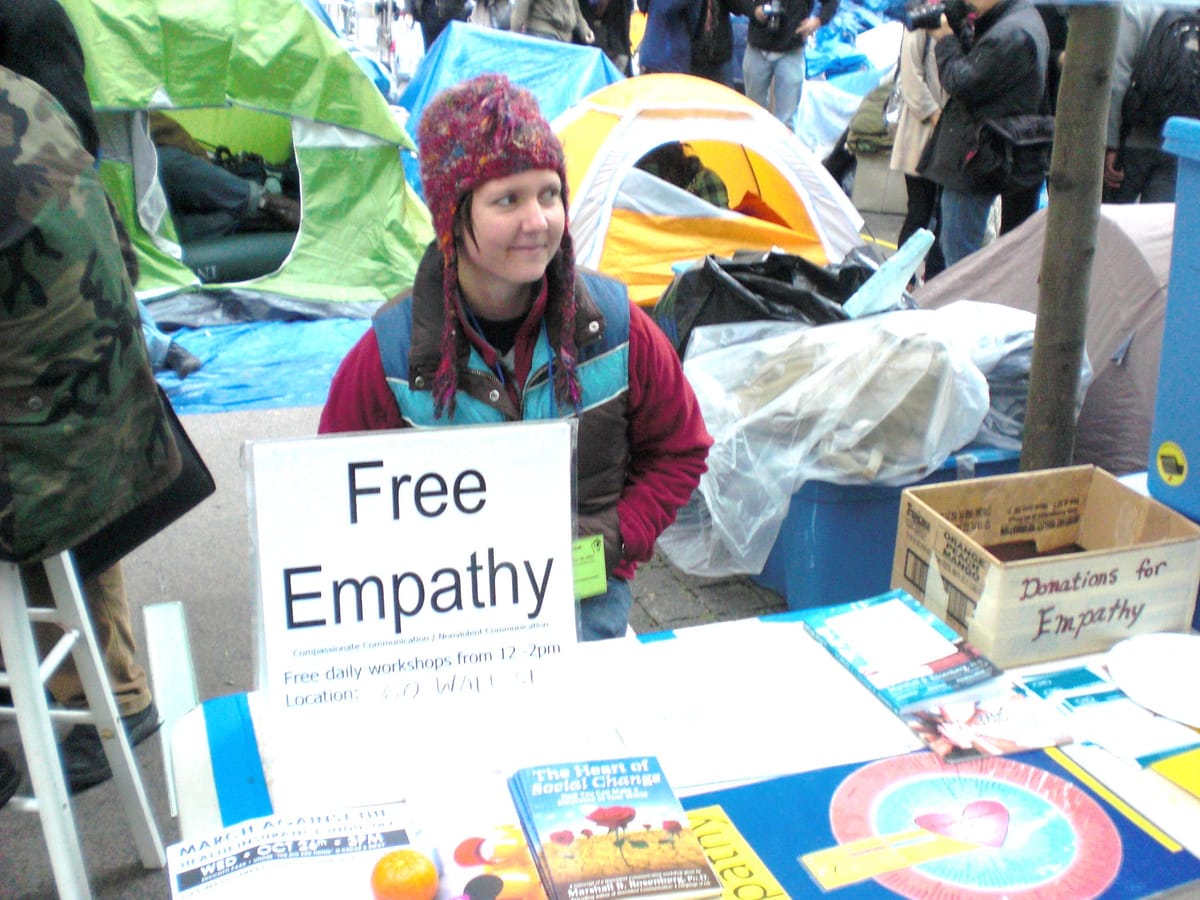
At its heart, co-governance is not simply a structural or procedural fix. It is a cultural one. It requires systems that are empathetic by design, and practices rooted in what might be called generative listening – the ability of people and institutions to genuinely hear, understand, and respond to one another.
Empathy, therefore, should sit at the core of any meaningful definition of co-governance. Co-governance is the practice of developing empathy between people and within systems. When empathy is present, governance becomes more human. It begins to reflect the complexity of lived experience, values, relationships, and culture rather than reducing people to service users, data points, or problems to be managed.
Over the last forty years, however, it feels as though we have experienced a profound deficit of empathy. This has been accelerated by technological systems and the exponential increase of social media that uses algorithms that distance us from the pain and suffering of others, numbing our collective capacity to feel responsibility beyond ourselves. In addition, political individualism captured in Margaret Thatcher’s assertion that “there is no such thing as society” has further eroded our sense of mutual obligation.
Yet a functioning democracy depends precisely on the opposite instinct. When our neighbours are struggling, that should be our problem. When people are not getting a fair deal, that should concern us all. As Barack Obama put it in his 2004 Democratic Convention speech: “I am my brother’s keeper. I am my sister’s keeper.”
And more recently, as we’ve seen in Minneapolis, the response of the city’s population has been called “neighbourism – a response to protect the people around you, no matter where they came from”.
Institutions Without Empathy
Bureaucratic institutions, meanwhile, have often drifted in the opposite direction – becoming remote, process-driven, and increasingly transactional. In the pursuit of efficiency, risk management, and compliance, empathy has been stripped out of public systems. Service delivery becomes something done to people rather than with them. The lived reality of this is perhaps best captured by the now-infamous Little Britain sketch: “Computer says no.”
When unilateral power operates without empathy, it alienates relational power. When representative power lacks meaningful connection to people’s lived experience, it struggles to mediate between the two. The result is a democracy that feels hollow, distant, and unresponsive.
Strengthening democracy by starting in neighbourhoods
If co-governance is to become an operative model capable of addressing systemic power imbalances, it cannot be imposed from the top down. It must be built from the ground up – starting in neighbourhoods, where relationships already exist and where democracy is lived daily, not abstractly.
This is where the Humanity Project (which I co-convene with Clare Farrell and Lee Jasper) has a real opportunity. By piloting six neighbourhood-based examples of co-governance, we can begin to explore what it truly takes to build democratic systems that work for everyone. These examples can test how relational, representative, and unilateral power can be brought into alignment through practices rooted in empathy, listening, and shared responsibility.
Co-governance is not about weakening institutions or bypassing elected representatives. It is about humanising power, rebuilding trust, and creating democratic systems capable of holding complexity, difference, and care.
If we want a democracy that works for all, we must learn not just how to share power but how to find our way of building meaningful connection and understanding with one another.