The beauty of the commons
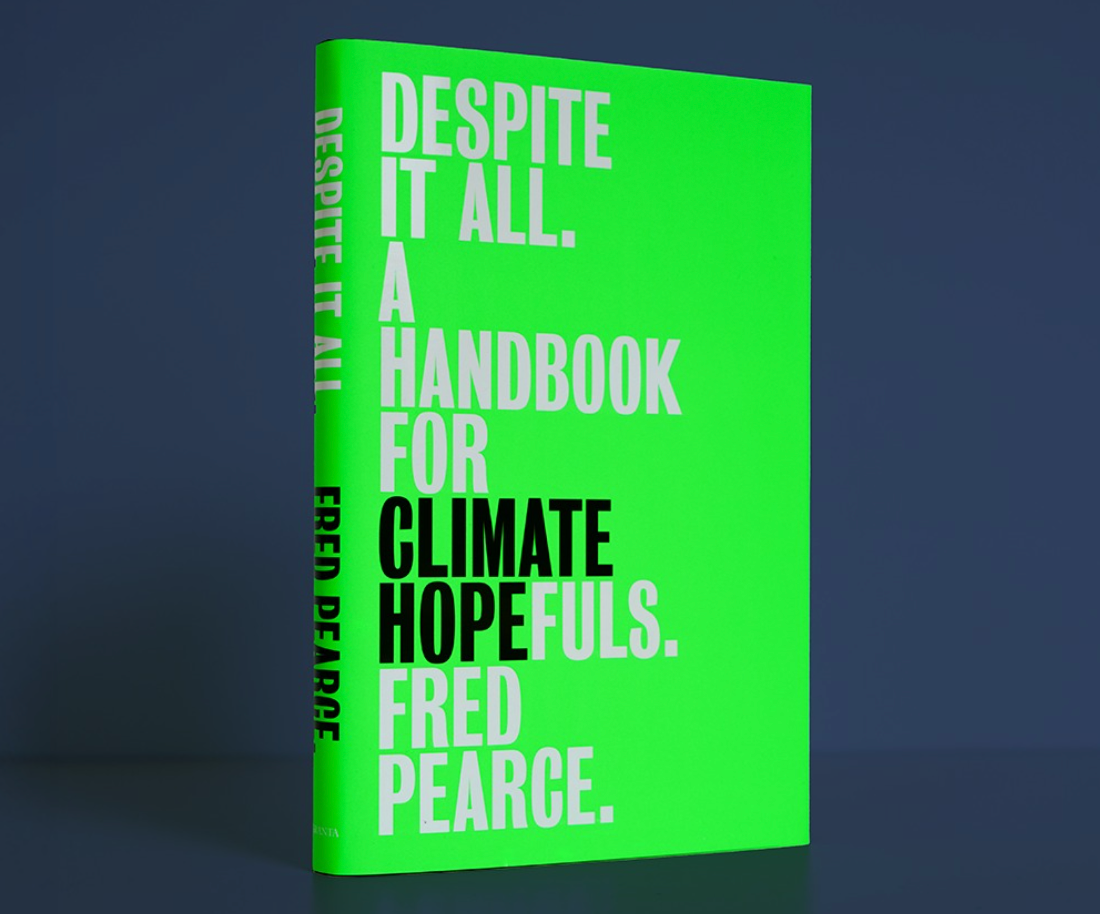
In his new book, Despite it All, legendary environmental journalist Fred Pearce argues that it is our ancient and global heritage of caring for the places where we live that will help us navigate the dangerous times ahead.

It is easy to be defeatist about the fate of the Earth. There is a climate crisis, species extinctions are in overdrive, tropical forests are disappearing, grasslands are being ploughed up, almost all our rivers are barricaded by dams, ice is melting, sea levels are rising, pollution is choking cities and creating dead zones in the oceans.
And then there is the toxic politics – in which a U.S. President is elected after a campaign in which he said defenders of nature and even climate scientists were part of ‘the enemy within’.
So, can we make good on our crowded planet? Despite it all, can we conjure up a Good Anthropocene? Most environmentalists almost reflexively think not. They see the climate out of control, nature in a nosedive to obliteration, and ourselves likely to follow before long.
Well, I agree that is one possible outcome. There is plenty to be scared about; plenty that feels unstoppable. But I refuse to be too despondent. We have fixed stuff before. You might say fixing stuff defines us. As ecologist Ruth DeFries of Columbia University puts it: “Humanity thrives in the face of natural crisis… Our ingenuity has brought humanity back from the brink time and again.” We find solutions.
Top of the agenda right now is the climate crisis, and we are on the case, albeit rather late. Indeed, many economists say that low-carbon energy generation has already become so good and so cheap that even Trump’s executive orders cannot hold it back. Especially when China seems hell-bent on conquering the world with low-carbon tech.
But tech is not our only hope. We humans have another powerful ally for remaking the planet: the living world. We often think of nature as fragile and doomed in our hands. I see it as dynamic, resilient and unlikely to fold under our onslaught. It has survived huge asteroid hits and ice ages. And today it is bursting through pavements, regenerating forests, taking back abandoned farmland, capturing carbon dioxide and even supercharging evolution to replace lost species. It has its limits, I am sure. However, all is not lost, and I would hate pessimism to be our downfall. I believe our future must lie in finding common purpose.
The term ‘the tragedy of the commons’ was first coined in the 19th century, but it was made famous in 1968 by the American ecologist Garrett Hardin. He held that sharing the environment doesn’t work. Couldn’t work. That whenever people have common ownership of a resource, whether forests or fisheries, unfenced grazing pastures or underground water reserves – or in the Anthropocene, an entire planet – it is bound to be destroyed, because common ownership is inherently lawless. If nobody is in charge, free-riders rule.
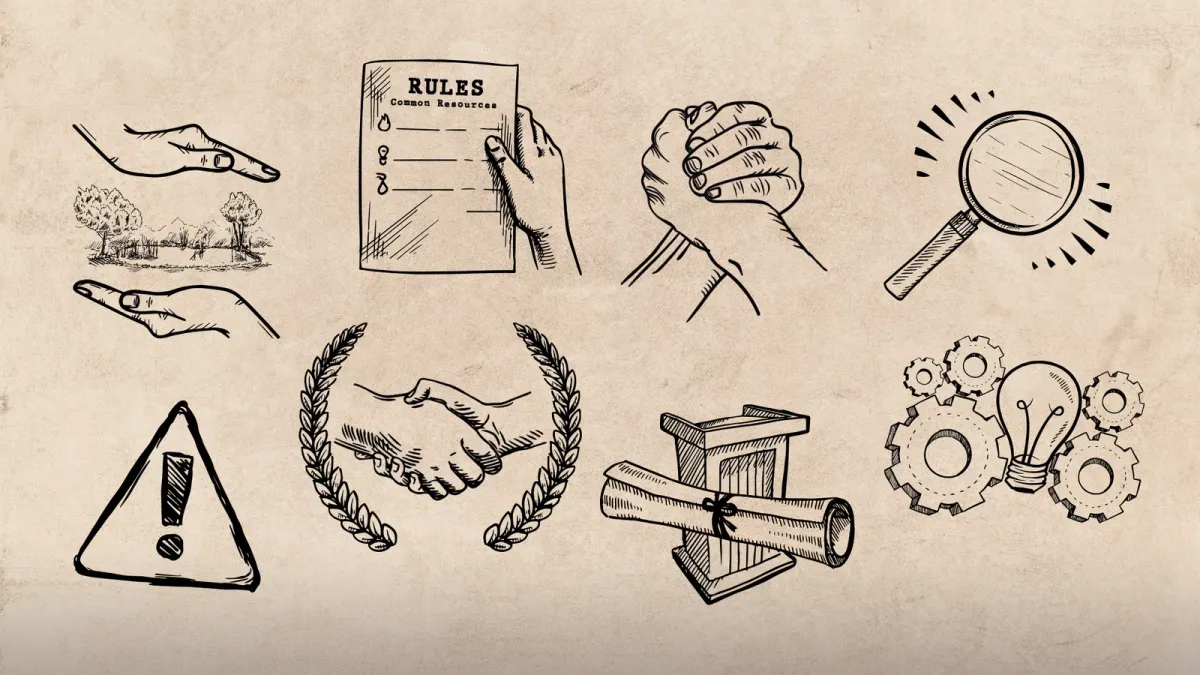
But Hardin had a nemesis: American economist Elinor Ostrom. In 2009, she won the Nobel Prize in economics for arguing that most local commons are not unmanaged lawless places at all. Communities of users usually manage their commons collectively and with consent. They often do it very well. Common sense prevails.
The evidence keeps stacking up that Ostrom was right. Collectively managed forests are often green islands amid a sea of privatised deforestation. This is evident not just in the Amazon, but in many other places. In Mexico, 70 percent of the surviving forests are on collectively owned lands.
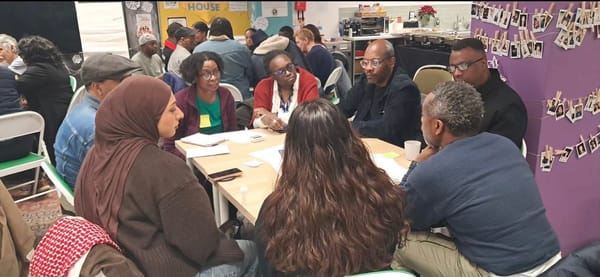
In modern Africa too, old prejudices against community-led conservation are being upended. Top-down fenced-in conservation, as represented by state-run national parks, is often failing. Instead, it is herders, armed only with mobile phones, who are seeing off poachers in remote places that park rangers rarely venture, alerting their fellows to animal movements by SMS, and accompanying high-rolling tourists who fund their conservation endeavours.
Some old-school conservationists remain horrified at this handover of the continent’s wildlife. They still see African rural people as poachers and bush-burners, either active enemies of wildlife or too poor and ignorant to take heed of environmental concerns. And they see rural communities’ herds of cattle as inimical to wildlife conservation. The truth is that community-led models have quietly surpassed fortress conservation in terms of both land area and impact. Most of Africa’s biodiversity depends on lands owned and managed by local communities.
The question now is whether we can do the same for the planet.
Maybe we can. Traditions of collective conservation are widely practised. Many environmental histories describe the creation of the Yellowstone National Park in the 1870s as the birth of conservation. But actually the creation and policing of protected areas has a far longer heritage, with deep roots in most cultures and religions. Across the world, thousands of sacred forests and groves have survived for many centuries and continue to flourish in the modern era.
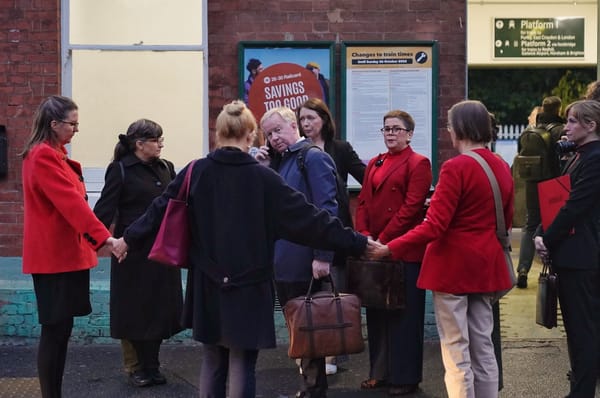
Preserved by Hindu villages in India and Catholic communities in the hills of Italy; by native tribes of the Americas and African animists; and by Siberian reindeer herders and Aborigines of the Australian bush, their longevity and survival is thanks to collective management, according to traditional religious and spiritual beliefs and taboos. Sacred groves are “the oldest form of habitat protection in human history,” says Piero Zannini, a conservation biologist at the University of Bologna.
Some are revered; others are feared. Either way, they persist; and in a world largely governed by statutory laws, it turns out that this collective cultural conservation is often more effective. Laws are made far away in national capitals, and government park wardens are usually salarymen, whereas committed locals rule from the heart, and they don’t knock off when the sun goes down. The lands they protect form a “shadow conservation network” and are “becoming ever more important as reservoirs of biodiversity,” says Zannini.
The protection of common lands in their many forms proves that our species can be less innately selfish than Garrett Hardin assumed. That we can all put aside thoughts of personal gain in order to ensure the greater gains for humanity and our planet. Now that ethos needs to protect the global commons: the oceans, the atmosphere and the biosphere itself.
Despite it All: A Handbook for Climate Hopefuls was published in February. You can connect with Fred on LinkedIn.
Come to the Hey! Festival, Manchester!
St George’s Day, 23rd April, 2-8pm, Cross Street Chapel
Join us for a day celebrating books, art, songs and political heroes (especially women) as Hey! Festival lands in Manchester. Featuring ballad singer Jenn Reid, Costa Book of the Year winner Monique Roffey, and many more. Celebrating faith and art, reckoning with national identity, and taking part in free writing workshops throughout the day. The Hey! day ends with a live episode of Good Neighbours. Get your tickets here:

Elsewhere in Absurdity...
The network is the strategy, as we meet and convene with the people who are already building the new world we need, celebrating our collective efforts to be good neighbours to one another, a proper British + human value. On that note...
- Last Thursday we hosted Episode 4 of Good Neighbours at our friend Marcus Lyon’s studio. With guests including Marcus, Andy Green and Saif Osmani of The Modern Cockney Festival, Pearly Princess of Fulham Maudy Blackie, artist and author Love Ssega, and the wonderful Gemma Rogers singing a couple of bangers, including this:
- Talking of bangers 🌭 many of the crew were at Trafalgar Square on Saturday for House Against Hate and the launch of the wicked Nothing But Love, the party to unite people against the far right grifters who are dividing our country;
- And on that note, a big hug from all of us to Sophie as she takes up a new role with Nothing But Love, using her passion to help to knit together the various organisations – including The Fête! – who are using music to bring the country together. What an important role at the right time, and Sophie has all our love and support in making it sing;
- David was at the SE London Queer Choir run by Genevieve Dawson, who were hosting a tour fundraiser. George Michael’s ‘Freedom’ was particularly spine-tingling.
- David was also at The Conduit for a ‘future of impact leadership’ dinner at The Conduit. Good news: neuroscience has lots to offer. Bad news: the penny hasn’t dropped on the risks to the fundamentals of our democracy and rights.
- Tracey was out and about, including at the Cultural Development Gathering-26: PROJECT LEGACY in Stoke on Trent gaining a deeper understanding about building long-lasting legacy in place-based cultural projects. She also joined a gathering of Black and racially minoritised women in leadership hosted by Ubele, and joined Tramshed in welcoming people to an Open House for collaboration and their ongoing fundraising appeal.
- Meanwhile, Clare was with Brian Eno at the New School of the Anthropocene to talk about politics and making art. You can watch the full session here: