Could libraries start a new democracy built from care?
Can libraries be the inspiration we need to build a new democracy from the bottom up, rooted in love and care for our communities?

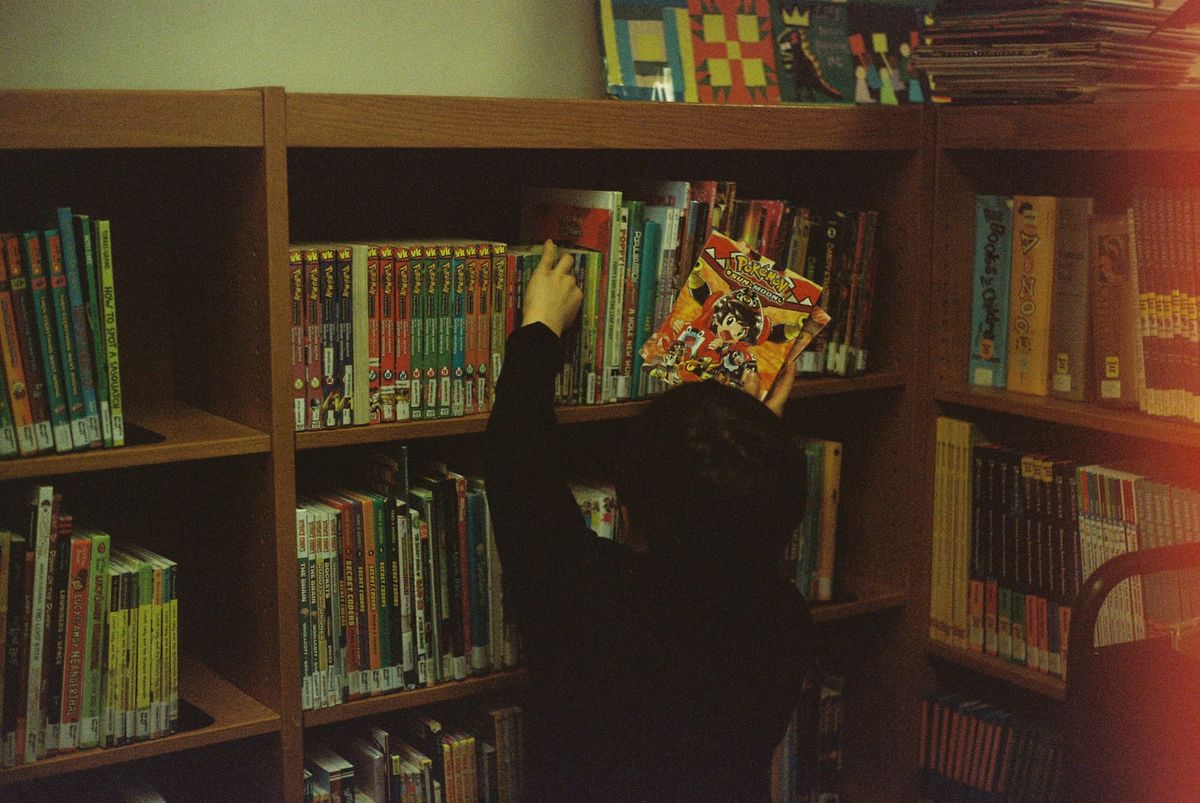
I walked into a ‘story time’ session at my local library with my one-year-old daughter recently. I’d barely slept for several days. My partner is a carer. He works 48 hour shifts, which means my daughter has her dad around the rest of the week, but I also have long stints of looking after her solo, through the day and night. All this is context to help explain how seriously welcome the warmth and community of the library is for me as a first-time mum.
As I write the new PM is chairing his first cabinet meeting, while the opposition makes the usual noises questioning how policy promises will be funded. I can’t help but think that unless we’ve gone totally mad in Einstein’s classic definition—doing the same thing and expecting different results—we shouldn’t be pinning all our hopes on electoral politics at this point. It is becoming abundantly clear that climate breakdown, and a slide towards fascism, call for more than simply electing a different leader or different party – a fundamental ground-up revitalisation of our democracy is needed.
Could local libraries be a key starting ground for that revitalisation? Their free access as an in-person meeting place and the supportive role they already play in many communities gives libraries unique potential. And their open door policy and appeal to all ages – including my one-year-old – means they are a truly egalitarian space. We don’t only learn from the books and computers. We learn from being with each other.
The beating heart of the community
Story time at our library is in the children’s area, where most of the floor is taken up with a colourful snakes and ladders rug and the walls are covered with colourful books. A softly spoken young man from the library reads from a children’s book by Benjamin Zephaniah, a group of toddlers gather around, sat up on their knees, craning to get a closer look at the pictures. My baby girl lets out a shriek of delight as we step over the knee-high fence sectioning off the room – this place is made for play!
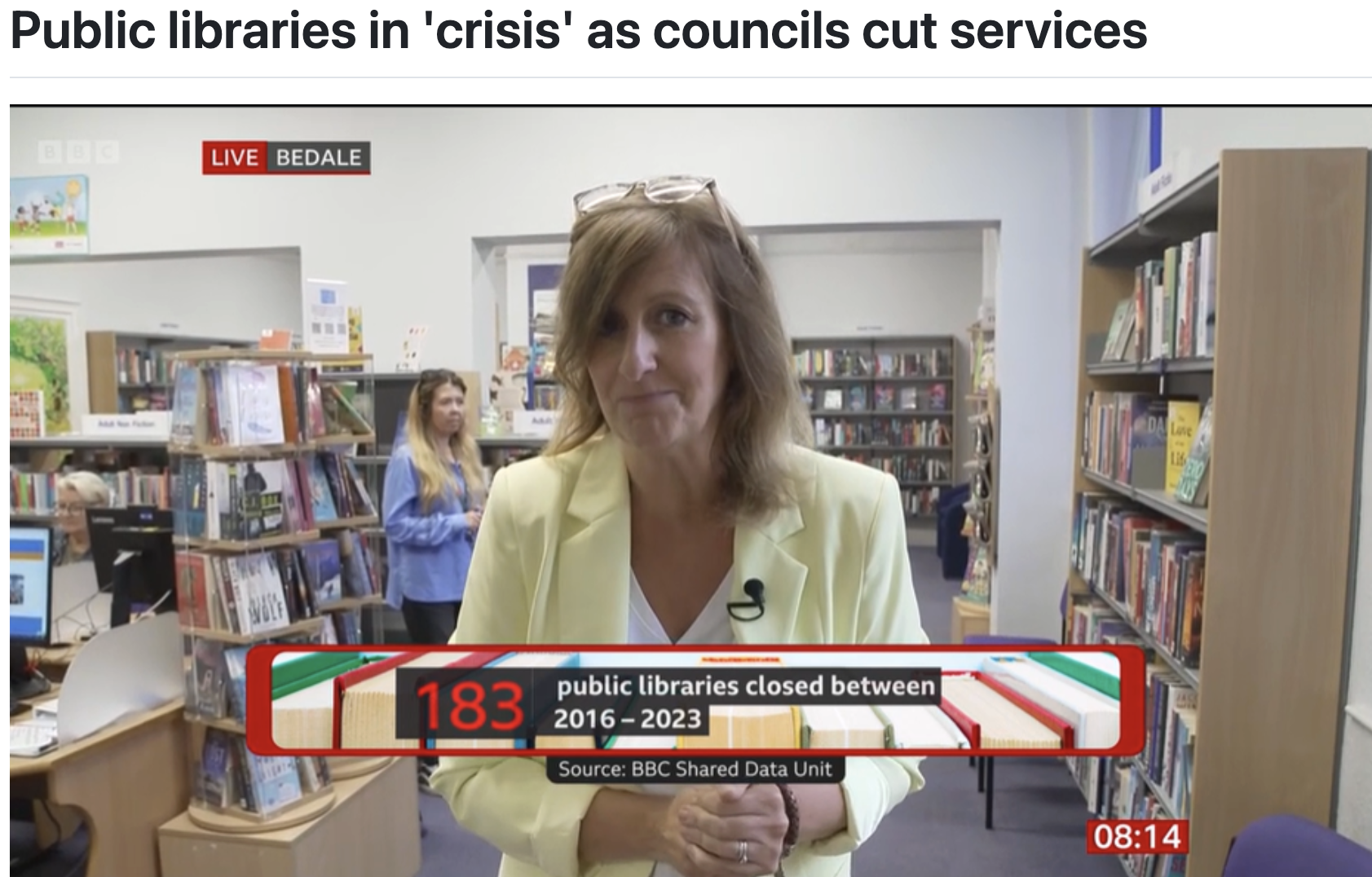
BBC analysis found that 125 libraries closed in England between 2016 and 2023. But there are also campaigns up and down the country to save libraries, and in the same period over 100 were handed over to community organisations.
Josephine Burton is the artistic director of Dash Arts, where she has run a three year project supporting people across the country to write speeches about what they feel we could do today to change tomorrow. Over 600 people have taken part in the speech writing workshops in communities, schools and workplaces. It’s not uncommon for people to choose to write about libraries closing down; “There’s a real strength of feeling out there in the country, an anxiety that these valuable local resources and hubs are disappearing,” Josephine tells me, “Libraries have the potential to be the beating heart of the community but they’ve been underfunded so they don’t do that anymore.”
But even as libraries are underfunded and face closure they can become a focal point that inspires grass roots democratic engagement in communities. The Library Campaign has been working with library user groups since 1984. Their Chair, Laura Swaffield, tells me: “When a library comes under threat all manner of people will work together and employ all sorts of skills. Quite left wing people can work together with quite right wing people and find some common ground, which is desperately needed now.”
A place to be a citizen — not a consumer
Back at the library the young man reading the Zepheniah book reminds the gathered toddlers to stay sitting down and not touch the book – I sense that the excitement of story time has spilled over into page-tearing chaos in the past. But isn’t that what public spaces are meant to be for – play, learning and figuring stuff out for the first time?
Over the last few decades, neoliberalism has been characterised by a gradual shift: the physical places we spend time together, our precious public spaces, are now mostly spaces we occupy as consumers. The library is one of those increasingly rare places where you are first and foremost a citizen, a member of the public.
Josephine from Dash Arts asks the important question: “What do we need from libraries in the 21st century?” She lays out her vision for me: “Can you create a model where the library becomes a resource for whatever local people need in a specific locality, so the focus would be different in different places? In some places it would be food banks and uniform swaps, others might need language learning and places for young people to hang out, while some might want internet access or amateur dramatics.” It should be a place to meet and figure out together how to make our local areas more resilient, how to stand up to power and learn how to create collective change, and become responsible citizens. Such a reimagining of how we use libraries would help communities pull together and refuse to let them be taken away.
Laura has seen first hand the effects the fight to save a local library has on the community and the individuals involved: “They learn a lesson that a campaign can work and does work, and that can carry on into other aspects of their lives.” She tells me that through the fight to save their libraries people find themselves doing more public speaking: “You might need to give a speech to the council or even just speak up at a group, these things start in a very quiet and gentle way – then you find yourself doing things you never imagined you would.”
A starting ground for a new democracy
Back at my local library, story time is over and the toys are out for the ‘stay and play’ part of the session. I chat with a dad who’s at the library with his 18-month-old son. The little boy is gathering all the cars he can find, including any my daughter picks up. We awkwardly negotiate his refusal to share. Of course the adult world has just as much difficulty with sharing as this toddler, we just have laws, borders and social conventions to try and regulate it. Here at the library the negotiations over how we share are out in the open.
These are exactly the skills we have to practice, and the sometimes uncomfortable conversations we need to have, if we are going to do democracy together in our communities. Listening to each other, speaking up, making decisions together and fighting for the meeting places we hold in common. Our libraries can be the starting ground of a new democracy built from the bottom up, with love and care for our communities.
Elsewhere in Absurdity...
We're all back from our holidays (bar the Wizard 🧙) and the newsletter is back to its regular schedule after a silly season of imagining what we would do if we we in charge. And the Absurd crew has been as busy as ever...:
Diya went to the Pagemasters zine fair at South London Gallery! 💚✨
Stella got her groove on at Carnival's 60th year! 💃🏿🎭
Alanna spent Sunday immersed in the Frida exhibition at the Tate Modern. 🎨🌺🇲🇽
Nuala went camping in Essex with the little one! 🏕️👶
Clare spent joined a panel with Steven Donzinger and Jojo Mehta at the Corporate Responsibility and Ecocide Film Festival. 🎞️🍃
Tracey visited a series of exhibitions in Paris where artists are exploring nature, culture and our relationship to the environment, including one of Fujiko Nakaya's 'fog sculptures', 'Cloud #07156' at Bourse de Commerce and Jesse Darling's 'The Ambassadors' at Palais de Tokyo.
Clive is headed to the opening of 'Branding Britain' this evening, curated by Hardist Malcolm Garrett, at the Museum of Brands.