Heterarchy, not Hierarchy: Left Cultures on Democratising Magazine Making
Co-founder and Editorial and Creative Director of Left Cultures, Phil Wrigglesworth, tells us about the magazine's beginnings and how they revolutionised the editorial process.

We were just coming out of the long Covid hibernation, shifting back into a world of sunshine and a renewed sense of hope. The great outdoors dazzled. It was a time when everything felt possible again.
For me, Covid was a circuit breaker. It had been a time to slow down and think about renewed creative direction, take stock of new ideas that had been fermenting away. Having spent my working life up until then as an illustrator, primarily for newspapers and magazines, the experience had left me wondering why editorial content is so narrow in scope — why the opportunity for alternative commentary seems to be almost non-existent, and why predominantly capitalist narratives that uphold the status quo dominate our national dialogue.
I knew I wanted to be a part of changing it, to discover a new, more democratised editorial process that took risks and allowed creative freedom to flourish.
And so the road to Left Cultures began.
Stuck in Visual Servitude
My diagnosis of print media’s growing irrelevance isn’t simply that the digital age has left it behind; it stems from a deeper disconnect between editorial content and the lived realities of its audience. Too often, editorial production operates within a hegemonic hierarchy that functions as a gatekeeper of the public narrative, determining which stories are permitted to pass through the beady eyes of advertisers and the extreme wealth of owners that underpins the industry.
What I ended up finding working in editorial offices of all political leanings, was that the same editorial hierarchy existed across all of them, whether on the right or left. I made a decision a long time ago only to illustrate for left-wing and progressive magazines and newspapers. Trying to put a visual positive spin on a story I fundamentally found as appealing as a bucket of sick had run its course. But the system was equally entrenched there too, with visual communication trapped beneath a glass ceiling imposed by the written word. I started to wonder whether “visual communication” was really just another name for “visual servitude”. Although I often agreed with the content being printed, I became deeply frustrated at the lack of opportunity to shape the conversation.
It was clear to me that words set the agenda, while the visual language was simply meant to serve.
Heterarchy vs Hierarchy
The reality is, editorial production hasn’t always been this hierarchical.
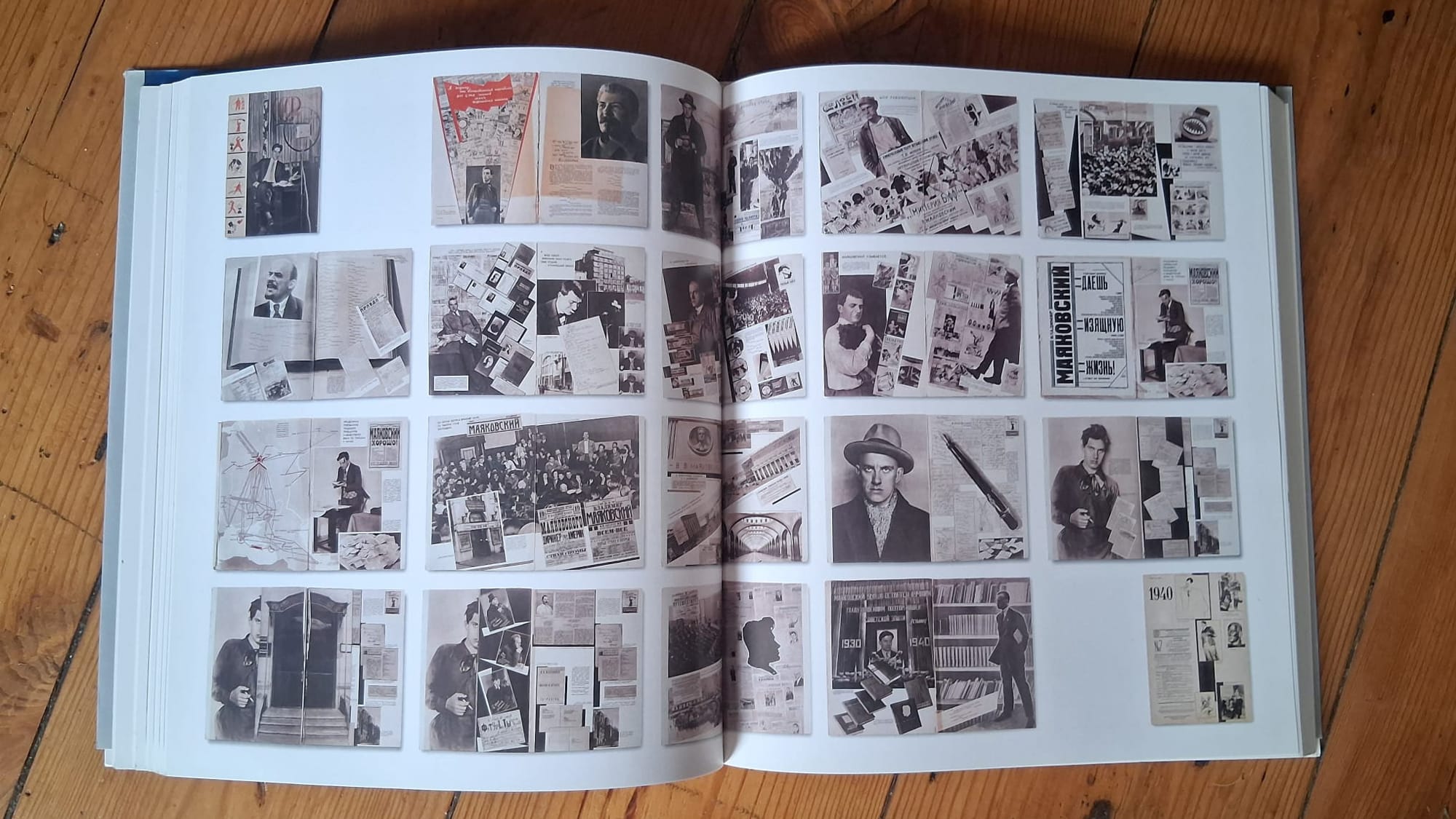
Steven Heller’s book ‘To Merz to Emigre and Beyond’ provided me with good insights into this whilst researching the history of magazines. There are many magazines that don’t fit into the neat hierarchical model of production on many levels, such as Alexander Rodchenko’s 'USSR in Construction’, a magazine fully collaged from existing newsprint. It’s a visual extravaganza!
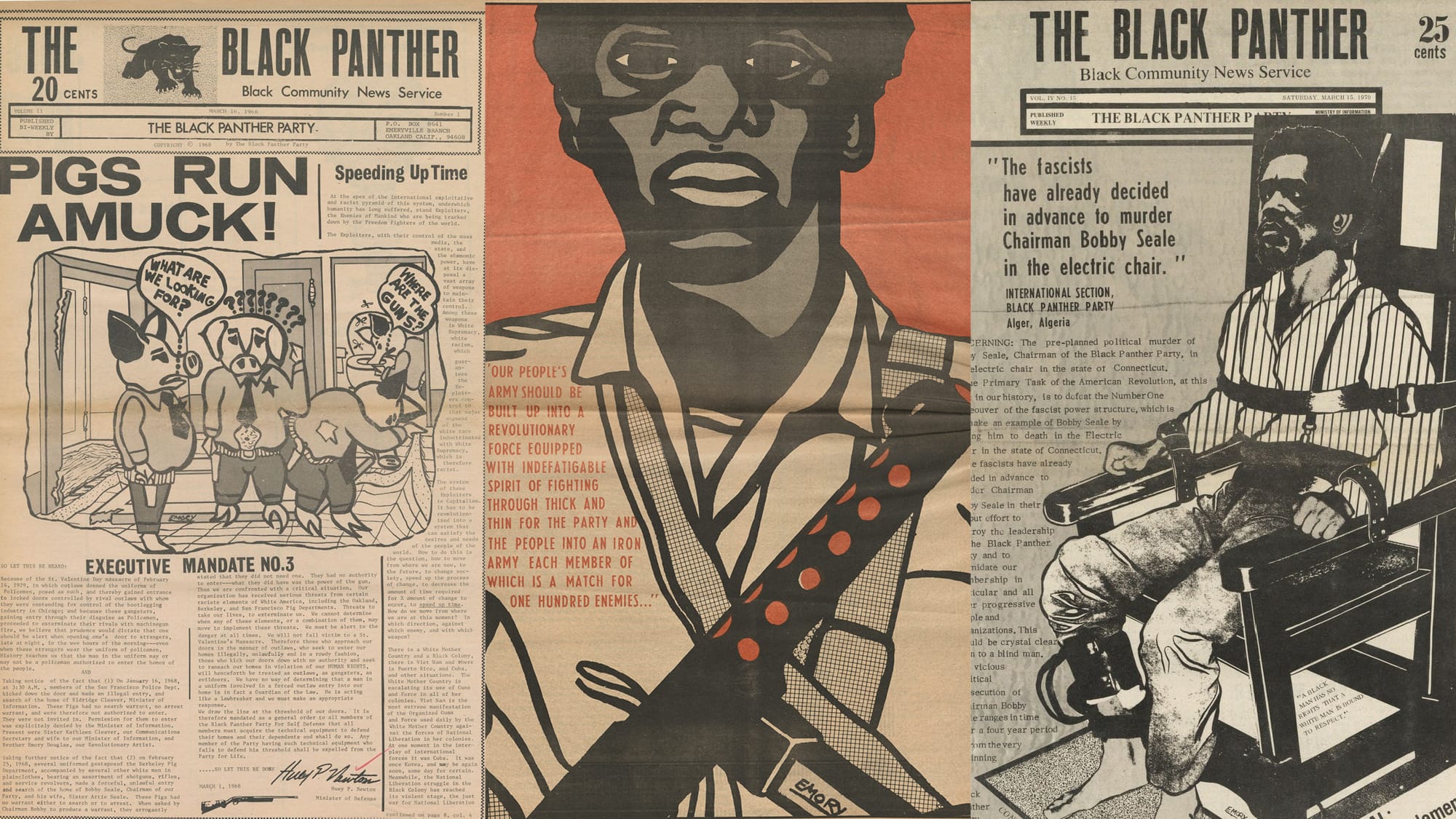
Not to mention, ‘The Black Panther: Black Community News Service’ had a much more balanced relationship between text and image, where they communicate between each other seamlessly. Thanks to the incredible artwork of Emory Douglas, an energy just fizzes off the page.
It was clear that there are many other non-conformist systems of production to learn from, and reading about it had been inspirational nourishment.
In the early days of developing Left Cultures we spent a lot of time exploring how to develop a different model of editorial production. What soon became clear in the act of doing was inviting rather than commissioning work from contributors offered a more democratic approach to how the magazine could be produced.
This change in approach shifted contributors from ‘contractors’ to collaborators who had as much stake in the direction of the issue as everyone else.
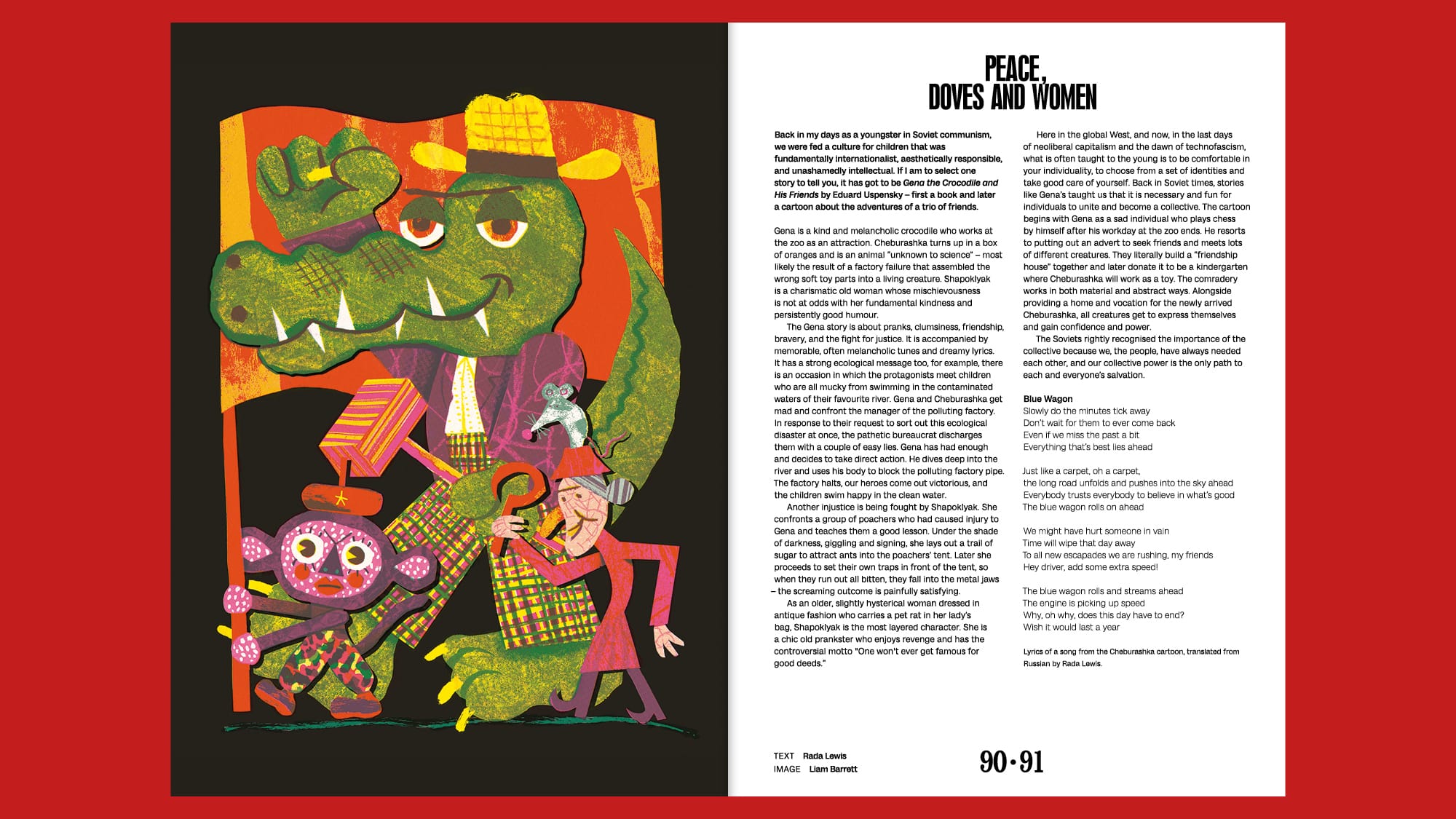
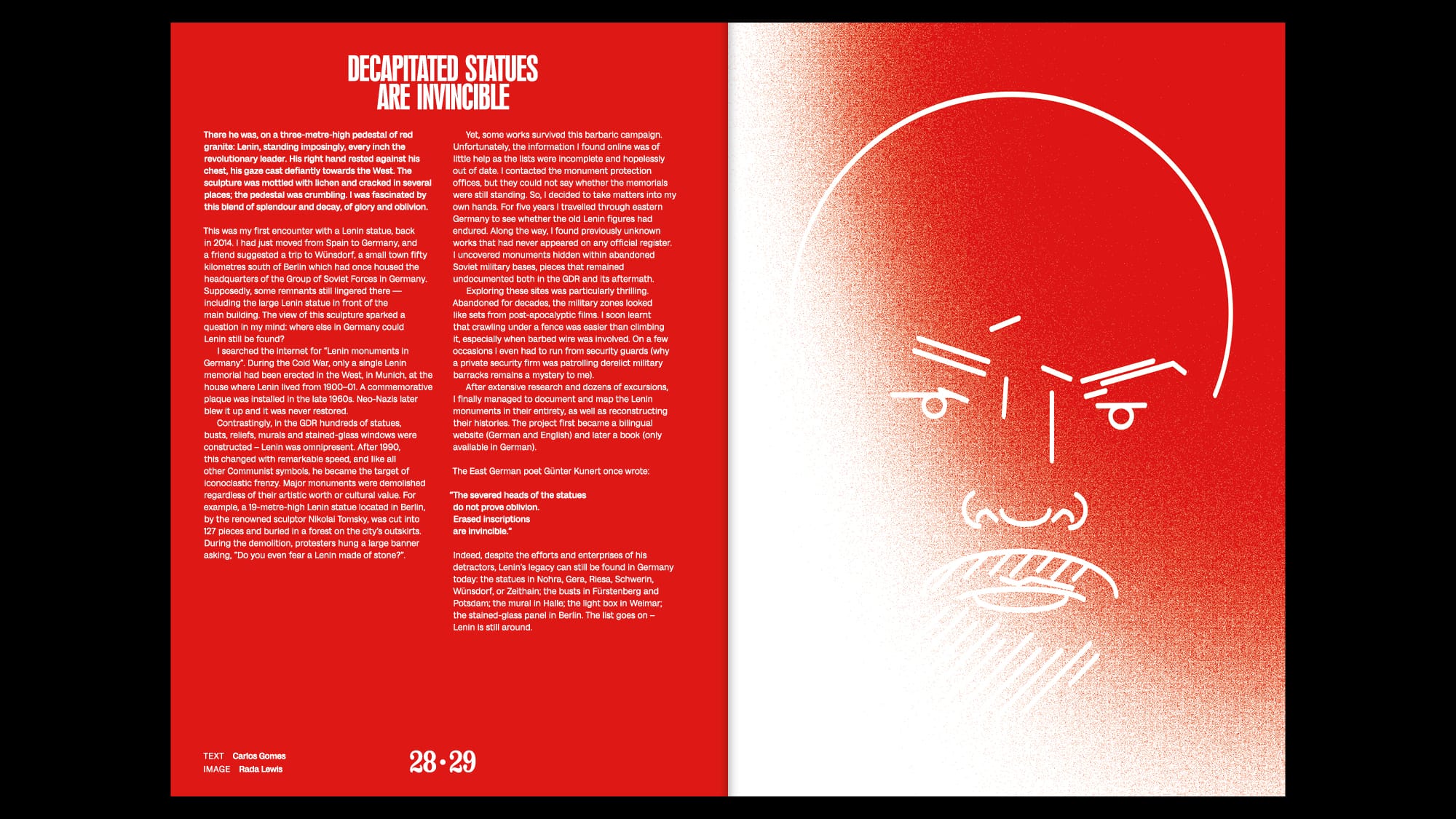
We’ve also opened the space for creatives to express their voices through other mediums such as film or music, instead of just through words. This has meant we invite a lot of “non-writers” to write for Left Cultures. One contributor, graphic artist Rada Lewis, said she had carried her story with her for her whole life and writing for us had finally provided her with a supportive space to tell her story. We want creatives who are routinely excluded by the narrow narratives of mainstream editorial publishing to have the freedom to voice their ideas, rather than have those ideas filtered out or suppressed.
The model of production that was emerging at Left Cultures was a heterarchical one rather than hierarchical, and fundamentally at its core - Marxist. Where the power of editorial positionality comes from the contributor, rather than an editor sat pulling the strings. Our approach is to invite a contributor to write whatever they wish, as long as it’s a true story and celebrates the left in some way.
The idea of collecting 50 stories by 50 contributors for each edition then began to form. Gradually, we began creating an exciting network of editorial perspectives that crossed, intersected and wove together. As the idea grew, the stories began to jostle against each other, creating points of tension, connection and debate, just like communities and people do.
The key reason we have so much creative freedom over our editorial process is that we are totally self-funded and have no donors lurking in the background. After the publishing costs of each edition are met, all profits are offered in equal share to the contributors involved. Even though we would love to have an upfront budget, this funding model fits our heterarchical and collective approach to publishing — it means everyone is involved in the publication’s success or failure.
It’s important to say that there isn’t an absence of editorial control. The ‘control’ comes through the selection of a balanced and diverse group of cultural voices for each edition, rather than imposing a single editorial line from the top down. Perhaps that kind of straight, hierarchical approach simply isn’t a good fit for the messy, contradictory nature of humanity?
There is something liberating about receiving a contributor’s work and being as surprised by it as the reader. The result is a collection of stories that opens out onto a diaspora of cultural perspectives and points of reference. No edition has a fixed theme or tightly controlled outline. Instead, its shape emerges organically, with unexpected connections and recurring themes such as family, music, peace and many others — revealing themselves along the way.
Visual Voice
For the artwork we take a similar approach. We don’t ask artists to merely service the accompanying text like the unimaginative and diluted world of the mainstream media. Left Cultures artists are invited to express themselves fully and take creative risks.
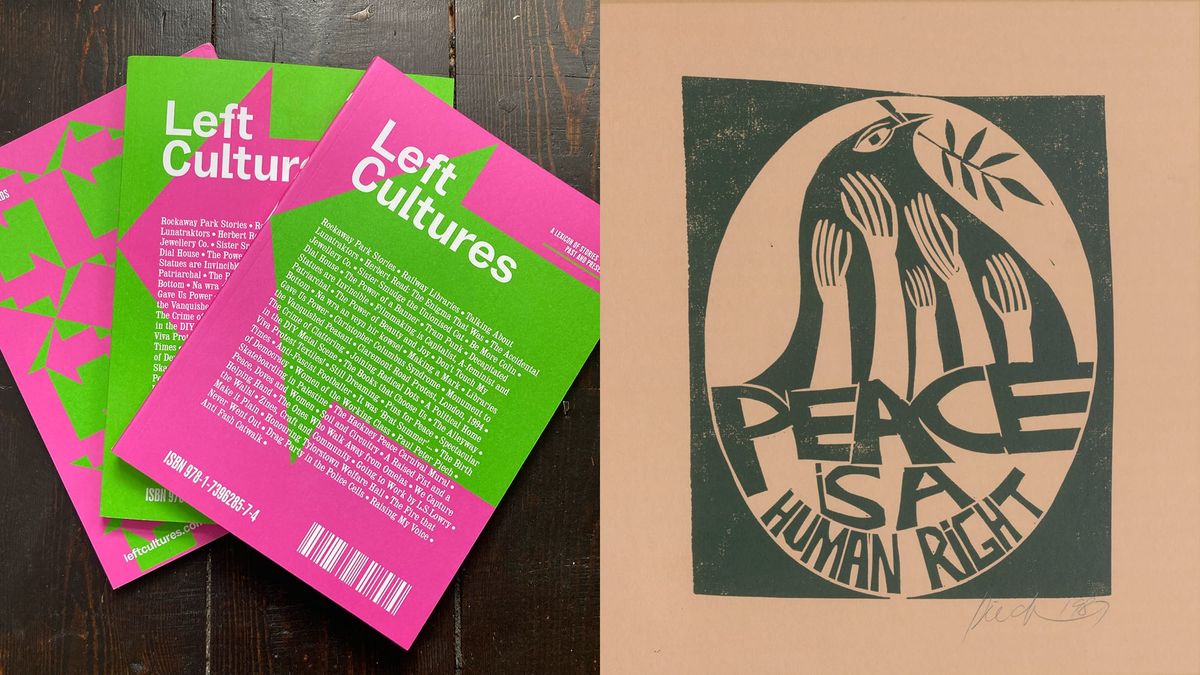
Many illustrators and graphic artists are invited to participate and tell their own stories, including Blacklodge Press and the Rickard Sisters. In doing so, they begin to break through the glass ceiling that has traditionally placed the written word above the image within the hierarchical model of editorial production. Their work responds directly to the writer’s story, and the ideas and experiences explored within it.
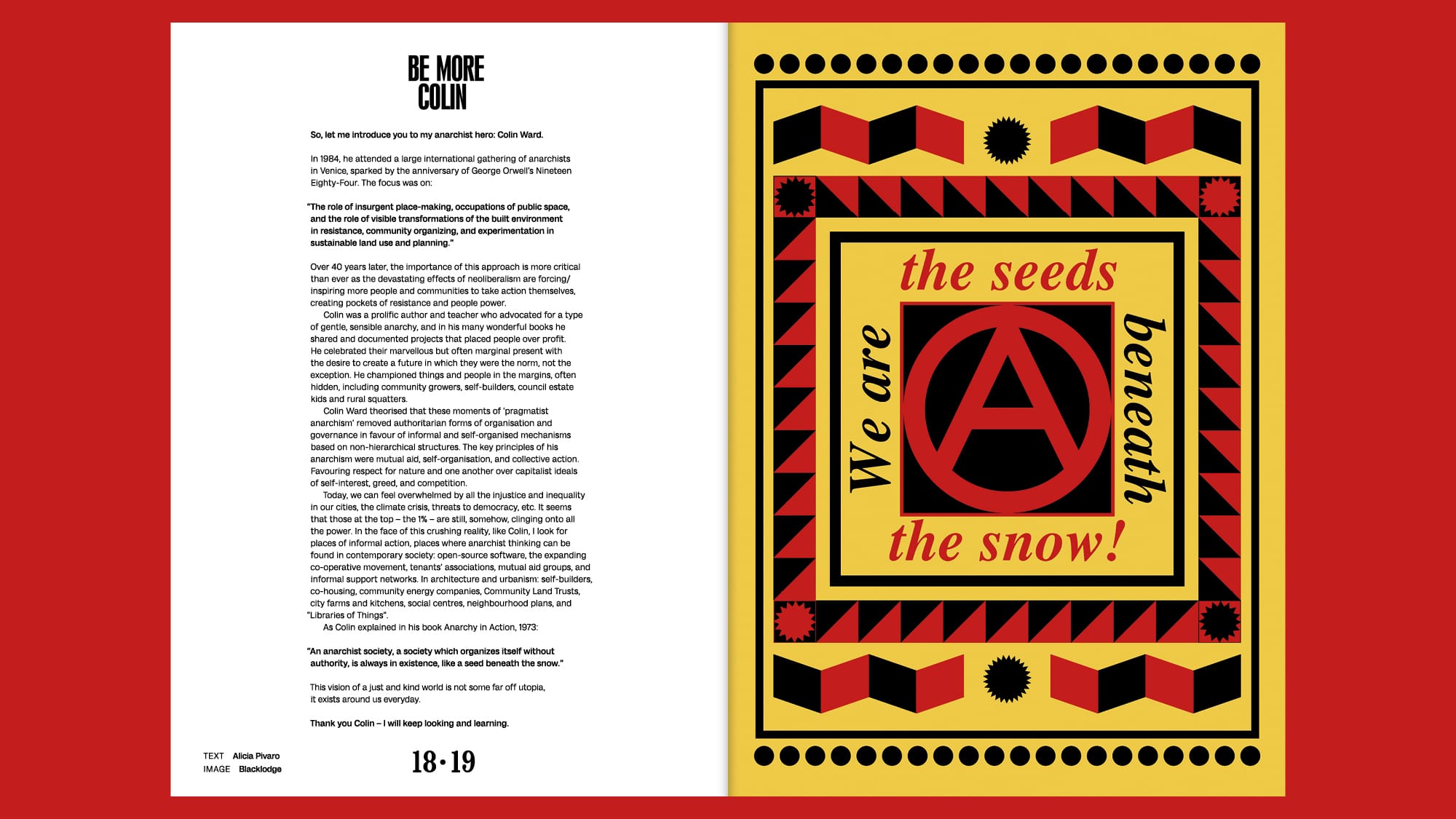
Democratising the creative process and giving contributors as much creative control as possible is a fundamental part of the process for us. Some writers ask if they can illustrate their own article and the answer is always a firm ‘yes’, whether they are an artist or not.
Other writers have asked if they can choose their own artist to invite to respond to their story, and again the answer is always yes. Devolving creative power to contributors and allowing them to bring artists into the conversation on their own terms, adds another layer of unpredictability and spice to each edition.
We love seeing artists step outside of what they usually do. Printmaker Jonny Hannah, for example, decided to make a battle jacket for his story about Crass. He then modelled the jacket himself in a photoshoot for the piece, moving beyond his usual practice to become, in effect, a textile designer and a model.
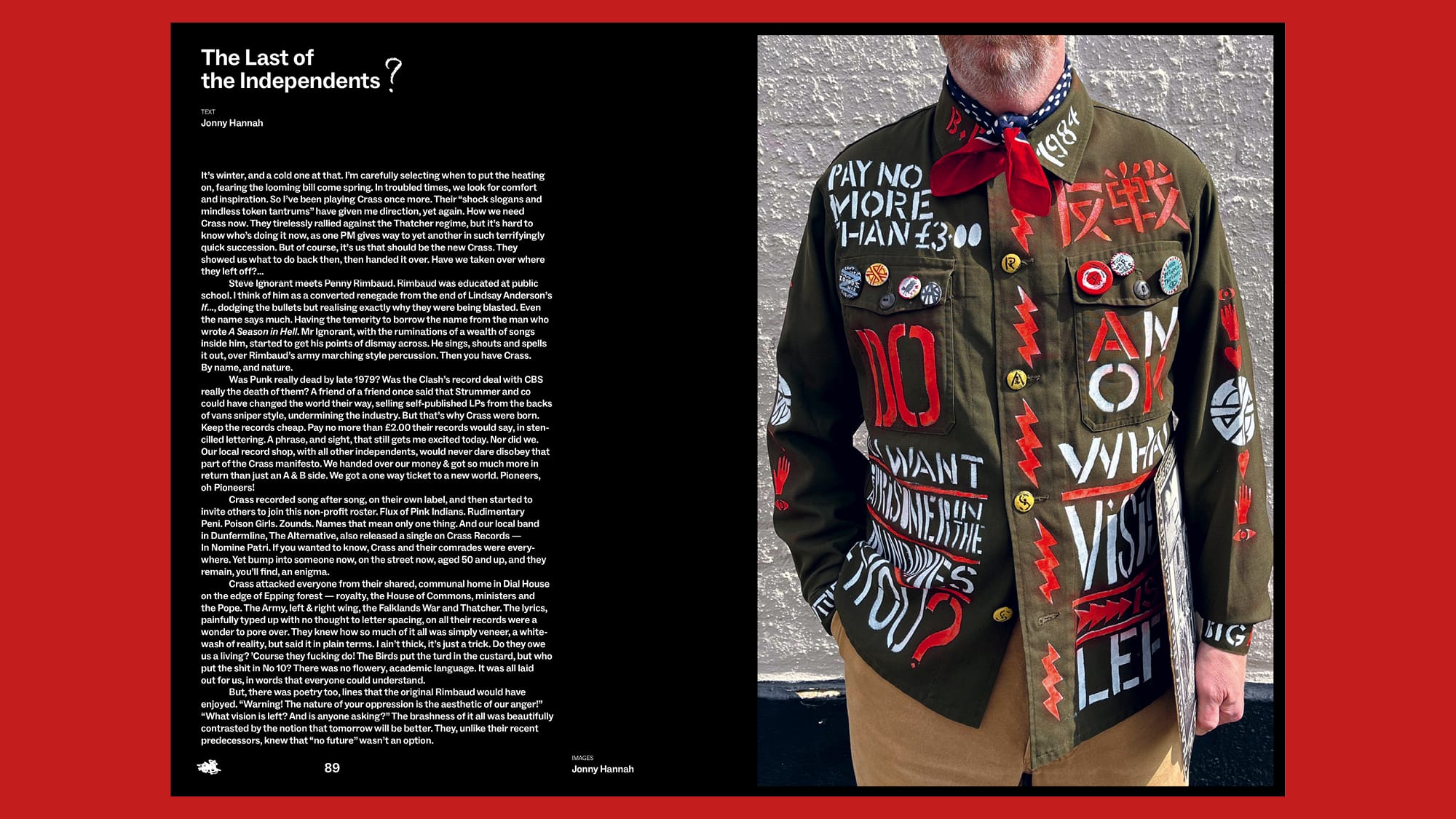
This is exactly the kind of creative freedom we want to encourage. Creativity should be about taking risks, following curiosity and allowing yourself to move beyond the boundaries of your usual practice. It’s about enjoying the journey of discovery and not always knowing where it will take you.
Time to get to work
We are already busy creating the sixth edition of Left Cultures, building what is becoming a rich Pandora’s box-style archive of lived, left-wing cultural experience.
There is still so much to discover and celebrate, and we’re excited to see where future editions take us. The project has already brought enormous joy to contributors and readers alike, and perhaps its greatest legacy will be inspiring a new generation of cultural voices on the left to step forward and help shape what comes next.
We remain genuinely curious about the breadth of left-wing ideas and proud to make space for marginalised and oppressed communities. We don’t all have to agree — debate and difference are part of any healthy society — but we do need to find ways to work together. If we are serious about challenging a system that is dragging society down a dark and dangerous path, solidarity matters.
So let’s keep making space for different voices, keep challenging each other, and keep building better ways of creating together, in unity and collaboration.
Now, let’s get to work.
Written by Philip Wrigglesworth, Co-founder and Editorial and Creative Director of Left Cultures.
Check out Left Cultures work and pick up their latest issue #5 here!
Elsewhere in Absurdity...
We've got a few people away on holiday this week, or off with the dreaded Covid! 🤧
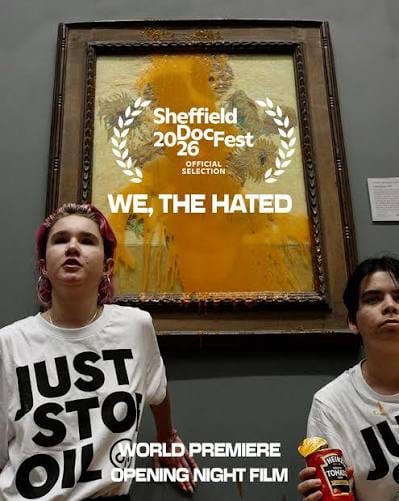
The rest of us invited our pal Rich Felgate to Absurd HQ this week to do a viewing of his brilliant new film 'We, The Hated' about his journey documenting the rise of Just Stop Oil. It's absolutely brilliant and a must watch! 🎬🍿
Clive went to the launch party for the 5th edition of Left Cultures at Book Haus in Bristol. 📚