How to prepare a revolution
After David Graeber, seven actions you can take now to tune up your rebel senses

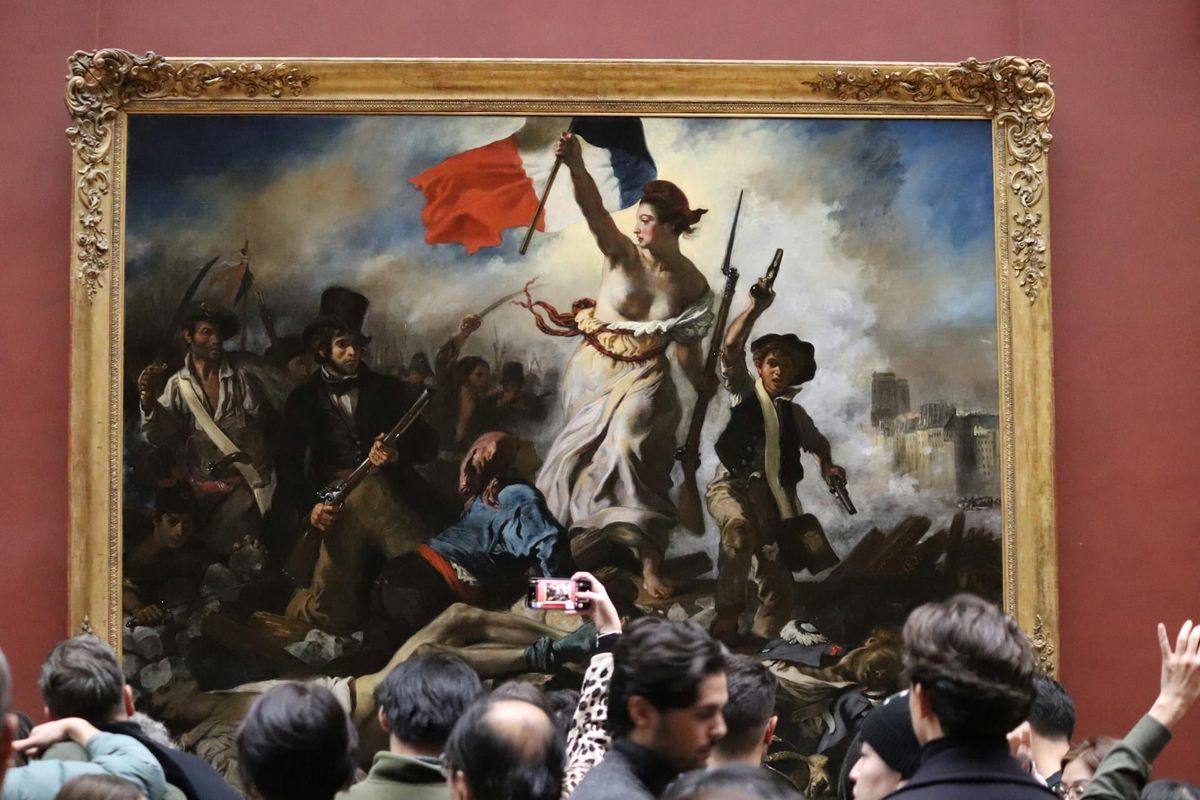
Will you spot the revolution when it arrives?
David Graeber asked himself this question in his 2013 essay “A Practical Utopian’s Guide to the Coming Collapse”. In it, he outlined how most revolutions weren’t what people imagined them to be (such as overthrowing the state); rather, to properly spot a revolution, he guided us to look at its lasting impacts.
Graeber thought revolutions were best explained by world historian Immanuel Wallerstein, who had analysed the upheavals of the last quarter millennium and concluded that these “consisted above all of planetwide transformations of political common sense”.
Planetwide, because in 1789 we were already living with a global market, and an emerging dominant political system of market-based bureaucracy. The “world revolution of 1848” then saw revolutions break out simultaneously in almost 50 countries. The picture has become more concentrated and clearer: markets, media, information, travel, pollution, climate. Everything is now – for better or worse – planetwide. The next revolution will be too.
As well as being planetwide, Graeber argued, to spot a revolution, you have to look for what has changed in terms of what people believed was common sense. What revolutions really do:
“is transform basic assumptions about what politics is ultimately about. In the wake of a revolution, ideas that had before been considered veritably lunatic fringe quickly become the accepted currency of debate.”
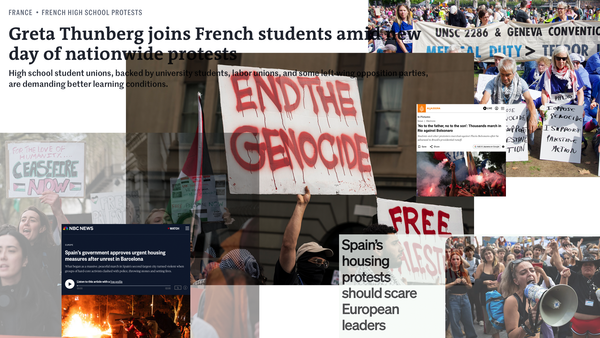
The feminist revolution of the 1960s was one such moment: it transformed what people understood about marriage, work, and gendered social relations, so they could (even if they don’t always) look completely different before and after. But so is what just happened in Serbia and the Student List, and the massive Gen-Z uprising in Nepal; both ideas that seemed impossible (at least to outsiders) even a few years ago, but now seem common sense.
For Graeber, the lasting legacy of 1789 was not regime change in France; its impact on human society was the planetwide spread of the vision of free basic education. And the “world revolution of 1917” may have started in Russia, but led to the possibility of the U.S.’s New Deal.
But the real aim of Graeber’s essay – how we “utopians” prepare for the “coming collapse” – was to encourage us to do two things.
The first: to prepare an agenda for the areas of common sense that need transforming:
“What might a revolution in common sense actually look like? I don’t know, but I can think of any number of pieces of conventional wisdom that surely need challenging if we are to create any sort of viable free society.”
I’m sure you can too. (Come to our subscriber gathering in January and tell us! rsvp here.)
The example “myth” that Graeber tackled in the essay was the “common sense” of neoliberalism. As he put it:
“Neoliberalism has always been wracked by a central paradox. It declares that economic imperatives are to take priority over all others. Politics itself is just a matter of creating the conditions for growing the economy by allowing the magic of the marketplace to do its work. … If [though] we stop taking world leaders at their word and instead think of neoliberalism as a political project, it suddenly looks spectacularly effective. Most of the economic innovations of the last thirty years make more sense politically than economically. … they have succeeded magnificently in convincing the world that capitalism – and not just capitalism, but exactly the financialised, semifeudal capitalism we happen to have right now – is the only viable economic system.”
How did they achieve this? One way, Graeber believed, was through pre-emptively deciding that it was more important to shut down social movements challenging neoliberalism, than for neoliberalism to work efficiently. As he explains:
“What if those currently running the system, most of whom witnessed the unrest of the sixties firsthand as impressionable youngsters, are … obsessed by the prospect of revolutionary social movements once again challenging prevailing common sense? … Is it possible that the preemptive attitude towards social movements, the designing of wars and trade summits in such a way that preventing effective opposition is considered more of a priority than the success of the war or summit itself, really reflects a more general principle? [That is] the pre-emptive attitude towards social movements is clearly a part of it: under no conditions can alternatives, or anyone proposing alternatives, be seen to experience success.”
The result, said Graeber, was “a relentless campaign against the human imagination. Or, to be more precise: imagination, desire, individual creativity.”
Preparation Rebellion
Those of us who have spent our time building movements have felt this, acutely, and painfully. But our role, Graeber reminds us, and this is the second purpose of this essay, is to help people rebel. To rebel by exercising our imagination, desire, and individual creativity. And to realise we’re not doing it alone, but that everyone else is doing it too. Making movements, basically.
So Graeber asks us to prepare for the revolution. But not “prepare” as in “ready yourself”. It is not passive. Prepare as in “prepare a trifle” – to make it.
Prepare for the revolution that’s coming (or is already here…?! If you hang around in our corner of the bubble, you’ll know there’s excitement about Pluto entering Aquarius; the last time that happened was the 1776 US Declaration of Independence, and the 1789 French Revolution).
The work is real, and doable. We invite you to bring the vision of the world we all want (what we’re calling World 2) into being. Because if a revolution is a shift in common sense rather than a seizure of power, then the useful actions are the ones that shift what people think is normal, possible and worth doing.
What gets in the way – what neoliberalism is very good at putting in the way – is the feeling that action against the system is pointless. So let me ask you this:
Is exercising your freedom pointless?
Is exercising your imagination pointless?
Are they ever pointless?
Do you want this system we currently have?
Okay. So prepare the revolution!
Here are seven ideas taken from Graeber’s essay to prepare the revolution. They’re micro but also macro: small shifts done by everyone over time together, is a movement. And hurry it up already, because by golly we need it.
1. Name the common sense. For Graeber, today’s assumptions are so settled that you have to spell them out before anyone notices them. Take money and debt, one of the key themes in his essay. Preparation: Write down one thing “everyone knows” about work, money or debt, e.g. “you must pay your debts”. Then ask: who told you this? Who does it serve? What would follow if it stopped being true?
2. Audit your “failures.” In the essay, Graeber talks about the 2002 IMF protests where protestors went home depressed because they couldn’t get near the trade meetings, then found out they had effectively shut the meetings down anyway. Preparation: look again at one of your campaigns, events or protests you wrote off – now find its hidden effects. And if you do, why not write a newsletter for us about them? Get in touch at hello@absurdintelligence.com.
3. Change the question you ask strangers. One core task of our mission is to transform social relations under neoliberalism so that we do not measure meaning by the values of production and consumption, but care and freedom. Preparation: the next stranger you meet, don’t ask them “what do you do?” but swap it for “who did you help this week?” or “what are you caring for at the moment?” It’s that kind of shift in everyday common sense that helps us see the world around us more clearly as a web of common senses, some of them – most of them – not our own. Take this further, and organise your next week at work around these questions.
4. Talk about debt without shame. Graeber writes in the essay, “The morality of debt and the morality of work are the most powerful ideological weapons in the hands of those running the current system. That’s why they cling to them even as they are effectively destroying everything else. It’s also why a planetary debt cancellation would make the perfect revolutionary demand.” Preparation: talk honestly with friends or colleagues about what you or they owe, or are believed to owe, financially or morally. Can these conversations help us see the “common sense” beliefs that neoliberalism has foisted upon us, as individuals as well as societies?
5. Take back an hour. “No one has much time for political activity if they’re working sixty-hour weeks,” Graeber writes. Preparation: Take back an hour from paid work, overtime or self-improvement gigs. Spend it on something unsupervised, unproductive and shared. NOT your side hustle. Or, in a group, why not debate how a four-hour working day could work for you.
6. Practice deciding together. Graeber writes, “I am less interested in deciding what sort of economic system we should have in a free society than in creating the means by which people can make such decisions for themselves.” Preparation: join something where self-governance is being practiced – a tenants’ union, residents’ association, co-op, mutual aid group, even a book club. And note what you decide, and how you decide it.
7. Exercise the imagination. Utopias are thought experiments that make it “impossible to say that such a thing is inconceivable.” Preparation: take ten minutes to journal, describing an ordinary Tuesday in a free society. Do it flash: 250 words, then share it with us. We’ll publish it.
We don’t need an exact blueprint for World 2. As Graeber writes, “Normally, when you challenge the conventional wisdom … the first reaction you are likely to get is a demand for a detailed architectural blueprint of how an alternative system would work [and] a detailed program of how this system will be brought into existence. … That’s ridiculous!”
What we do need is the map to help us get there, and the ways of being that are important for us when we do get there. So: prepare, practice, and be inspired by Graeber’s closing words:
“The age of revolutions is by no means over. The human imagination stubbornly refuses to die. And the moment any significant number of people simultaneously shake off the shackles that have been placed on that collective imagination, even our most deeply inculcated assumptions about what is and is not politically possible have been known to crumble overnight.”
You can download and read the essay for yourself here.
Elsewhere in Absurdity...
Alex & Charlie went to the AKO Storytelling Institute’s Movember Narrative & Nibbles 👨🏻🍻
Clare spoke at Psychedelics Design 2026 🍄😵💫
David went to Tartuffe (Remixed) – Moliere × Jamaica × Nigeria! 🇯🇲🇳🇬
Oh, and don’t forget the first IRL Absurd Newsletter event!!!