If I was in charge...
This week’s Absurd Idea imagines a word turned upside-down.

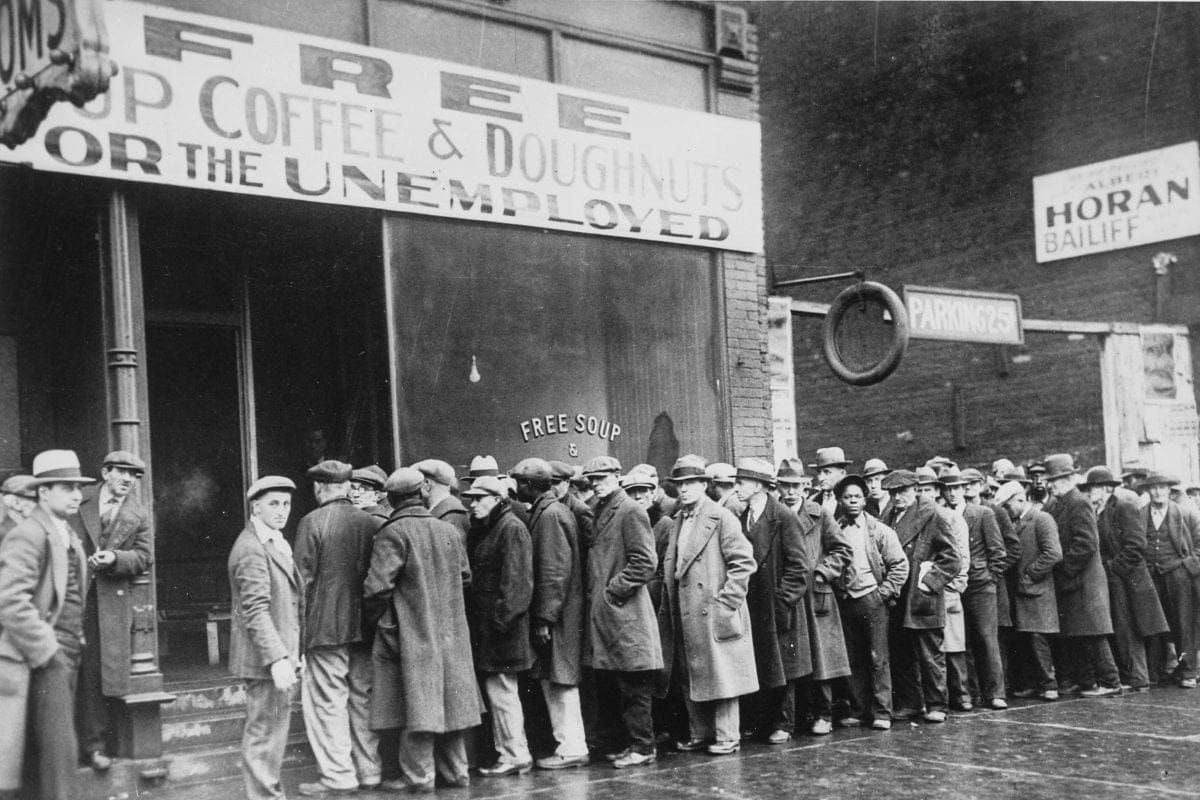
On the first day of the Absurd Transformation, a fundamental piece of legislation will be introduced that will signal the ambitious intent of the new system.
The word “market” will be banned.
A service of remembrance will be held for the word in London’s St Paul’s Cathedral, where representatives of the major City financial institutions will take part in a Jeremy Deller-directed re-enactment of The Cleansing of The Temples. Sam Ryder will reprise his role as Jesus from his acclaimed West End run in Jesus Christ, Superstar, and will lead the congregation in singing.
Neither Sam Ryder, nor the 1973 film, but what a temple!
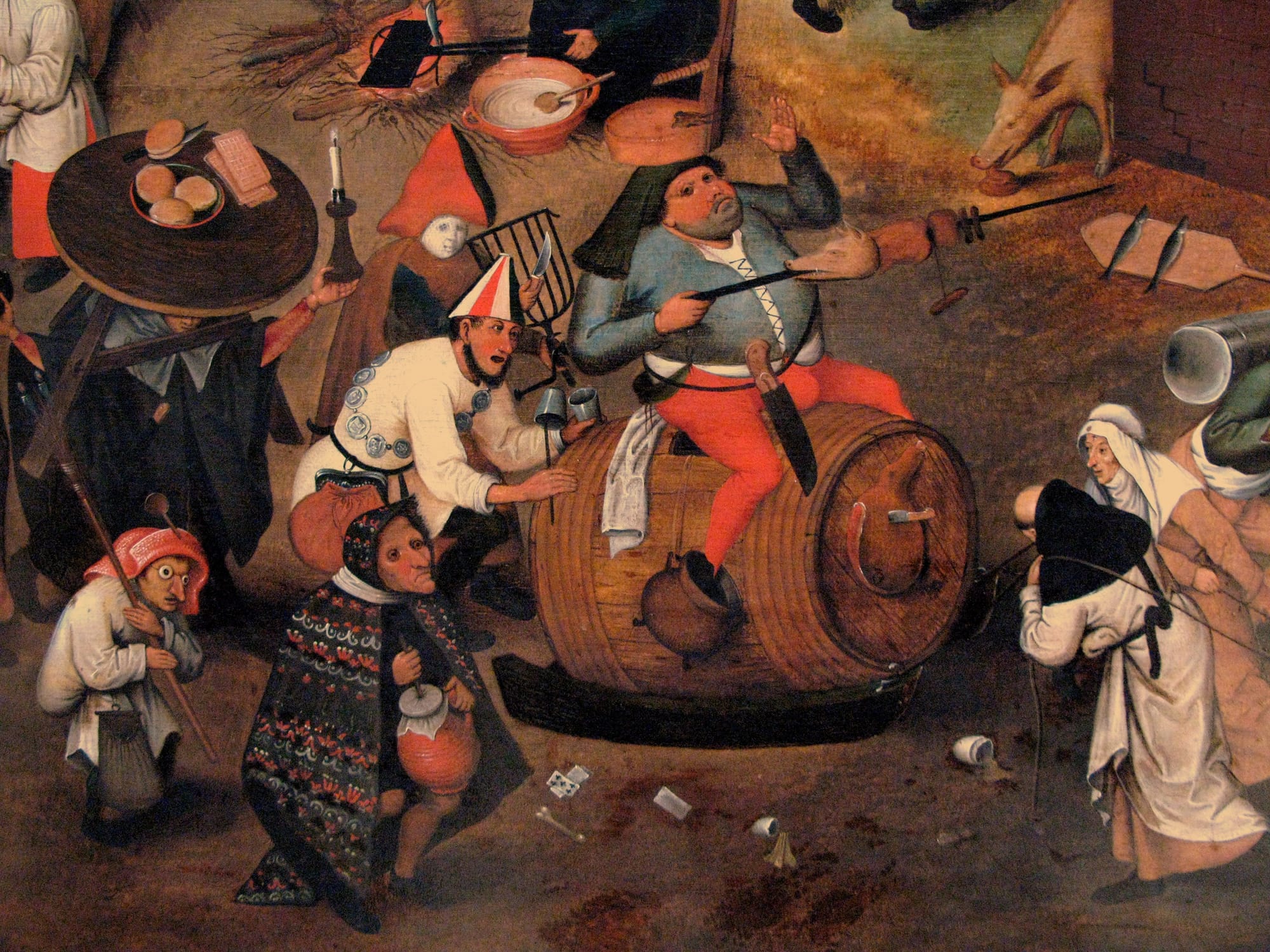
After the service a Fools Day cavalcade will make its way from Ludgate Hill, via Westminster Abbey, to the Royal Hospital, Chelsea, where an original British Telecom share certificate will be interred next to the grave of The Right Honourable The Baroness Thatcher LG OM DStJ PC FRS HonFRSC.
A memorial stone will be inscribed with the words of David Graeber from Debt: The First 5,000 Years (Melville House, 2011):
“A great embarrassing fact haunts all attempts to represent the market as the highest form of human freedom: that historically, impersonal, commercial markets originate in theft.”
For too long a fig-leaf for ideological fundamentalists, the removal of the word “market” will help fast-track a transformation of shared understanding, giving society an off-ramp from the language of production, consumption and unsustainable growth.
A lexicon of Love
But this is no mere proscription. It is an upgrade; a move that signals not just what we want to leave behind, but crucially where we want to go.
In the majority of usage, the word “market” will be replaced by “commons”.
This simple switch-out will narratively support a societal shift: from extractive profiteering to collective sustenance. From exploitation to regeneration. Signalling the transformation that will be embodied in changes to business legislation and practice in the face of the climate and nature emergency.
Many revised terms will make immediate and widespread sense, for example:
“Farmers’ Commons”, “Flower Commons” and “Fruit & Veg Commons”.
Agricultural production and consumption will be primarily positioned not as something bought and sold, but societally nurtured – a Common Treasury For All.
The work of the first woman to win the Nobel Prize for Economics, Elinor Ostrom will be widely disseminated and taught as a vital tool in communicating how a Commons mentality supports local, national and bioregional resilience, not to mention identity.
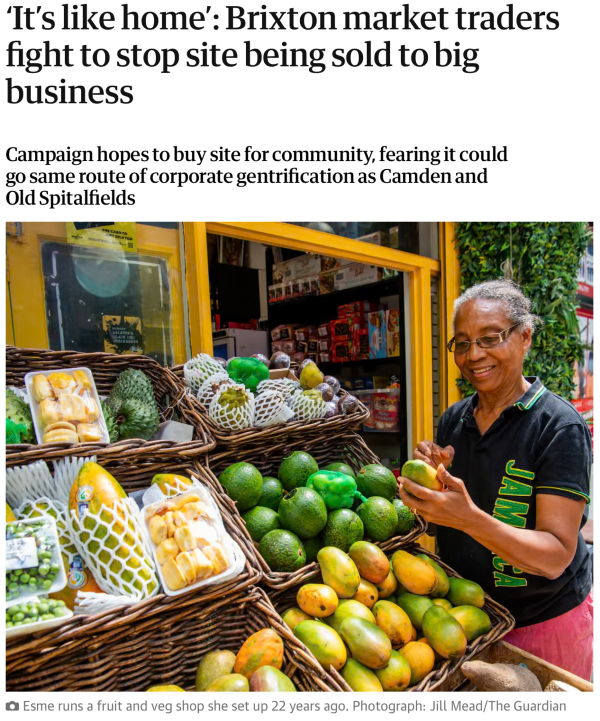
“Market” as a geographic descriptor will be similarly transformed. Brixton Market, for example, will become Brixton Commons, a fitting new title for a cherished local resource being reclaimed by its community from the clutches of hedge-funded foreign ownership. Historic locations like Borough Commons, Norwich Commons or Bury Commons will gain new, holistic positivity, rightly recognised as shared places essential to the communities they serve.
The names of places such as Stowmarket or Market Drayton will not be subject to legislative change, I’m not a monster, nor a Soviet (even if Leningrad was a way better name). Market towns will however be referred to as ‘Commons Towns’, with historical centres of trade such as Ludlow in Shropshire or Dorset’s Sturminster Newton being joined by newcomers to the Commons Transition such as Milton Keynes and Dalston.
“Commons” will also be used in “market”-related turns of phrase such as
“Let the commons decide” and “free commons”.
Of course, the English language being the bare fluid thing it is, “market” can also be replaced by other words. For instance, “moral” or “morals”.
“Market sensibilities” will become “moral sensibilities”, industry sectors will be subject to “moral regulation”.
Specialist “markets”
Several phrases relating largely to the financial commons will be subject to particular rules.
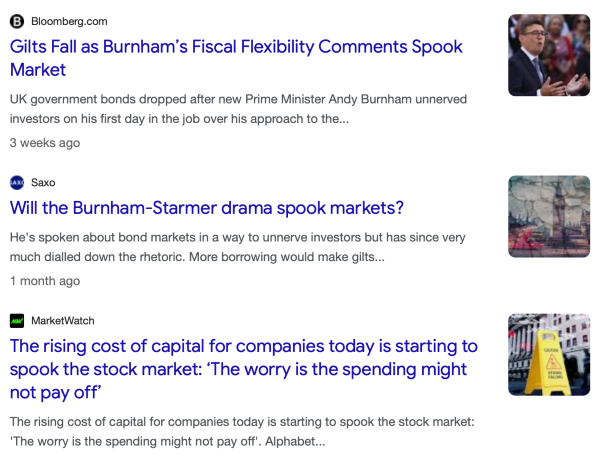
Deployment of the phrase “spook the markets” as a tactic of the City and Press to entrench financiers as arbiters of power will be replaced by “spook the cunts”, thereby turning a negative into a positive.
Economic decisions made by the Absurd Transition will be assessed by the double metrics of:
a. Has the commons decided? and
b. Does it spook the cunts?
Answering “yes” to both these questions will give legislation the green light.
Additionally, “market leader” will be changed to “Gary Glitter”.
This reference to the 1973 chart-topper I’m The Leader of the Gang (I Am!) will be a popular reminder that the value of investments and status may go down as well as up, and that what appears to be the most successful performer in any sector may also be illegally fucking people.
In the interests of not placing unnecessary focus on the best performer in a sector – thereby entrenching notions of hierarchy or ‘no-alternative’ – lesser (but nevertheless still successful) competitors in sectors may be referred to as “Harvey Weinstein”, “Myra Hindley” or “Russell Brand”.
“Market-making” will be known as “grooming”; “marketing”, “marketer” and “market research” will be re-rendered as fart noises, and the plethora of phrases such as “fix the market”, “play the market”, “corner”, “flood” or “rig” “the market” will simply be referred to as “nonce” or “noncing”.
The process of establishing ‘paedoquivalence’ will be a vital tool in the removal of social licence for exploitative and extractive business practice.
A new efficiency
This Absurd legislation will also contribute to a national language efficiency, as evaluated by KPMG, the auditing Myra Hindley.
“Market value” will become simply “value”. “On the market”: “for sale” or “for rent”, “supermarket” will be replaced by “shops”, and “hypermarket” by “big shop”.
Britain will be encouraged to spend the time saved by shorter sentences staring out of windows or doing good deeds for neighbours.
Three notable exceptions
In addition to not forcing Lincolnshire’s Market Deeping to change its name to Moral Deeping, there will be three permitted exceptions that prove the rules.
1. The Treasury will publish The Tragedy of The Market by way of reparations for the damage caused by white nationalist and all-round arsehole Garret Hardin. His 1968 article The Tragedy of The Commons deliberately projected the extractive behaviours of narcissistic capital onto the rest of humanity, to legitimise widespread enclosure and privatisation.
2. Kensington Market will return to 49–53 Kensington High Street (Currys is pointless anyway) for the sale of all punk and goth paraphernalia. Like bangles.
3. The trading of securities will be allowed to retain the use of the word, although thanks to the prevalence of Artificially Inflated stocks, it shall be known until its final implosion as “The Slop Market”.
You Marketing Market
Finally, the Absurd Authority recognises that the banning of any word gives it significant, dangerous power.
Which is why “market” will be popularly designated “the M word” – a pejorative classification more insulting than the B, F, C or even P words.
This status will be enhanced by the proscription in law via an updated Section 5 of the Public Order Act 1986. Usage of the word will be punishable by fines of up to £1,000.
Manna from heaven for our potty-mouthed modern world, it may then be gleefully (and illicitly) deployed as the very worst of the swear words.
For example: “Richard Madeley, what a complete Market.”
Elsewhere in Absurdity...
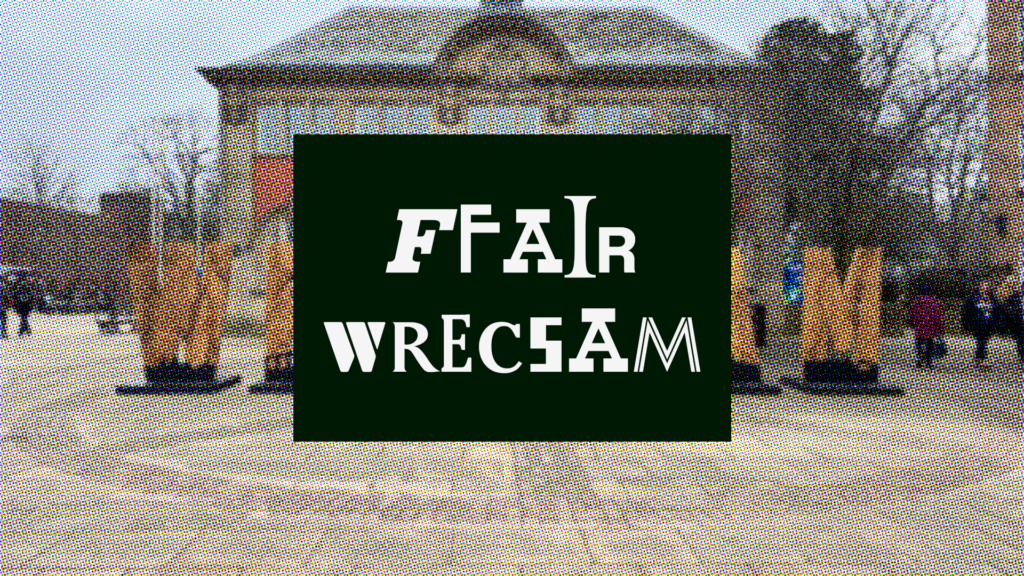
Tracey, Alanna and Alex have been in Wrexham with the legends that are TCC, recce-ing for September’s Ffair Wrecsam!
John went to see the Richard Dadd exhibition at the Royal Academy - marvelling again at the wondrously unique piece of folk weirdness that is The Fairy Fellers Masterstroke.
Diya was at DAYTIMERS at Whitechapel Gallery on Saturday that was all about platforming contemporary south asian artists and musicians.
Clare’s off to the opening night of Death Note, the Barbican’s new anime musical.
And Charlie managed 45 minutes of The Odyssey before he walked out.