The Campaign for IRL Democracy Starts Here
We're creating spaces for people to practice democracy with each other, IRL. Want to join?
Marsh Farm in Luton is a special place. Once the home of Andrew Tate, it also has earthy English magic and lore, with Waulud’s Bank, the ancient Neolithic monument adjacent to the estate, being the source of the River Lea.
When you visit, you’re struck by the huge Bob Marley mural on the formerly derelict farmhouse, which the community group Marsh Farm Outreach renovated. Since 2005, the workers cooperative has focused on improving the economic and democratic opportunities for residents in an estate of, in their words, “severe deprivation and social challenge.”
Marsh Farm is also one of the recipients of the government’s Pride in Place strategy, with £20m to spend over the next ten years. With reports coming in from across the country that many places have no guide to how local authority and residents can decide together how best to spend this money, Marsh Farm’s existing infrastructure is handling the challenge more smoothly.
In April this year they ran their first People’s Assembly, the first of many to discuss the future of the neighbourhood. Supported by grassroots “assembly culture” organisation Humanity Project, more than 150 residents came together to deliberate on local issues, listen and learn from each other, and shape decisions: their report has just been published. The residents agreed three priorities for action: better resident access to and benefit from community assets; better support, space and resources for young people; and bringing back the Marsh Farm Market. The local authorities were bought-in from the beginning to help implement the decisions.
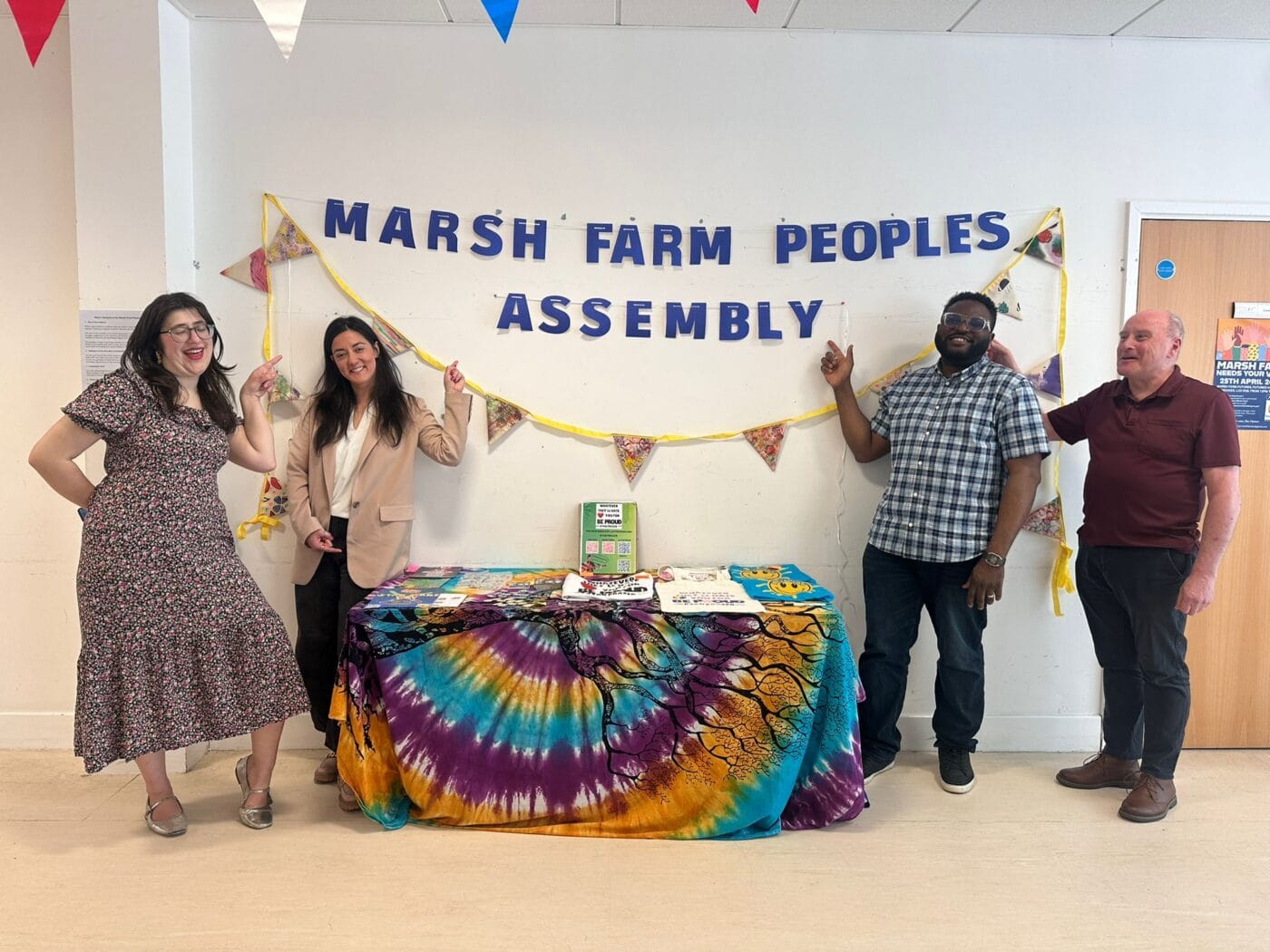
One of Andrew Tate’s supporters was there. By the end, he was the spokesperson for his table, where antagonism and suspicion had turned into collaboration in the space of a few hours.
Shaping the world together
This kind of transformation for the participants is not unusual. As Graham Smith, Professor of Politics at the Centre for the Study of Democracy at the University of Westminster and an expert in participatory democracy, puts it:
“The thing that always makes me emotional at an assembly is seeing people who are very different from each other and who would never have naturally met, collaborating and learning together. Our world is so divided at the moment by in-groups and out-groups and we have so few of these spaces left where people can meet people they wouldn’t, and actively work on something to shape the world.”
With successes such as Marsh Farm, participation in politics may not be so dead after all. The latest official (ONS) figures show that the majority (78%) of people in the UK participated in at least one political activity in a year, and on average had taken part in two activities. Viva la democracy!
Democracy - but on one’s own
But of course, statistics don’t tell the whole story. The top six political activities are all things people can either do alone or on a screen: voting, signing a petition, boycotting products, forwarding or sharing political social media content, contacting their politician, or contributing to a consultation. You have to get to number seven before the political activity is likely done in real life: volunteering for a cause, 13% – and then much can be done online now, too, and on one’s own.
This is also why assemblies such as those at Marsh Farm are critical to democratic opportunities – because they bring people together in real life, without which we only have a very narrow, and failing, definition of democratic life.
Says Rich Wilson, CEO of Iswe Foundation and an internationally recognised expert in democratic systems change:
“Democracy is about how we rise to the challenges we face together. Voting matters, but so do the relationships that make collective action possible. In an age of screens and algorithms, creating the conditions for us to be in person is not a nostalgic luxury – it’s essential governance infrastructure.”
The loss and recovery of what are being called “third spaces” – pubs, clubs, youth centres, etc, where people can come together for collective action – has, it feels, become central to democratic renewal and the rebuilding of neighbourhoods – and, perhaps, nations.
The Miracle Inn
In June, Dr Morgan Phillips launched The Miracle Inn, a third space builder for a new embodied environmentalism. Its ambition is for a more just, ecological, and resilient socioeconomic system – but that, says Morgan, will only be won from the bottom up, and that will only emerge from a mass movement built on strong bonds of trust and solidarity. Which needs people to meet – in real life. Phillips says:
“People, today, spend many hours of their day alone. They are not necessarily lonely, but their social skills have weakened, or never truly formed. Social atrophy has kicked in, the ‘we’ has been lost in pursuit of the ‘me’ and this is disastrous for democracy. The Miracle Inn has been set up as an antidote. Key to our work is the use and creation of ‘third spaces’. We want to build a movement, from within the environmental movement, that is committed to the revival and restoration of our social infrastructure.”
Wilson agrees that this emphasis on relationships is critical for democratic renewal, especially in a time of climate collapse.
“Democracy is fundamentally about relationships with power, relationships with our communities, and relationships with one another. In an age of screens and growing isolation, bringing people together face to face is not a nice-to-have. It is the only way we will create the conditions to overcome division and build something new. Together.”
You can see this with initiatives such as The Logging Off Club, the campaigner Adele Zeynep Walton’s attempt to help young people put down their phones and break their addictions to social media. But what is emerging is not necessarily an energy of running away from the benefits that digital and online can bring for connection and momentum in renewing democracy. It is, rather, an energy of running towards people being physically together, and what proximity creates for and between people.
A Marshall Plan for belonging
It’s a similar sentiment that drives a new ‘Marshall Plan’ launched this June by a collaboration between Demos, Kinship Works and the Joseph Rowntree Foundation. Their plan is to reach a funding settlement for the civic necessities of publicly shared life – the clubs, associations, networks and infrastructure.
James Plunkett of Kinship Works says:
“It feels like we're at a pivotal moment for civic renewal. Thanks to pioneers in communities across Britain, especially in the last 15 years, we're much clearer about what the work entails, and how the state can show up to support it. We talk a lot about Britain being broken, but I think we see signs here of how the state, citizens, private sector and civil society can collaborate to fix things. It's a shared project of national renewal.”
IRL Democracy
The Fête of Britain is our campaign for all these things, which we’ve wrapped up in the concept of “in-real-life democracy”. It’s a cultural invite to bring people together in spaces where they can rehearse the skills it’s going to take to govern a new world, from the bottom up.
Those skills include some of the basics of democratic life: listening, speaking well, making decisions together. We know these practices have atrophied in the neoliberal ratchet system that is modern politics, because they are the things we tell pollsters that we no longer have: that we’re not listened to (45%), we don’t have a say (63%), and we have no power over the decisions that affect us (82%).
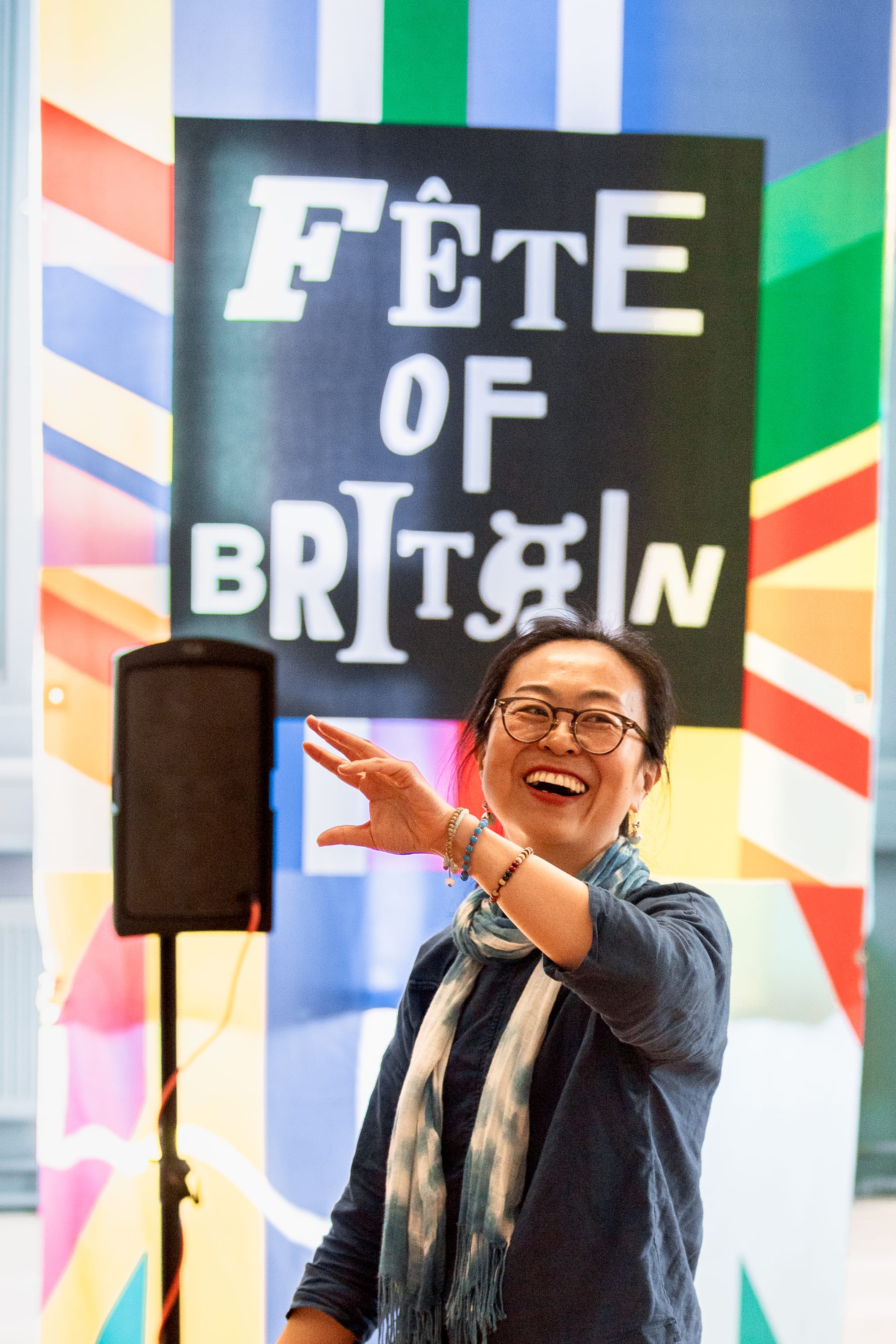
Clare Farrell is co-convenor of Humanity Project, which supported Marsh Farm’s people’s assembly, and a spokesperson for the Fête. “In order to reach people, it’s important to find where they are and go to them,” says Farrell, which is why the Fête is a roving carnival visiting every edge of the UK. “The movement to get people off screens and into real life, back into their bodies, is only going to grow.”
By creating spaces in which democracy can be diagnosed and defibrillated, we can practice these skills again. The invite is cultural – to a fête with music, song, dance, comedy, creches, and baked potatoes – because what kills democratic participation is how boring it can be, how out of touch, and wrapped up in etiquette no one ‘normal’ understands.
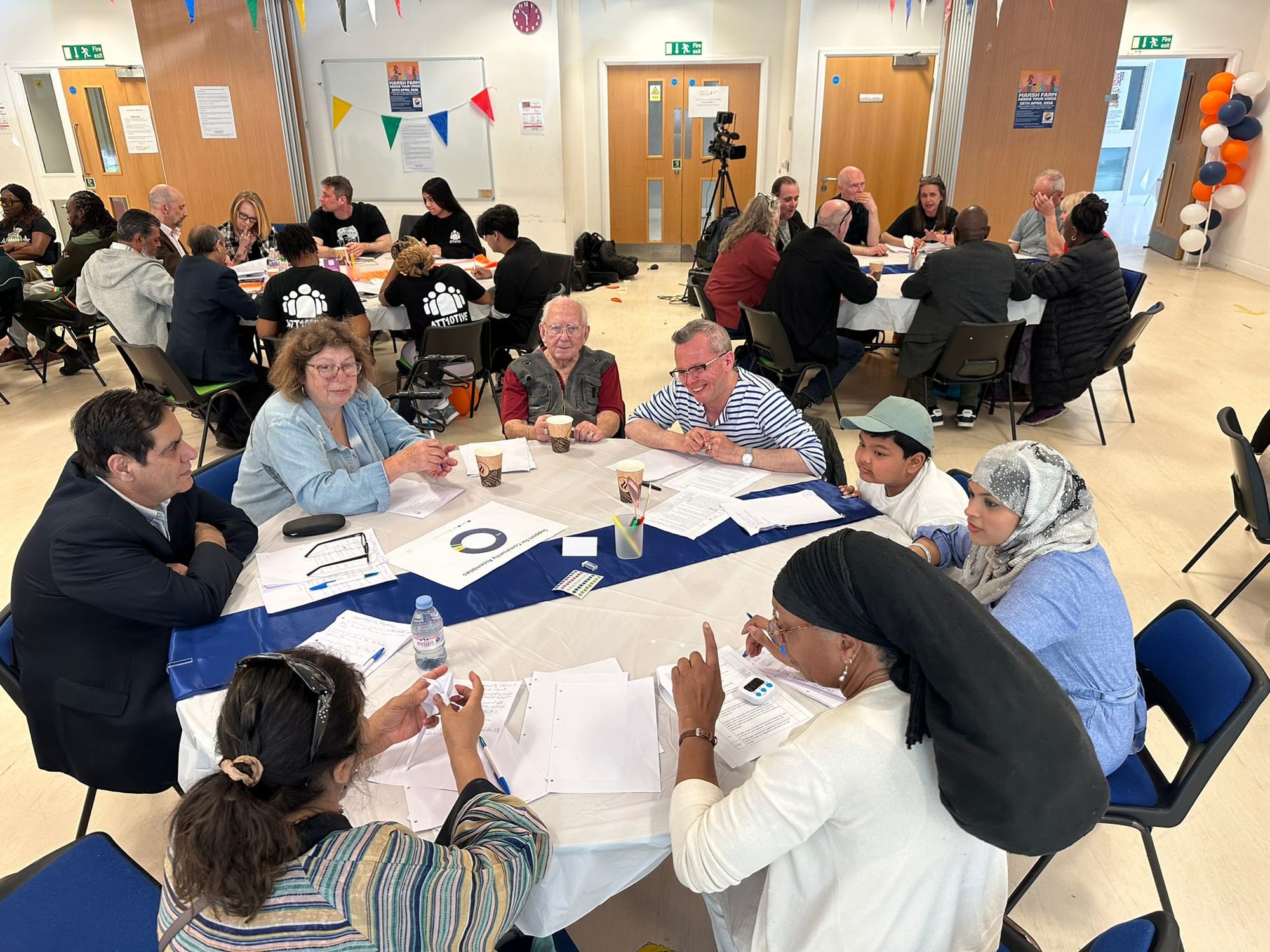
Which is why for Glenn Jenkins, a Marsh Farm Outreach coordinator, their assembly had to have music, food, and laughter baked into its design. As it says in their report:
“The whole point is to kick-start a new way of doing things where residents can regularly come together to make decisions and service providers can be more accountable to the people they serve.”
That sounds like in-real-life democracy to us.
This piece originally appeared in the July issue of Byline Times. You should really subscribe because it contains some of the best journalism out there right now.
Elsewhere in Absurdity...
Most of the crew went to see Our Public House, a culmination of over 600 speech writing workshops across the country run by our wonderful friends Dash Arts, all turned into a singing and dancing, politically-moving play about the state of the nation.
Charlie was the Q in a Q&A with Beeban Kidron, who has just published a jaw-dropping book: USERS: How Big Tech Took Control and How to Fight Back.
Clare was at the Exeter University climate conference and didn’t do the protest despite, what everyone thought. She did then facilitate, alongside another Charlie – Charlie Gardner – a National Emergency Briefing film showing hosted by XR Lewisham. That was off the back of releasing a podcast about the food crisis which has blown up online (nothing at all to do with Alex’s guest appearance).
Also in Lewisham, Tracey attended the Lewisham Annual Cultural Summit, exploring the potential impact of the Cultural Partnership in advocating for and shaping Lewisham creative future for its creatives and residents, whilst also discussing a new format of Lewisham People’s Day 2027.
Not stopping there, Tracey also spent a joy-filled afternoon at Simmer Down at the Southbank on Friday, filled with reggae, revival and good times, before carrying on (all night?!) to a beautiful celebration of Caribbean culture and togetherness at CARICOM Heads of Mission reception in observance of CARICOM Day 2026.
Charlie, Alex and Sophia all went to see the magnificent Mr Ian Bruce’s film playback, celebrating the launch of his album, OK.
And Charlie is also up to Durham to join 200,000 people at the Durham Miners Gala.
We’re also missing Stella and Diya, off on their European holidays.