The Keys Were Always in the Door
The spaces for community exist - but what do local people need to bring them to life? A guest post by Fun Palaces' Executive Producer.

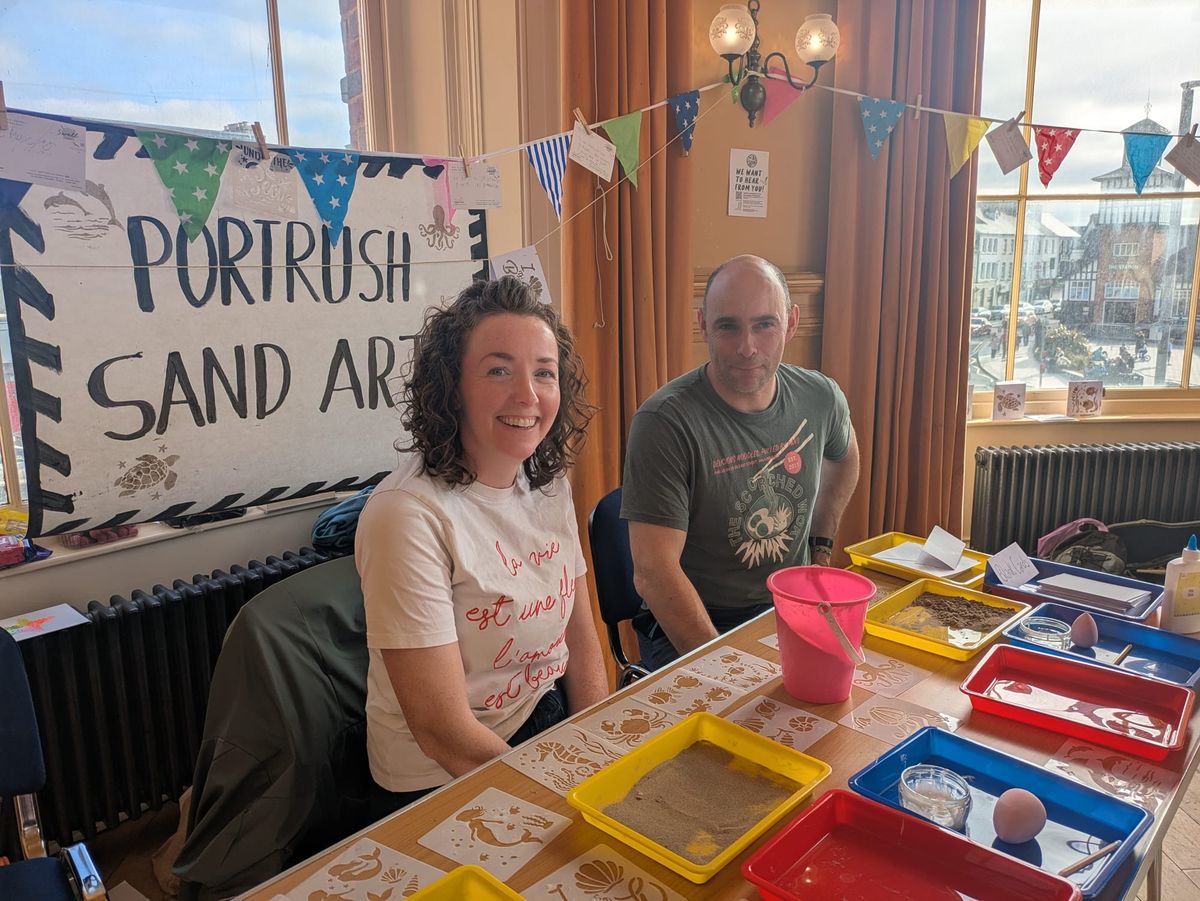
For five years, the volunteers behind Swell, a community movement in Portrush on the north Antrim coast, have handed out postcards at their festival with a single question printed on them: What is your wildest dream for Portrush?
Hundreds of answers in, a pattern set. Over and over, people wrote that they wanted a community centre: Somewhere free. Somewhere open. A place that cost you nothing and asked nothing of you, where you could turn up, see a familiar face, and do something together.
The thing they were dreaming of was already there. Portrush has a town hall, a good building in the middle of town, publicly owned. Yet, for most of the year, it sits with the lights off, its doors shut to the unprogrammed, drop-in, ordinary life people kept writing onto those postcards. The wildest dream of the town was standing on its own main street, waiting. Nobody needed to build it. Somebody needed to open it, and to mean it.
I have spent years watching communities take a building exactly like this one and, for a few hours, a day, a week or a season, change the terms on which people are allowed to be inside it. Two have stayed with me especially: Abi and Laura in Cwm Garw (Garw Valley) above Bridgend, and the volunteers here in Portrush.
I am the Executive Producer at Fun Palaces, a campaign to make the cultural sector fairer, more inclusive, richer and more fun. Cultural democracy is a grand phrase for a plain idea: everyone has the right to make culture, not only to consume it, and nobody needs a qualification or an invitation to begin. What those years have taught me is embarrassingly simple. The building is nearly always already there and what is missing is rarely bricks. It is permission, in the felt sense: the belief that you are allowed to walk in and make the place yours, and somebody with the keys deciding they can live with that.
That last part – somebody with the keys deciding they can live with it – is the generous bit, and also the hard bit. A key opens a door but it says nothing about whether the person who held it can still choose who walks through and the question we must follow, straight into the discomfort, is not what communities are owed. It is what handing over actually demands of the people holding the keys.
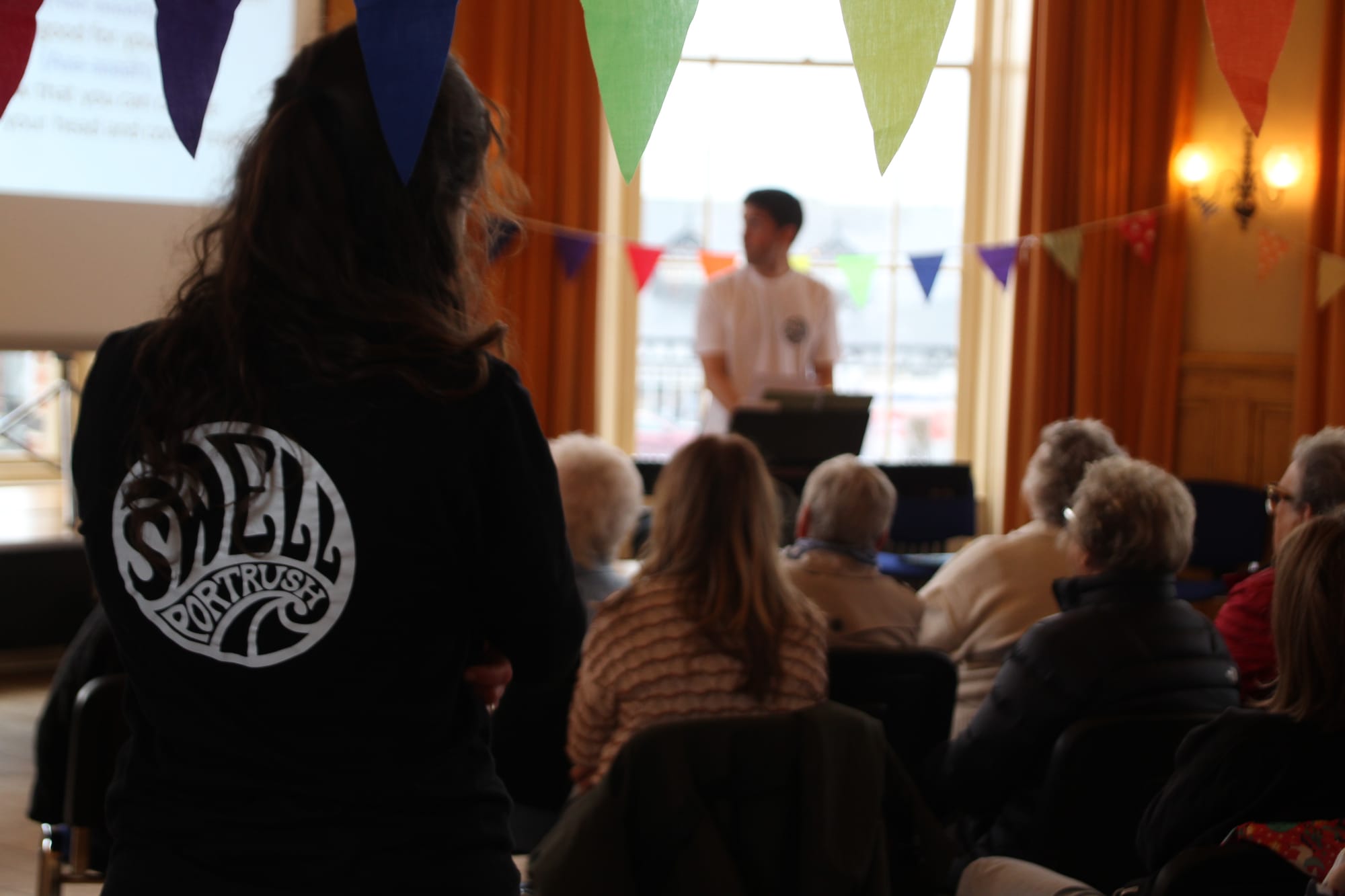
Gemma Reid and the Swell volunteers have been doing exactly that: opening it, and meaning it. Each October, on the annual Fun Palaces Weekend of Celebration, they take over the town hall and run part of their community festival as a Fun Palace, treating a municipal building as if it belonged to the people whose rates pay for it – because it does. Last year, they filled it with a repair café and brought in the North Coast Community Exchange. Swell is an active member of this growing movement, where people trade skills, time, and goods in a local currency called Waves. It operates on the old and faintly scandalous principle that everyone has something worth offering, entirely without the need for money.
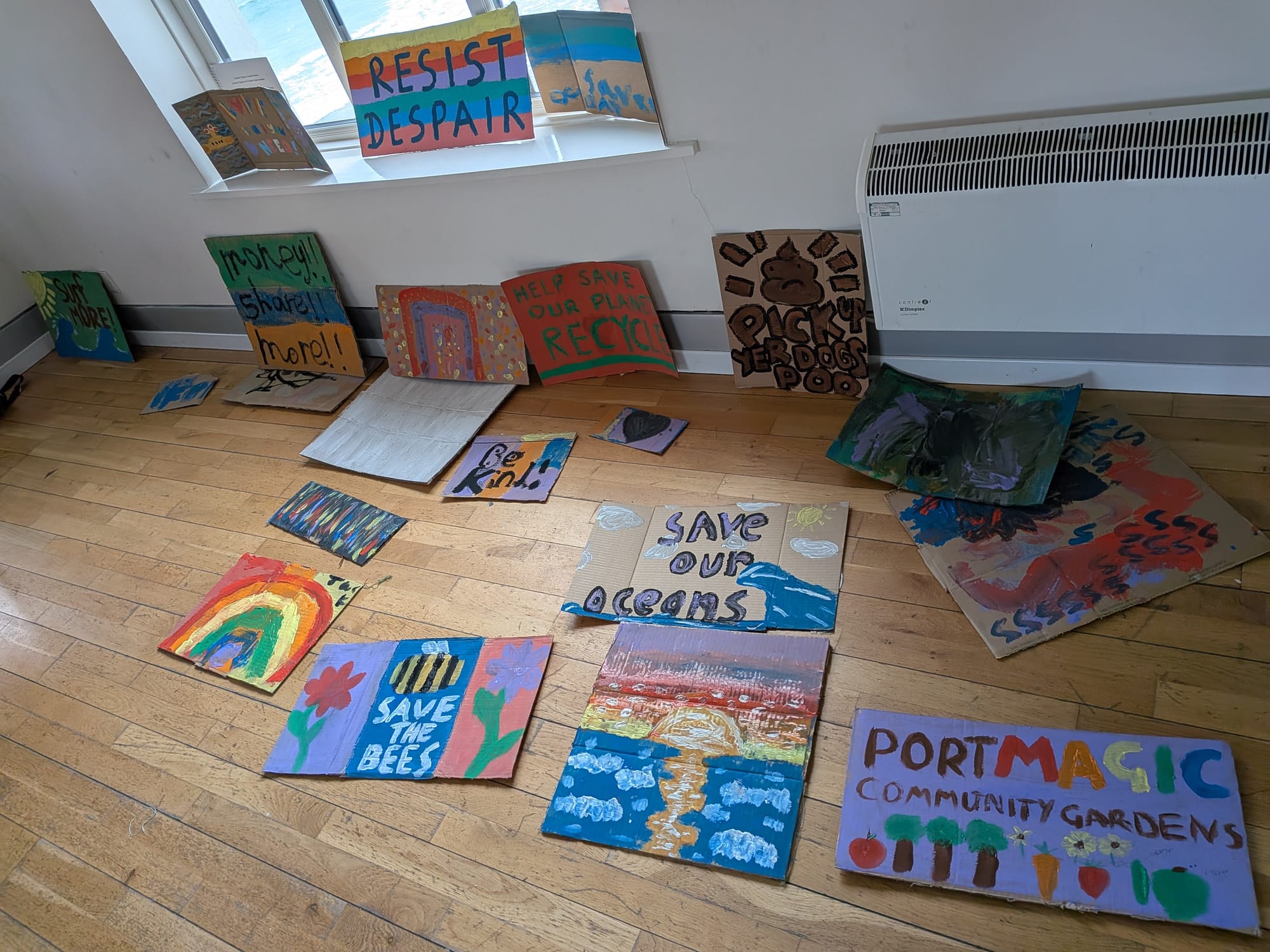
The festival is only part of it. In May they held the Creative Voices Activist Voices exhibition in The Arcadia, a former ballroom on the seafront that is now a café with an upstairs room looking straight out at the Atlantic, and alongside it people made protest placards.
For Gemma, one of Swell’s founders, none of this is decoration. She has spent five years pushing back on the idea that what she runs is “just” a festival. It is a movement helping the town come together to shape its own future. The moneyless exchange is part of how she means it.
“The Community Exchange is a system that allows people to exchange goods and services without money. We are using it to build a community of activity in Portrush.” – Gemma Reid, Swell
A recent piece by Stella Fass in these pages argued that theatre, dance and communal ritual are how we keep our humanity intact, and that we become most ourselves in a room full of other bodies surrendering to a shared experience. That is entirely true. I add only this: the rooms where that used to happen are still standing. The ballroom is a café now. The chapel hall takes bookings. The miners’ institute, where the valley still has one, is hired out by the hour. The infrastructure of communal life did not vanish; we just stopped behaving as though it was ours.
What the valley kept
Let me take you somewhere the loss is starker. Cwm Garw is one of a fan of narrow former mining valleys above Bridgend in south Wales; three villages strung up a single road beside a river that ran black with coal dust for so long the locals called it the Black River. At its height, the valley held more than fourteen thousand people and six deep pits.
The Ocean Colliery worked its last shift in December 1985, in the bitter months after the strike. Within a year, the headframes were pulled down and the spoil was hauled out on the same railway that carried the coal. Reclamation took the best part of twenty years. The valley is green again now, with two small lakes where the colliery stood and a cycle path where the trains ran.
What greening could not so easily restore was everything the pit had organised around itself without anyone quite clocking that it was doing so: the welfare halls, the institutes, the brass bands, the male voice choirs, and the St John’s Ambulance hall in Pontycymer where they trained the men for underground disasters and held the dances on the weekends. When the work went, the scaffolding of ordinary social life went with it.
“It’s a resilient community, but there’s been lots of challenges since the mines closed. There’s not many opportunities socio-economically. And lots of the culture that built up around mining... after that left there was a bit of community dislocation. The social connections that used to be made in community hubs, they don’t exist as much anymore.” - Abi and Laura, Cwm Garw Fun Palace Makers
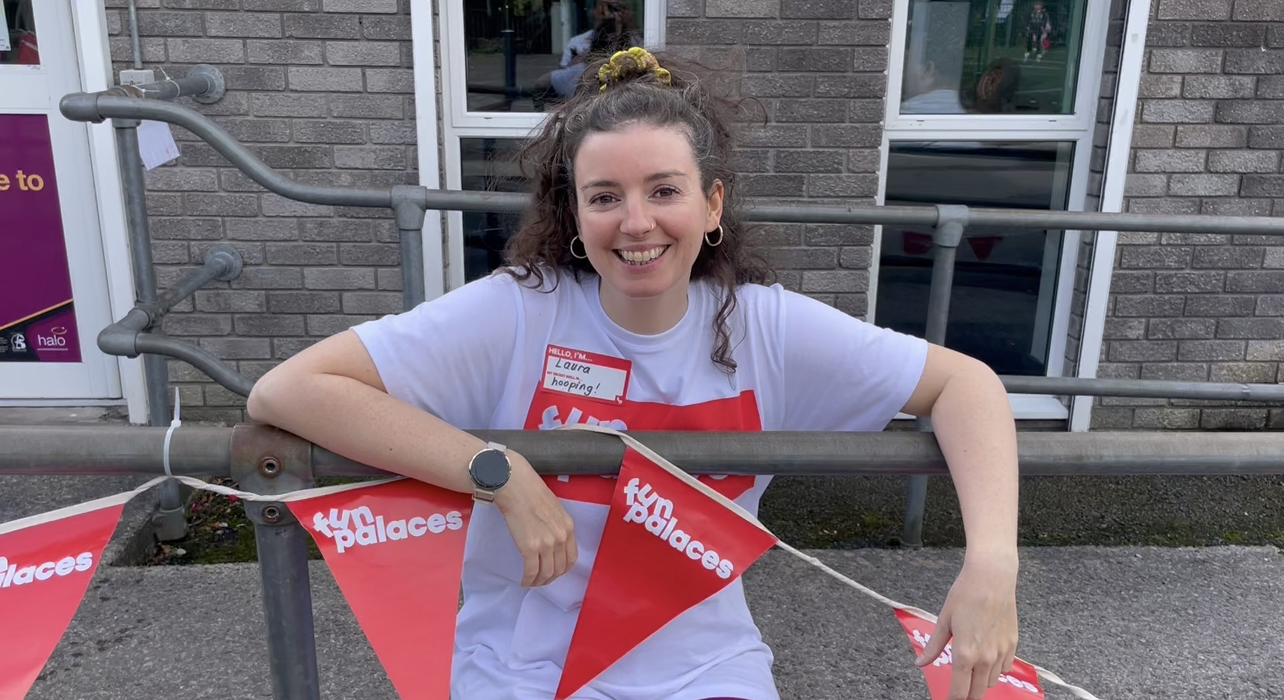
In 2024, Abi and Laura, who had never run anything like it, decided to make a Fun Palace. They held multiple open meetings, gathered forty-five suggestions from their neighbours, and whittled them down to nineteen things to do on the day. Privately, they hoped fifty people might come.
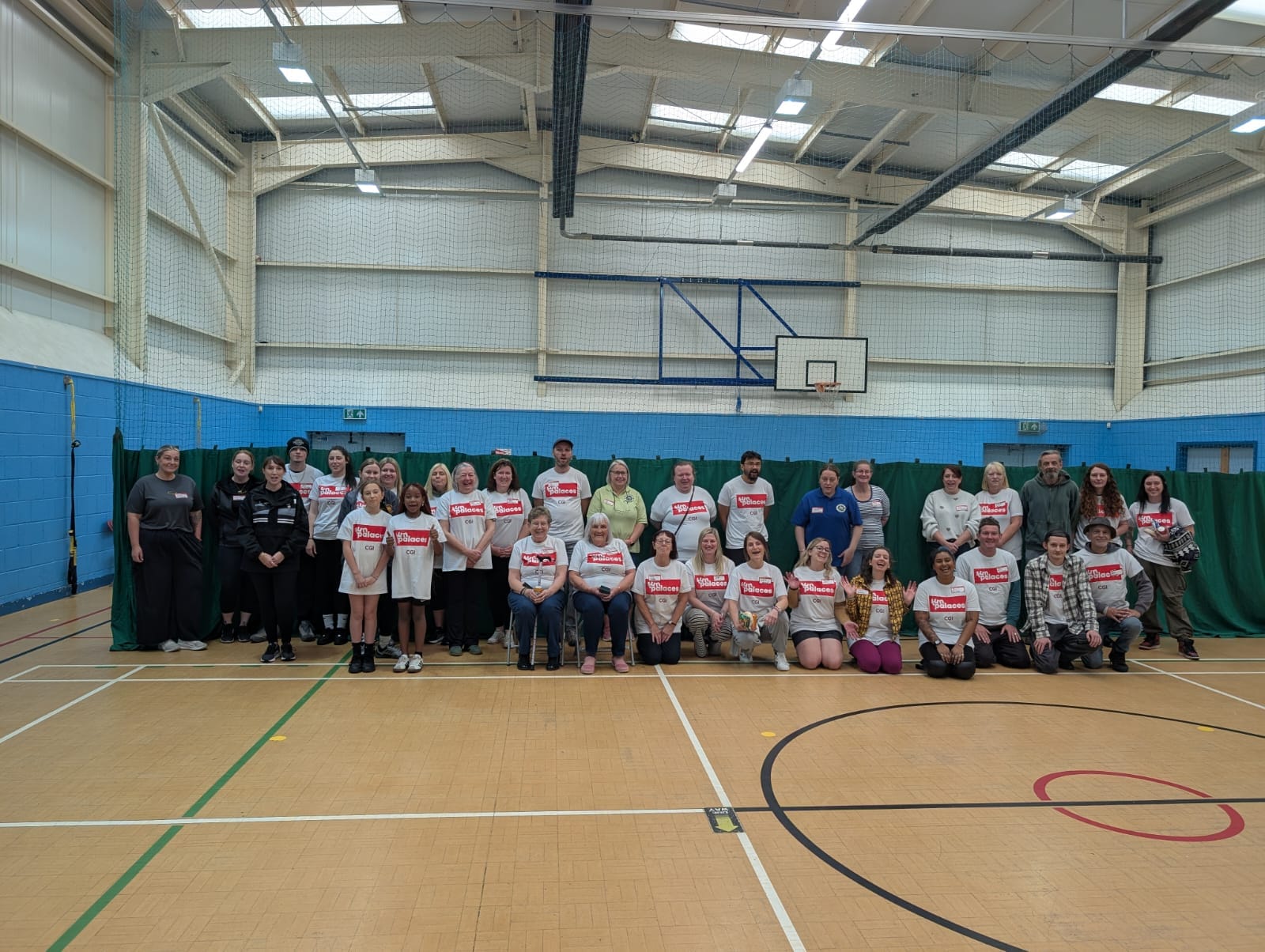
Over three hundred came through the doors of the Garw Valley Life Centre, helped along by forty-two volunteers from the community. Between them, they did hula hooping and macramé, took rides on the heritage railway that enthusiasts have been patiently rebuilding up the valley, learned a little British Sign Language, danced, jammed and followed a scavenger hunt to a locked suitcase someone found going free on Freecycle. The macramé was made from offcuts of cord one of the Makers had at home; the leftover cord went onto the craft table; the plants came from people's own cuttings.
“We had elders in the valley, the youngest of the valley, everyone in between. We had people who grew up in the valley and never left. We had people who’d grown up here and then returned. And then people who didn’t grow up here as well.” - Abi and Laura, Cwm Garw Makers
Notice what they did not do. They did not build a community centre, and they did not wait for one to be funded. They took a building that already existed and, for a day, changed the terms on which people were allowed to be in it; from clients of a service to authors of an afternoon – a transfer of trust.
The law can transfer a deed
Which brings me back to the keys. In April the English Devolution and Community Empowerment Act became law, and with it a Community Right to Buy: when the pub, the shop or the community centre a place loves comes up for sale, local people now get first refusal. This month the government put £61 million behind it, aimed at exactly the buildings that have been hollowed out, and the minister talked of doing politics with communities, not to them.
It is a good sentence. The people at Locality and across the community power movement who fought for that money should take the win and I am glad the law has caught up with the feeling.
For what it is worth, though, it is an English law, and it will likely not reach the Garw Valley or the north Antrim coast at all. Abi, Laura, Gemma and the others were never waiting on a statute passed in Westminster to begin. They did the work anyway.
We must be careful about what a key actually opens. The Act can transfer a deed and the fund can buy a freehold but neither can hand over the thing that was missing on those postcards in Portrush. It was never ownership in the legal sense (the town already owned its town hall), it was permission in the felt sense. It is the core belief that you are allowed to walk in and make the place yours.
In the technology sector, there is a clear distinction between open-source and open-washing. You can publish your code for the public to see, but if the core team rejects every community contribution that doesn’t fit their exact, pre-planned roadmap, you haven’t handed over anything. Physical infrastructure suffers the exact same delusion. You can hold the deeds to a building and still run it as a service delivered to a public imagined entirely as customers. You can programme every hour of it from the top and keep your neighbours as mere visitors in a room they technically own. The harder transfer (the one no statute can compel and no fund can purchase) is the one that happens after the keys change hands.
The unease is the signal
Here’s where it gets uncomfortable.
If the spaces already exist, and the broken part is our relationship to them, then the people who have to change are not the communities. It is the institutions and the office-holders who hold the keys. Handing over a building you are responsible for is genuinely hard, in ways that are easy to mock but require taking seriously. There is the insurance question, the safeguarding question, the who-pays-if-it-breaks question. There is the deeper fear, the one nobody minutes at the board meeting: the fear of the wrong people turning up, of the event being not quite what you programmed, of losing the feel of the room.
Every instinct an institution has been trained into, to plan, to curate, to manage risk, and to deliver a service, pulls aggressively against simply opening the door and letting a place decide for itself what it wants to be that day. Urban planners talk about desire paths: the dirt tracks people wear into the grass because the paved route doesn't serve them. Communities have always walked their own desire paths through our civic infrastructure, ignoring the prescriptive programming to find the connection they actually need. Institutions hate desire paths because they look messy and out of control.
The people who find handing over the hardest are very often the ones, like me, who believe in it most sincerely. We say the community knows best and then we write the risk assessment, choose the activities, and make quite sure, by a hundred small managing reflexes, that the thing turns out close to how we pictured it.
Handing over is the strict discipline of not doing that. It is the discipline of letting the macramé be made from whatever cord is in the house.
That unease is not a problem to be smoothed away before the handover can happen. The unease is the signal that a real handover is happening at all. If giving over the space costs you nothing and frightens you not at all, you have almost certainly kept hold of the thing that mattered – the right to decide what counts – and handed over only the room. A key is only meaningful if the person who held it can no longer lock you out.
A door, not an afternoon
It is tempting to file all this under the “soft stuff”: a pleasant community afternoon, a nice-to-have.
It is not soft.
Dr Katy Pilcher, a sociologist at Aston University, carried out research with our Fun Palace Makers, spending time with them and working alongside Swell as part of this. She found that taking part in creative activity with your own community is not an endpoint, but a doorway. People who start by making a placard or running a craft table go on to get involved in the structural issues facing where they live. They speak up. They join the boards, committees and campaigns that actually decide things.
The afternoon in the town hall is catalytic. It is where a person discovers, often for the first time, that they are allowed to act on the place they live rather than only live in it. An institution's willingness to hand over its keys is not a community-engagement nicety to be measured, logged and reported. It is one of the crucial hinges on which the larger question (who gets to shape public life at all) actually turns.
Turning the key
I am sceptical of the part of our movement that is forever about to build the thing that would finally let people in. Some new space, some new platform, some new structure, sitting just over the horizon, waiting on the next round of funding.
Meanwhile, the town hall is dark, the welfare hall is hired out by the hour, and the library’s community room needs booking three weeks ahead by someone with a large amount of public liability cover. The dream of a free, open, undemanding place to be together is not waiting on bricks, or even, mostly, on a Right to Buy. In Pontycymer they were holding the dances in the ambulance hall the whole time. In Portrush, the wildest dream of the town was its own town hall with the lights on as a place to gather as a community.
The keys, it turns out, were always in the door. The only question I find interesting anymore is whether the people holding them can bear to let someone else turn them, sit with how exposed that makes them feel – and call that feeling not a warning, but the work beginning.
Follow Fun Palaces on Instagram, and connect with Orla on LinkedIn.