Value for Trust
How we must urgently reframe our view of value

Last week Alex threw a particularly gnarly gauntlet at me. In his piece Another Economy is Possible he said:
“One of the central questions of the conversation about the economy and perceptions, narrative and stories, is: who gets to define value?
I’m raising this question … to prompt our Charlie into writing the newsletter piece he’s been threatening to do for a while, on how we can replace the concept of “value for money” with a better metric for the way we interact with one another: a “value for trust”. (Part of our “love is the work” series.) Come on Chazza!”
Thanks Alex 😬. Like I’m qualified.
But in the spirit of the Exquisite Corpse, here goes.
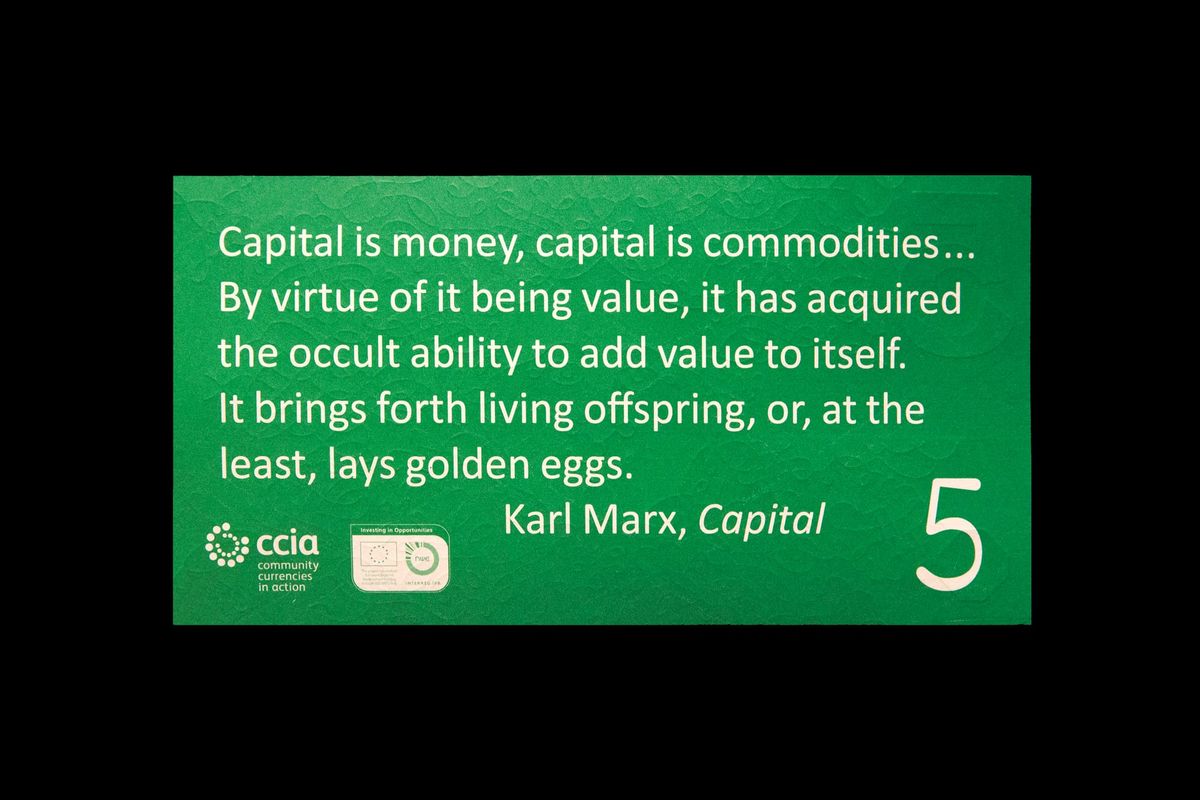
For me all this starts (what doesn’t?!) in Brixton, with two instances of what I can only describe as everyday magic. Both involving the Brixton Pound, the local currency I was involved in for over ten years, helped design with Clive as part of This Ain’t Rock’n’Roll, and collaborated with Jeremy Deller on. You can read about some of it here in the New York TImes (gift link).
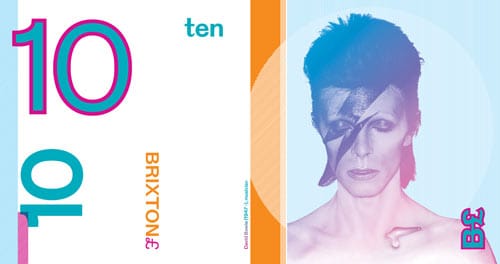
Magic Instance #1. I order a drink at The Windmill, Brixton’s legendary music venue, paying with a hot-off-the-press B£10 note, the one with David Bowie on it. The woman behind the bar takes the note, examines it and says (something like) “what the fuck is this??” I tell her it’s a Brixton Pound, and that I’m pretty certain The Windmill is one of the (200+) local businesses that accept it in lieu of the money with the rich woman’s fizzog on it. Could she check with the landlord? To which she replies “well, it looks like the kind of money we should be using” and gives me my pint, and my change.
Magic #2. The Brixton Pound has just launched a(n actually quite groundbreaking) pay-by-text service, and I’m in the wine shop in the market. I hit send on my phone, and… nothing happens. The bloke in the shop says “oh, there’s no reception here, but I saw you send the text” and I walk out with my wine.
Two purchases, two acts of utterly banal everyday magic. The Windmill hadn’t signed-up to the Brixton Pound it turned-out, and who knows whether my text ever reached the bottle shop – but the ‘transactions’ happened nonetheless. Not like they’re supposed to though – in real time, with real money as guarantor of value. No, reality juddered in that moment: a kind-of not-quite occurrence that brings to mind that brilliant Ursula K. Le Guin quote Alex referenced last week:
“The exercise of imagination is dangerous to those who profit from the way things are because it has the power to show that the way things are is not permanent, not universal, not necessary.” A War Without End, 2005.
What happened in those two instances was value was mediated not by money, but by TRUST.
But even using the Brixton Pound in a shop that knew it accepted it was magical – because when you’ve bought a real thing from a real person in a real shop with money that look as unreal as this:
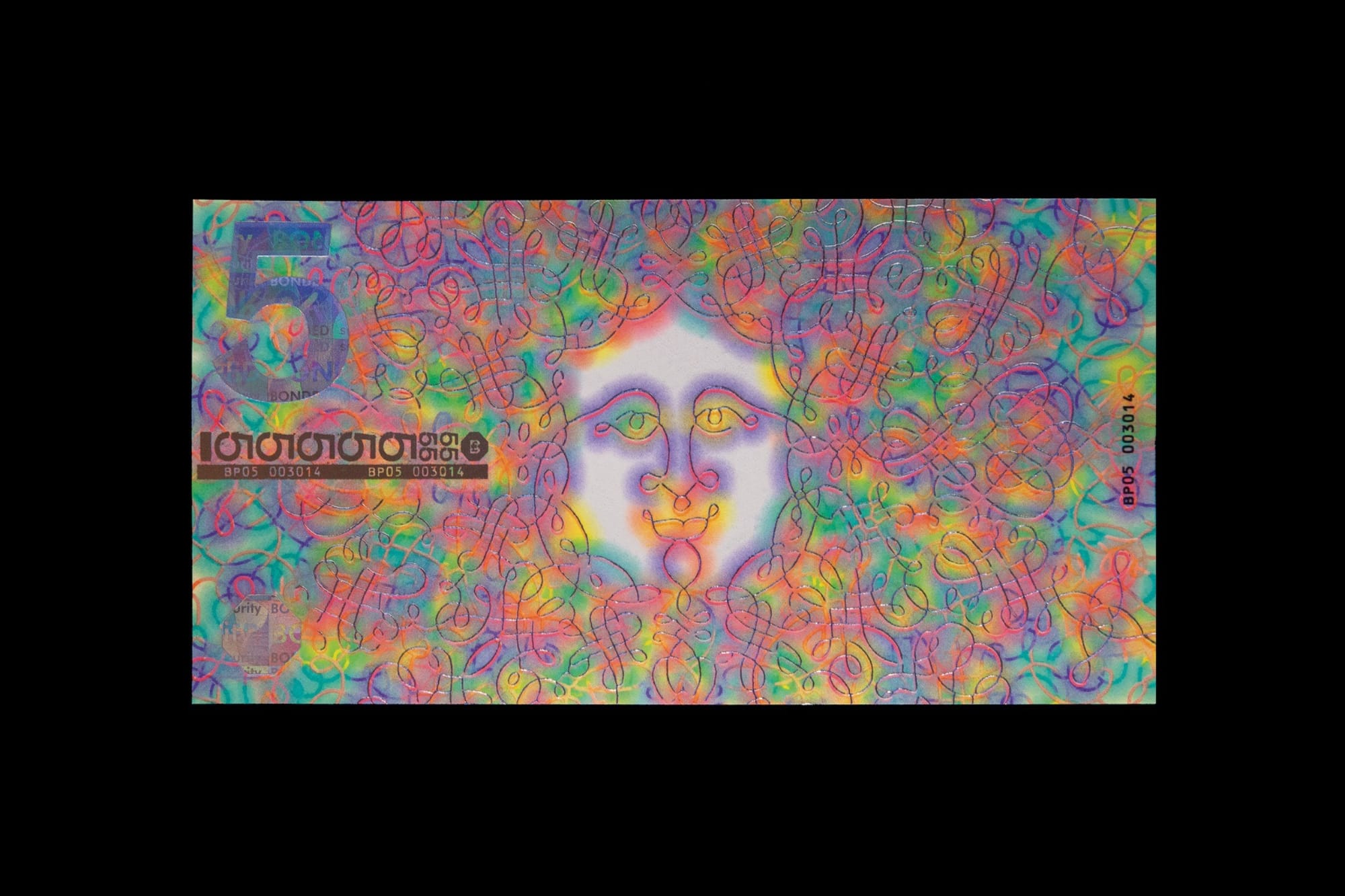
… you have to ask yourself what else is possible?
Now, you may well be thinking: d’oh Charlie, even ‘real’ money doesn’t actually exist. It’s a shared delusion, created by banks to profiteer off the collective human madness that is the simultaneous belief in interest-bearing-debt. Or something.
But to me, that’s the very Emperor’s New Clothes beauty of something like the Brixton Pound. Not (as envisaged by its economically-minded founders) a technical tool to provide ‘competition’ to fiat currency, but as something so obviously made-up it can highlight the similarly made-up nature of the thing that’s shit.
And count the ways that money is shit. In no particular order, here are mine (you will have many more, of course):
- In the UK our banknotes have a picture of the brother of an alleged paedo rapist on one side, and on the other (on a fiver) a man who helped starve millions of people in India and turned a blind eye to police brutality against the Suffragettes
- And they’re plastic
- A tiny proportion of people have almost all of it, at the expense of almost all of us
- Of the rest of almost all of us, fucking Boomers have most of what’s left, which means that soon Millennials will when their parents peg it
But the very worst thing (even worse than the paedo rapist or the Millennial thing) is that we cannot collectively get our head round how to not use money as the ultimate measure of the value of almost everything. It is quite literally where the buck stops.
So in fact, the very very worst thing about money is these three words:
Value for money.
The world is so tired of shit like this: “Staffordshire councils agree joint pledges focused on value for money and waste reduction”.
Or Rachel Reeves setting up an actual Office of Value For Money – as if governing a nation was a cosplay version of shit BBC Ann Robinson-fronted consumer programme Watchdog.
Because when you think value for money is a valid way of navigating the world, you think that stuff like this is basically acceptable:
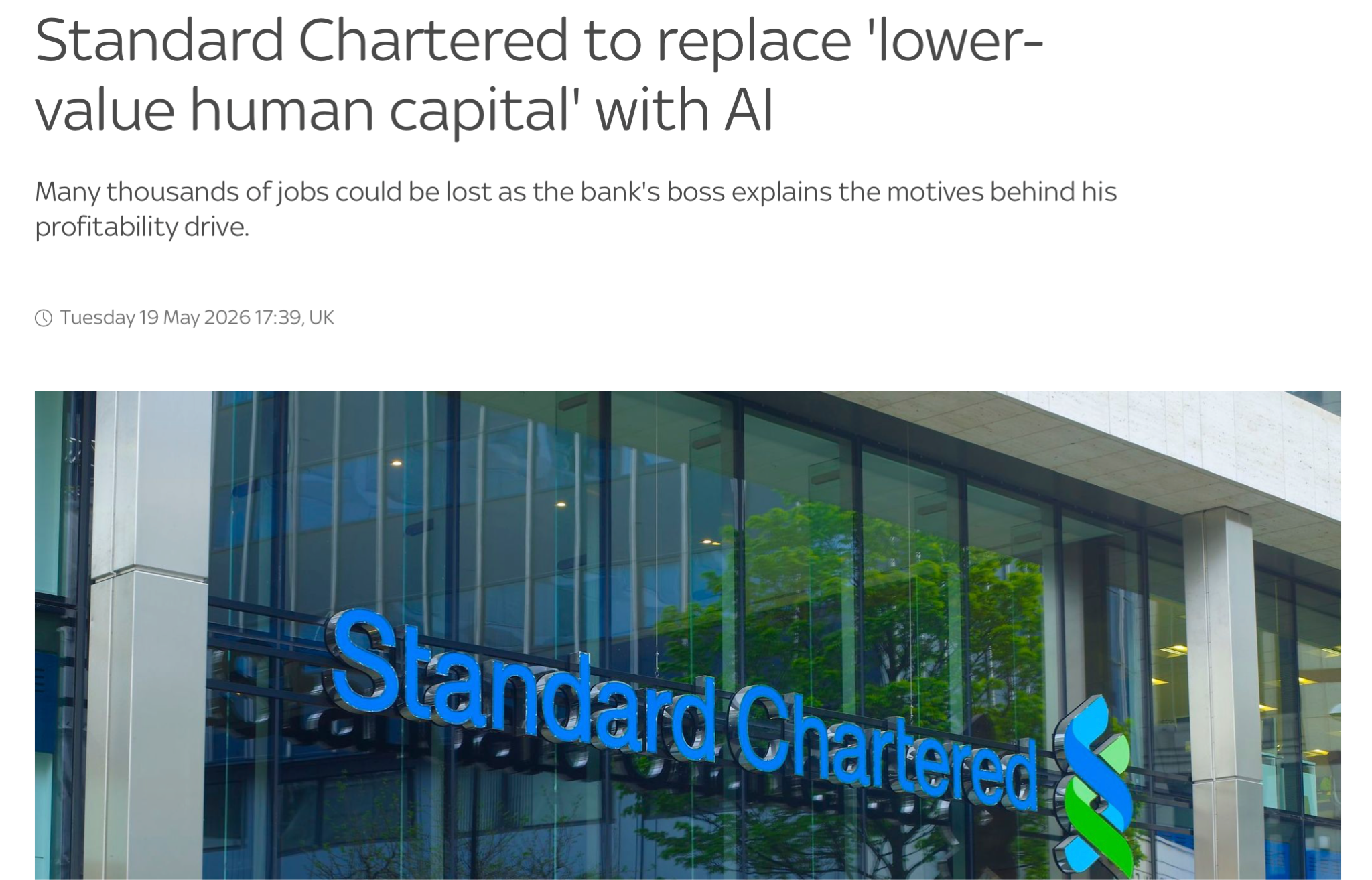
“Lower Value Human Capital”. By the way: that’s you and me, even if the arseholes in Silicon Valley and The City of London haven’t totally worked out how to make it so for your industry yet.
Remember that the next time you boot up Chat GPT to train it some more.
Two people I wish wish wish weren’t dead are David Graeber and Nigel Dodd. Readers of these parts need no introduction to the former, but Nigel was Professor of Sociology at the LSE, and author of the ace The Social Life of Money. I’d’ve definitely called him to help write this article. Actually, I’d’ve asked him to write the article. He totally understood how you cannot separate economic value from societal and cultural value – and that the latter two are the most important metrics.
I remember him talking about alternative currencies, and how there was an academic in Scandinavia who wanted to create one out of hugs. How he thought that Prêt A Manger allowing their staff to give free coffees to whoever they liked was the greatest monetary innovation, because the worth in kindness of such an act way outvalued the monetary loss/gain between parties. It’s the kind of view of value we’re really looking forward to exploring with the Bureau of Silly Ideas and their not-so-silly-idea of smiles as an impact currency.
And of course David too, with his premise that we need to replace the relation between Production and Consumption with Care and Freedom.
Because that IS what we need to do, right?
At the risk of unhelpfully paraphrasing Marx, Graeber et al, money has become not simply a tool, but the end in itself. It has shifted from something that enables, to something that (for the vast majority of people) actively disables.
It’s not up to the job of defining value any more.
So, 1100 words in: it’s time we started talking about value for TRUST.
Because if money demands certainty and replicability, TRUST helps us cope with what’s actually happening in the world: uncertainty and change.
And where money constructs walls and separates people to protect the few, TRUST builds bridges and provides refuge for the many.
As we live through the very end of the Darwinian con trick, we can begin to see this much more clearly. It was never actually survival of the fittest: that was merely the illusion of the most monied, at the extracted expense of us all. As the Musks and the Thiels turn their monetary value into rockets and bunkers we see ever more starkly that what the rest of us require at pace is the value of trust.
And while I realise that this might look like stating-the-bleedin’-obvious, and that Bigger Brains Than Mine will paint the myriad ways such a position is ‘not that simple’, please spare me. Because (here in the UK at least) we’ve been happily living in a world defined by necrotising platitudes like ‘it’s the economy, stupid’, ‘there’s no magic money tree’ and the idea that the world can be run like a household, for decades. Value-for-money bullshit peddled by people who rely on their sleight of hand going unexamined, while they shovel as much ‘value’ into their own troughs as possible. People, and systems who have long since lost our trust.
But what might a shift from money to trust as a signifier of value look like?
For us at Absurd Intelligence it means embracing failure as a very real prospect, and not letting it stop us for a moment. Being guided by virtue ethics over utilitarianism. It means happily giving trust, without any requirement for that trust to be first earned. It means giving things away at every opportunity.
Of course, we exist in the ‘real’ world too – we have to put food on the table. But a bit like the legendary Ian MacKaye of Fugazi and Dischord Records “our point was never to smash the label system, our point was to make our own world”; moving from a value for money frame to a value for trust one doesn’t mean you have to disavow all money.
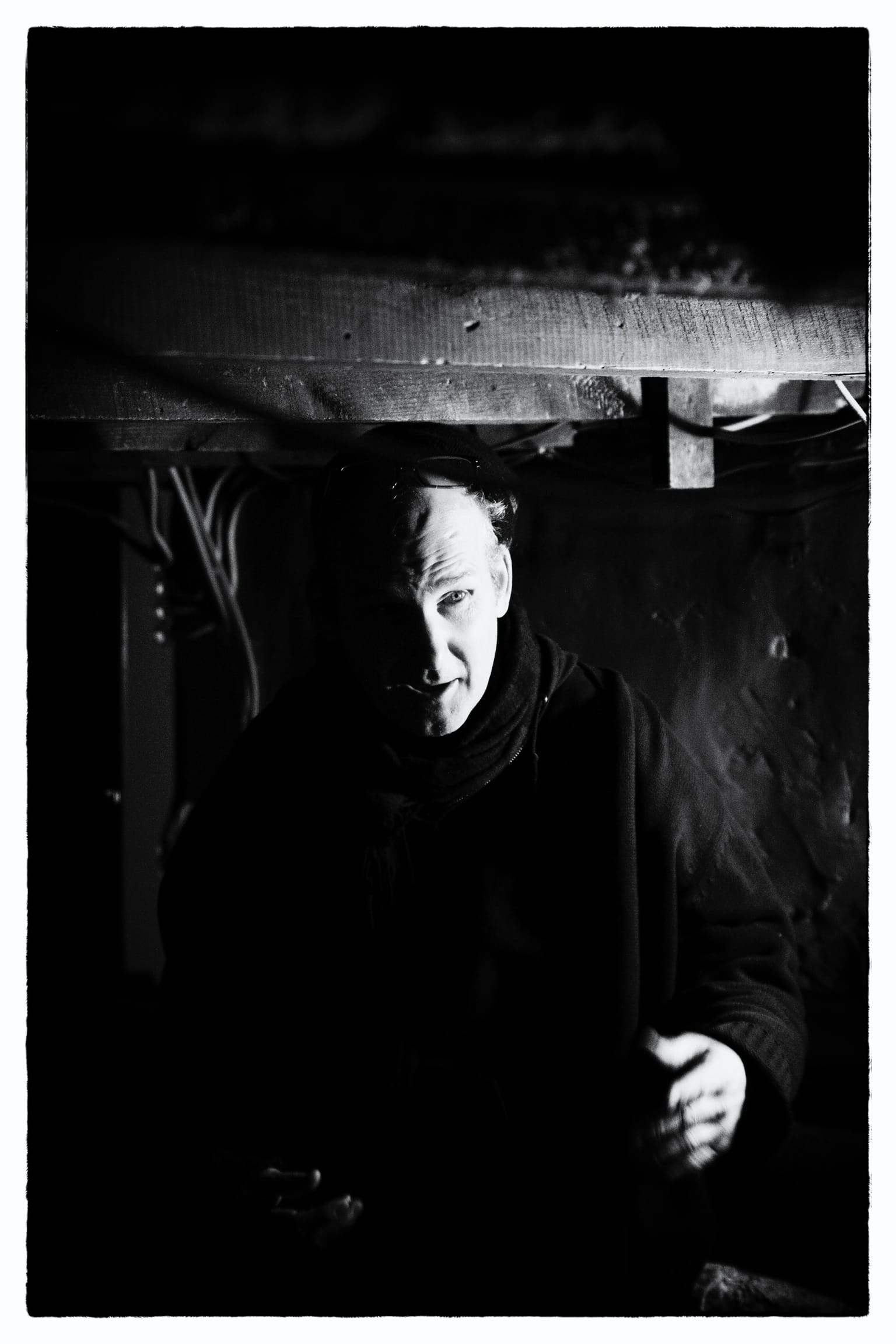
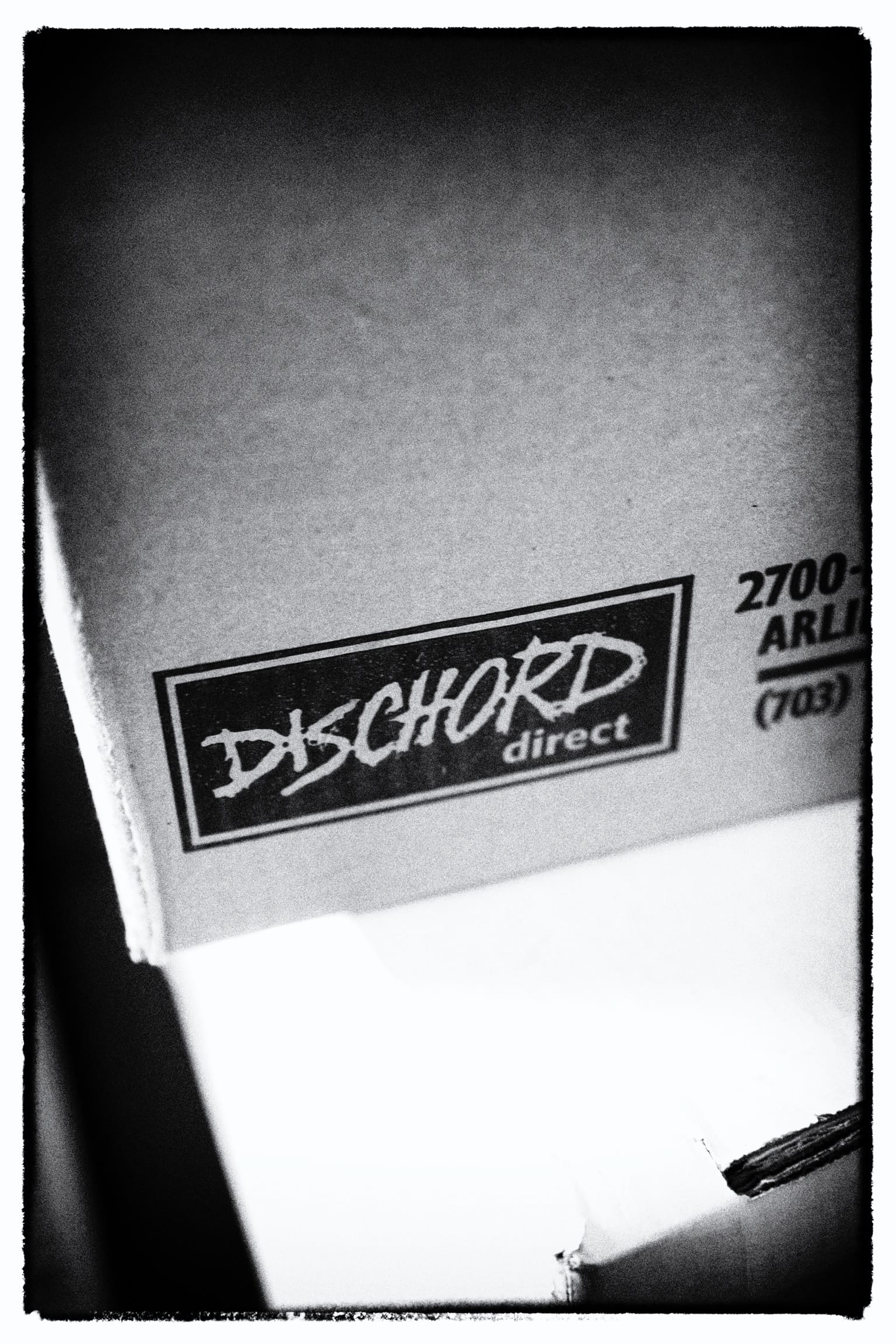
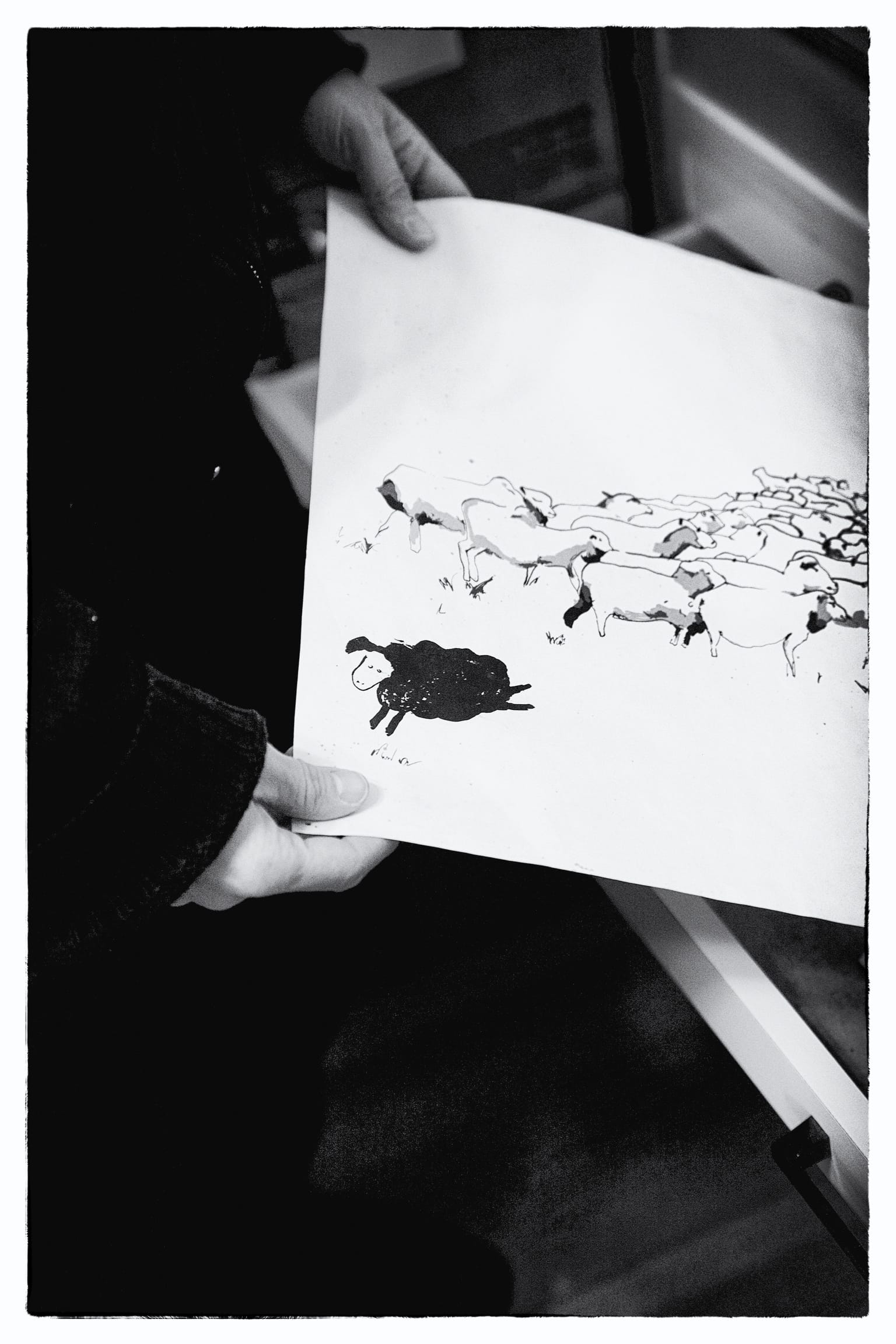
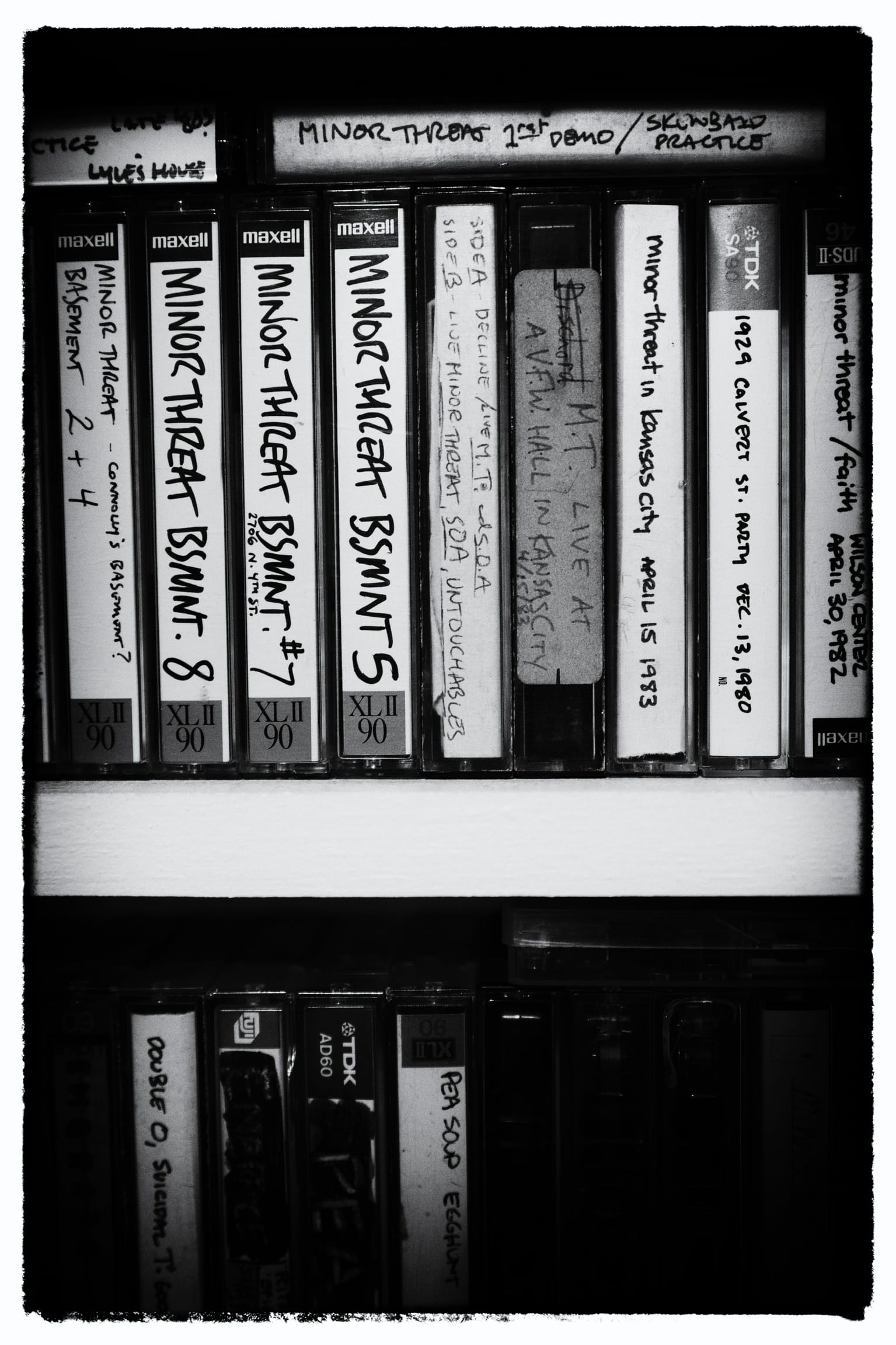
Ian MacKaye, Dischord House, Washington DC (Images: Charlie Waterhouse)
Interviewing Ian for The Truth of Revolution, Brother gave me a glimpse of what an ‘own world’ might look like. No contracts or lawyers – agreements made with handshakes and enormous generosity. Gigs that are always All Ages. No merch (make your own Fugazi t-shirt!).
Ian’s is a world unrestricted by superfluous crap. Squint, and it looks like anywhere else; embrace it though, and it feels like love.
Make a world where love is the work, and everything changes. It transforms our notion of Return on Investment. By building on foundational values of trust – where money reverts to a functional, enabling (not valuing) purpose, the creation of alternative realities becomes beautifully attainable.
Alex wanted me to say this again so it gets the emphasis it deserves:
where money reverts to a functional, enabling (not valuing) purpose, the creation of alternative realities becomes beautifully attainable.
Money as enabling, not valuing.
So something as mundane as the Brixton Pound – no more than a voucher scheme in unimaginative analysis – or something as transgressive as burning money – is making that world.
It is realising what we can do, by doing it. (Thanks Lotte L.S.)
In the collaborative spirit of the Exquisite Corpse, and in the absolute knowledge that this newsletter has questions but no answers, who else is up for making a world where value is measured not by money, but by TRUST?
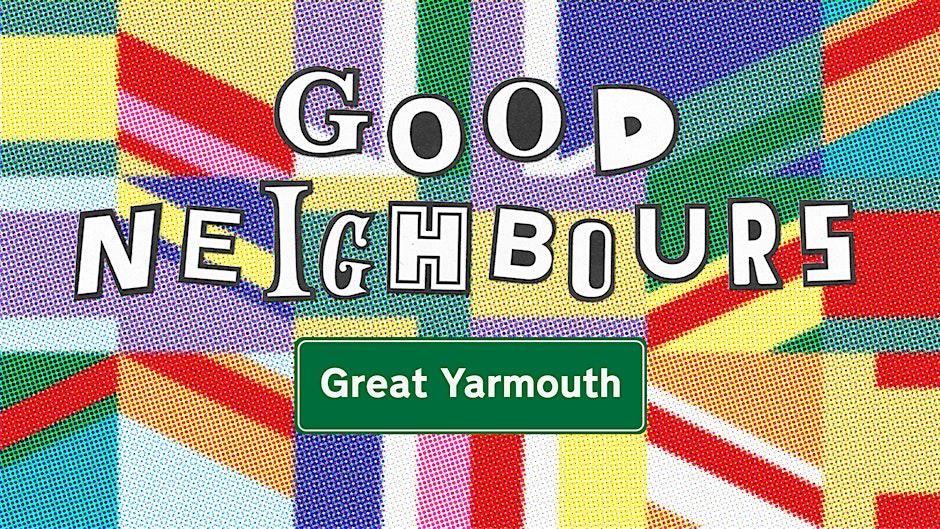
Good Neighbours
at the Out There Arts Festival! Friday 29th May, 6pm
Join us in Great Yarmouth as hosts Clare Farrell and Jessie-Lu Flynn welcome a bunch of neighbourly local artists, community organisers and amazing people who all make Great Yarmouth, err, great!

Elsewhere in Absurdity…
Charlie went to Norwich Transformed for a panel on Who Controls Culture? with Rae Jones from Outpost Norwich and Julia Devonshire of originalprojects. Ash Sarkar was the keynote. She’s way funnier than on Question Time.
Diya kept up her reputation as hardest-ligger in the office by travelling to Bristol to see Mitski.
Alex has spent most of the week talking.
David lectured at the Ecological Economics module at University of Surrey, workshopped city-scale adaptations at Chatham House and learnt about the Mining-Industrial Complex.
Clare wore her climate action expert hat at a Swiss Cottage climate assembly.