Are we saving the world yet?
A guest post from Anthea Lawson, whose new book How Not To Save The World offers antidotes to common pitfalls of change-making and activism.

The phrase ‘saving the world’ doesn’t mean much, does it? A headline writer’s shorthand; a casual locution that can indicate a wide variety of doing-good-type activities; a figure of speech in which ‘world’ represents whichever kind of doing good we are referring to. I would hear ‘Oh, you’re off saving the world, are you?’ if I was going on a protest, or working to get a law changed, or planting trees on a permaculture project. In my experience it is used more by people who aren’t involved, than it is by those who are actually trying to make change, or trying to help those who need support.
Nor is it used literally: nobody in their right mind thinks that they are actually going to save the whole world. Yet that expression has hidden power. I think its persistence is a symptom of an unconsciously-held social script, one that shapes our understanding of how doing good should look and sound. After three decades of activism, I often see this ‘save-the-world’ script running under the surface, whatever the issue people are working on.
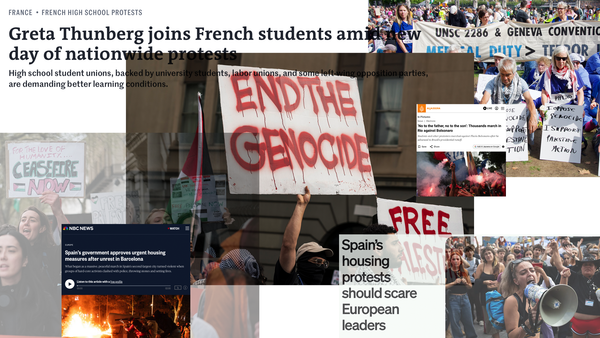
The script calls us into righteous battle with the forces of evil, telling us we must be heroes or that we cannot rest. It tells us that because we are good and fighting for the right cause, our opponents – or even just those who are not fighting alongside us – are wrong or bad. It tells us that our role is always to protest. It calls on us to patrol the boundaries between who’s in and who’s out, and to make things pure. It tells us that we know the answer, and that if we have some privilege while others are struggling, our role is to save them.
If you’re already thinking, ‘hang on, I don’t do any of that!’, let me add: this is not conscious. Some of this script derives from our shared human psychology and the risks of heroic inflation, and of ‘othering’, that are recognised in many mythic and wisdom traditions across cultures. But the script is also rooted in the dominant culture in Britain, which has been shaped by centuries of class and empire.
I have worked for human rights groups including Global Witness and Amnesty International and have seen the script in operation there. But I have also seen it in in community groups, grassroots campaigns, big charities, small charities, service delivery, climate protest, within the Labour Party and on the wider left, among people who love calling themselves ‘activists’ and those who resist that label and try to act simply as citizens. We’re not all running all of the script all of the time. But many of us (and I am no exception) find ourselves acting out parts of it.
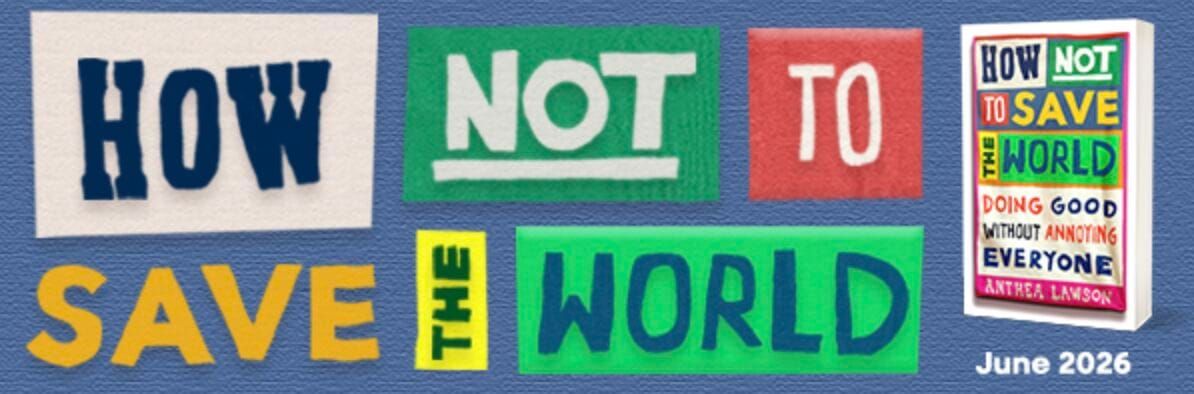
The title of my new book How Not To Save The World is a nod to the casual use of that phrase. I’m suggesting that there are better ways to try to do good that can avoid some of the pitfalls.
I also wanted to point to the very idea of ‘saving’ being unhelpful, and that’s because the script works, too, in its inverse, helping to keep people away from even trying to work for change. Everyone can read what the script is saying – sometimes better than the self-declared ‘activists’ can – that if you’re not good enough, you can’t take part; if you’re not vegan, you can’t talk about the climate; if you don’t have lived experience of precarity, better to keep quiet and leave the work to those who do. I wanted to find alternatives to that script so more people might see themselves taking part, helping to build the world they want to live in.
I had nearly finished writing the book before I saw clearly how the script is also in operation among insurgent movements on the other side of the political spectrum. It’s in the go-to-Mars heroism of the tech bros, AI boosters and hyper-scaling effective altruists. Closer to home, in the high-street political-conversations project I’m currently involved in, I encounter plenty of Reform UK zealots, and they demonstrate it too. There is talk of saving the country, there is moral righteousness, there is talking-at rather than listening, and anyone who speaks against the project is turned into an enemy.
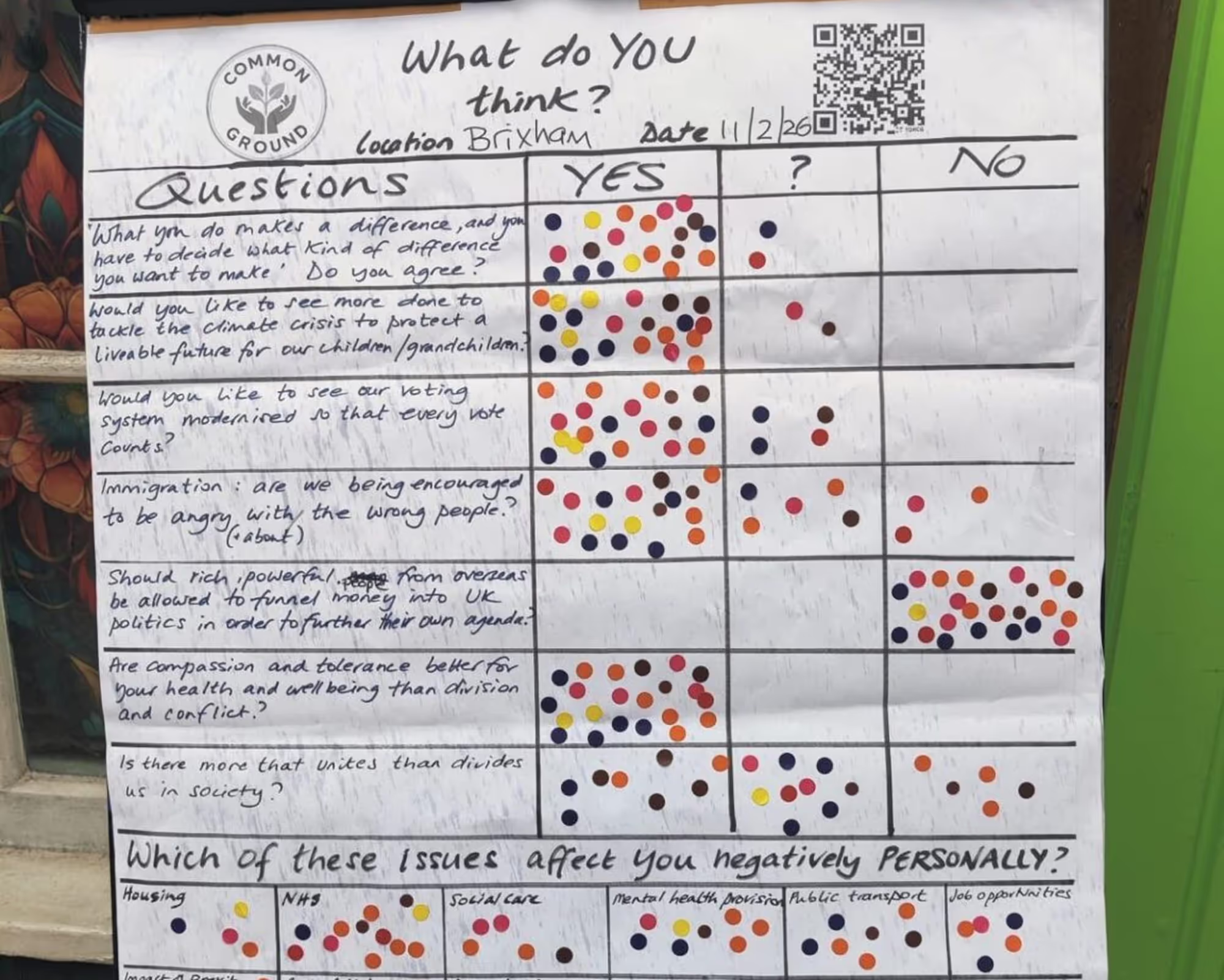
That said, the right is often better than the left at communicating with people so that they feel heard, and I think the save-the-world script has particular manifestations among those fighting for progressive and compassionate futures. This is why I have been thinking about whether those of us who want a more just world might become more effective if we could get over ourselves a little.
In calling us to act in times of urgency, the script does name some truths. We do need to act, because the situation is disturbing and will worsen without intervention. Fossil fuel interests are fighting dirty to avoid giving up their short-term profits, even if that condemns humanity’s future and is already harming those least responsible for climate breakdown. Far-right authoritarians are using division, racism and misogyny to obtain power that they can use to enrich themselves and their billionaire friends. Both of these threats to flourishing life are features of capitalism, not anomalies. So if we want a world in which people and nonhuman species can thrive, we do have a fight on our hands. Brave people have always had to protest in order to win the rights that we have. This is not a play-nicely-and-be-polite manifesto.
As an experienced campaigner I am also interested in good strategy, however, and while on the progressive side of things the save-the-world script can help to fire us up and make us feel morally invincible, it can also get in the way of strategy.
When we think we are on the side of good, it is tempting to moralise, but this does not win over the people who feel judged by it. Providing information, which is what we often do when we think we are right, does not on its own change minds. Boundary-policing does not help to build teams or coalitions. Approaching those who are struggling with an attitude of saving, heroism or knowing-better does not create the solidarity which helps us to stand together.
And the tasks right now are precisely those of standing together, building wider coalitions, winning people round. It’s all very well to say that we need to speak truth to power, and I have no argument with that: we do. But to defeat the far right, build local resilience against inevitable climate breakdown, and create the new forms of democracy that would actually suit a pluralistic post-imperial nation already well into the 21st century, we need to be able to organise with the people around us, in our communities, because that’s where all of those things are going to start – they’re not going to be handed to us from above. And this requires a specific set of capacities.
In How Not To Save The World I draw on conversations with more than a hundred experienced change-makers whom I asked about their antidotes to the classic script. I wanted to report on and share this wealth of experience at a time when many people are becoming politicised for the first time, and when widespread collective action is several decades in the past.
Service and ego-check rather than saving. ‘Bridging’ to those with whom we don’t have shared views on everything, so that we can work together on the issues where we do share concerns. Taming our need to be the one who knows. Building connection, which requires listening, rather than focusing on our individual voice of protest.
To some people, none of these antidotes to the save-the-world story will be big news; these all have deep traditions, or they might be just what you already do. If that’s you: fantastic, and power to your elbow.
For change-makers who might be accustomed to being listened to; for those whose sense of who they are is bolstered by their political commitments; for those who rely on theories of change that involve providing information, or who are more comfortable with ideas of saving and charity than with the possibility of alongsidedness, there may be some self-examination to be done, and in How Not To Save The World I wanted to model how that looks.
Doing paid change work for professional campaign groups gave me a shield of ‘good work’ I could hide behind. It was good work – I can point to treaties I helped campaign for and laws changed in dozens of countries. Those organisations continue to make vital interventions. Yet that shield of good work also defended me from having to investigate my assumptions and blind spots that came, in part, from my middle-class background.
And for years I didn’t want to look within because I feared it might diminish my political reasons for fighting for justice – or, in other words, my credibility. But we are multiple, and our motivations can co-exist. We can be committed to fighting for justice because we care about suffering and it’s the right thing to do. At the same time we can also have been shaped by our experiences in ways that give us certain ideas about what fighting for justice should look like. And our capacity to fight effectively for justice may benefit from reflecting on what those unthought ideas might be.
How Not To Save The World by Anthea Lawson is published on 4 June.
Elsewhere in Absurdity...
As well as a whole bunch of the crew attending Hard Art on Monday for a session on art and politics, including a coffee meeting at the infamous Notting Hill Bookshop Café (infamous for the film, and the tourists who come to get their pics...) we also got out and about building the cultural ecosystem (and just having a good deal of fun):
Alanna and Clare went to see all-female Irish trad supergroup Biird for an enlivening cultural experience – harps, ceilidhs, Irish dancing, mythology and a surprise collab with Kate Nash.
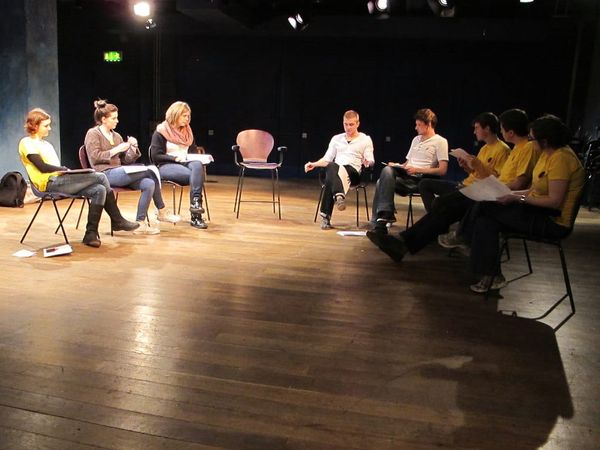
David was on the first residential week of his Ashridge doctorate on how to change the world, using Freire and other foundational practitioners of emancipatory pedagogy.
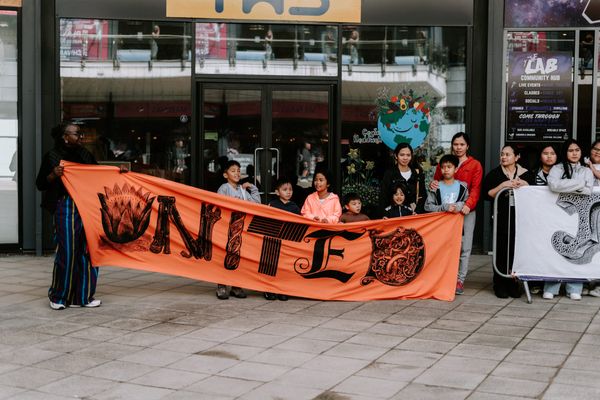
Tracey attended an evening at the Barbican to hear from the Curator of the Project a Black Planet exhibition and season exploring Pan-Africanism; she also followed her passion for large-scale outdoor work on a road trip to Les Machines de l’île Nante.
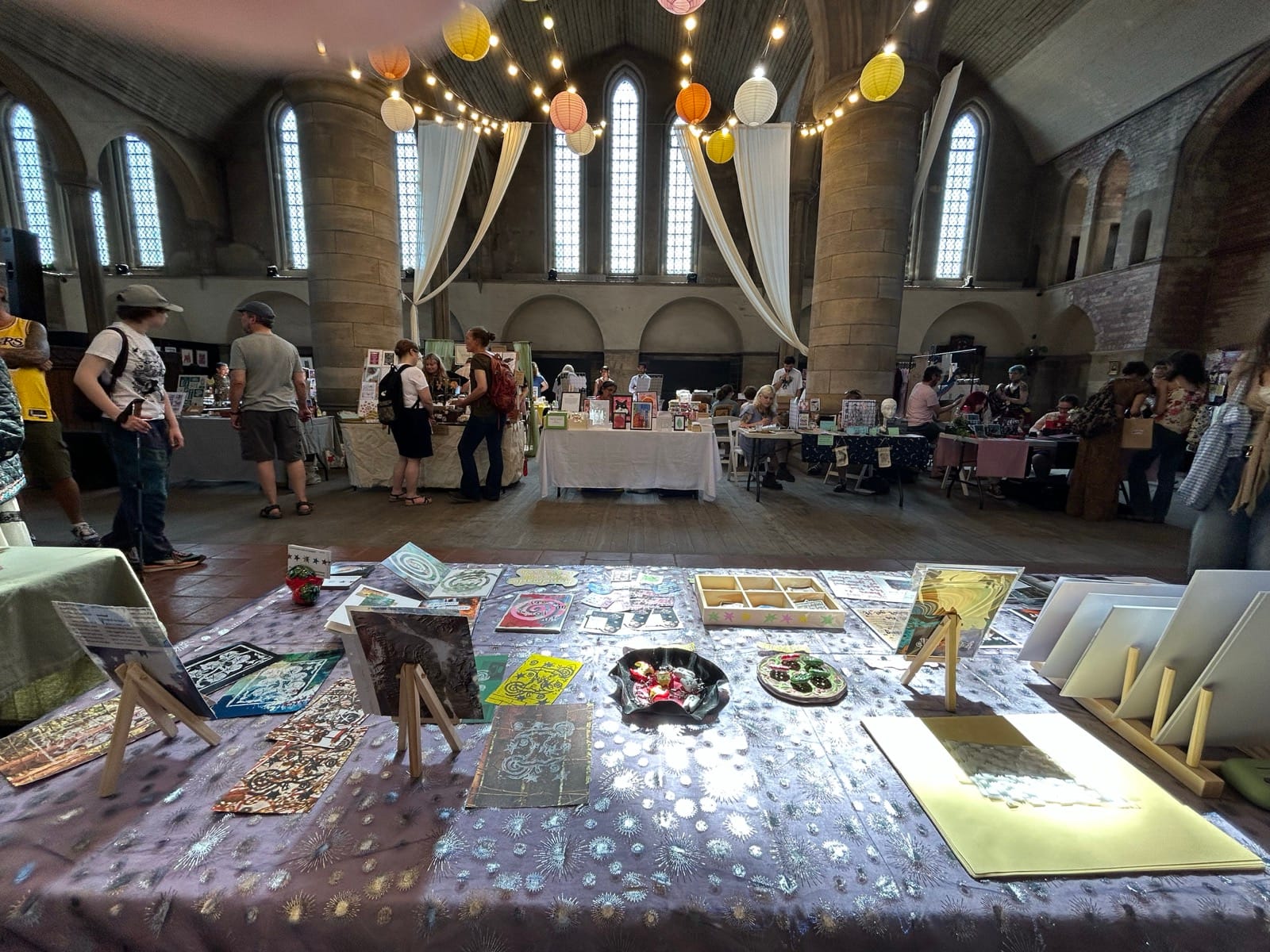
And Diya went to Leeds to put up a stall at a local art market at Left Bank Leeds, in a truly gorgeous venue.