Building peace in the wreckage
In a north Wales horror film shopping centre you can see a new world (that’s as old as time) being made. And it’s beautiful.
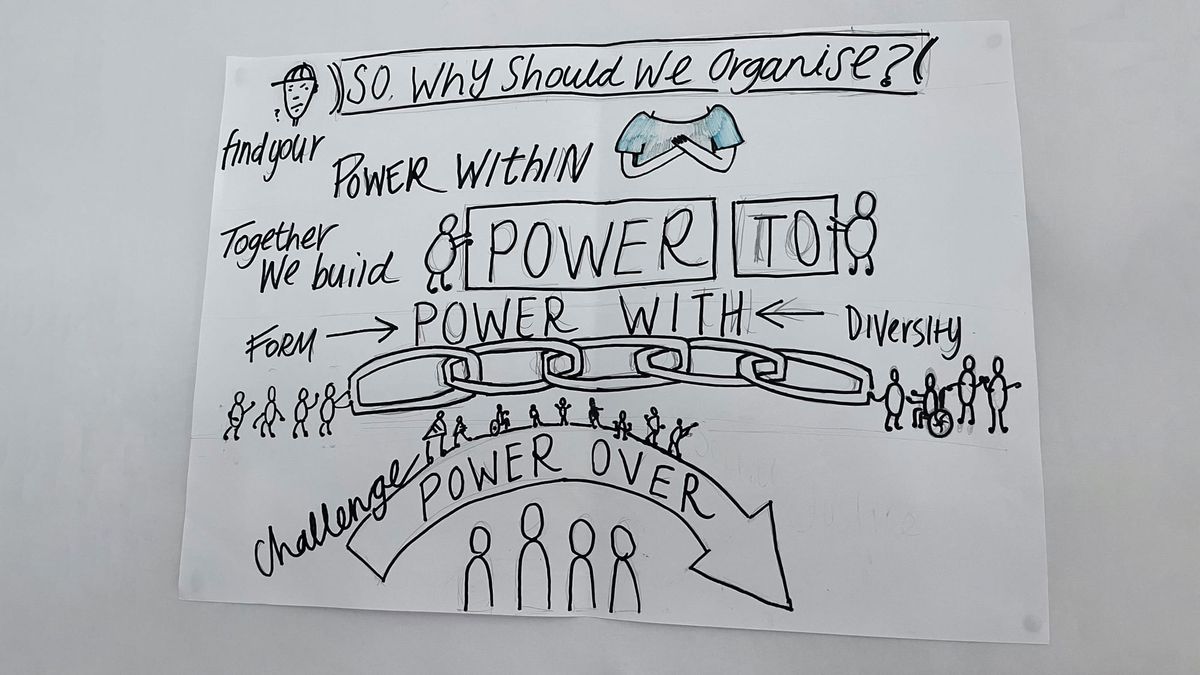
One of the perks of the work we do is that I have the opportunity to travel around the UK meeting brilliant people putting in the hard yards to make the places they live better. Those who are working every day to support their neighbours, while running the community spaces where the magic of building a new world really happens.
They say you can’t fix a problem using the same logic as the system that caused it, but what I have begun to notice is that, in the wreckage of hit-and-run capitalism, communities are able to pick up the abandoned component parts and use them to build resilience in their communities.
What’s also clear is that it’s only possible to build the new world we dream of if we have the time and the space to truly imagine it and then bring it into being. And with such limited access to third spaces, organisers are having to be creative and reclaim the spaces left behind by private enterprise and transform them into community hubs.
This was evident to me when I visited Wrexham recently with the Humanity Project to make a film. As I usually do when visiting new areas, we met a group of incredibly talented, intelligent, and dedicated organisers working bloody hard to make the world a better place every day through community participation and agency. They were from TCC (Trefnu Cymunedol Cymru / Together Creating Communities), an organisation nurturing meaningful connections and fostering a strong, inclusive community. They’re creating space for individuals and organisations to feel a true sense of belonging, while actively engaging in shaping a shared future.
My friend Nick Gardham, founder of Community Organisers, says TCC: “have been the connectivity tissue in Wrexham for 30 years”. They “bring together community leaders and organisations to ensure the decisions taken about town are made in the interests of those who live and work there and have built a powerful alliance that links grassroots organising to public institutions and the Welsh Senedd.”
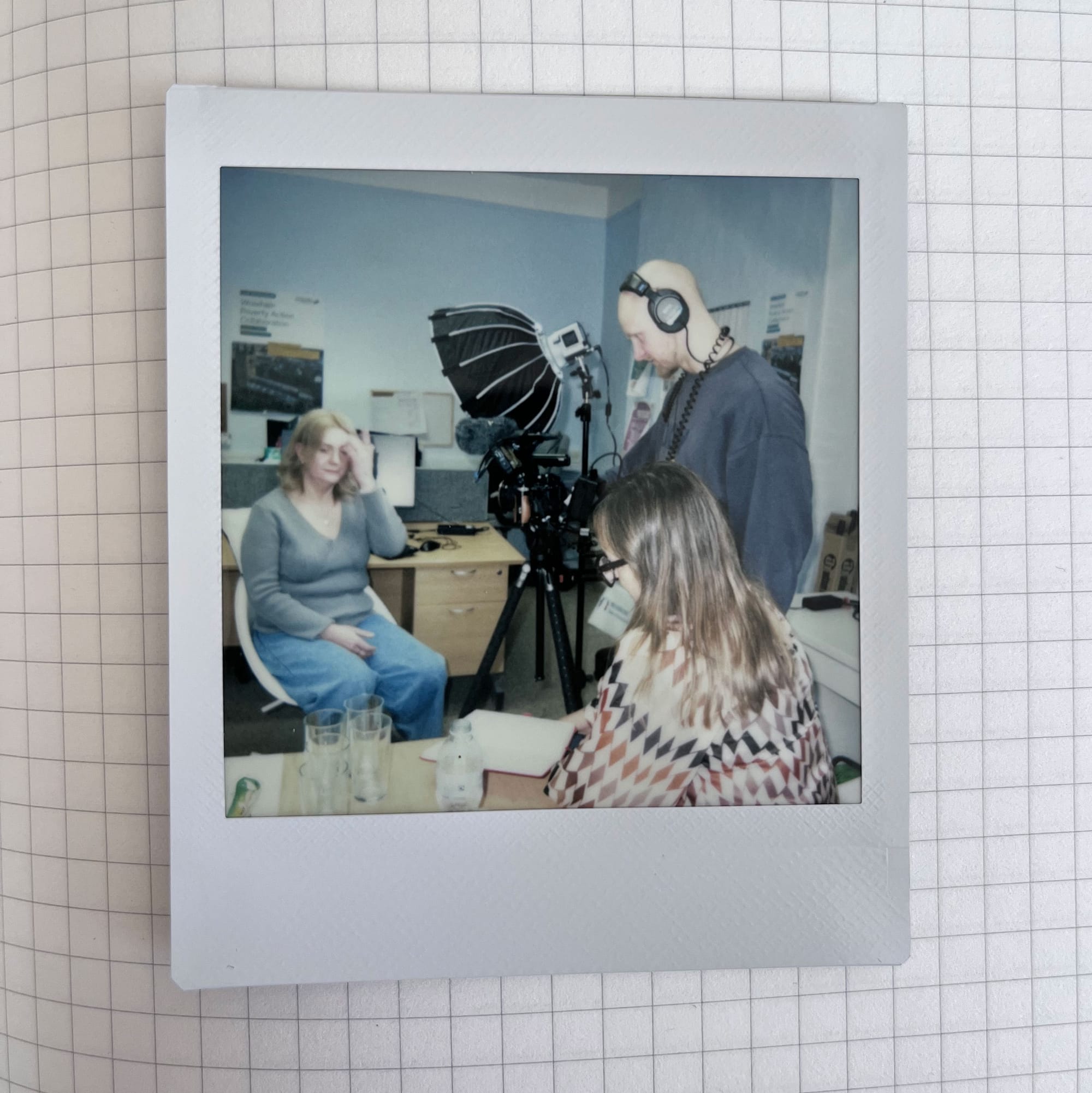
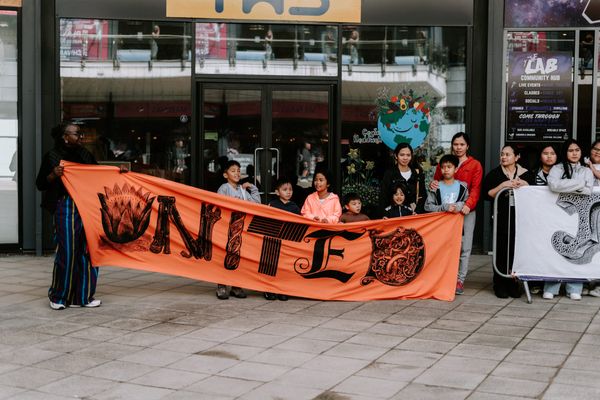
After filming at the TCC offices, we were shown around part of Wrexham and taken to the ageing, half-empty Eagles Meadow shopping centre – better known to locals as "Seagulls Meadow." It didn't take long to understand why. The place felt like a monument to the failures of late-stage capitalism. This vast glass and concrete monstrosity had followed a familiar trajectory: bulldozed into existence in the name of regeneration, demolishing local history, briefly filled with big-name retailers, then quickly abandoned when the profits failed to materialise. A new out-of-town development was the final nail.
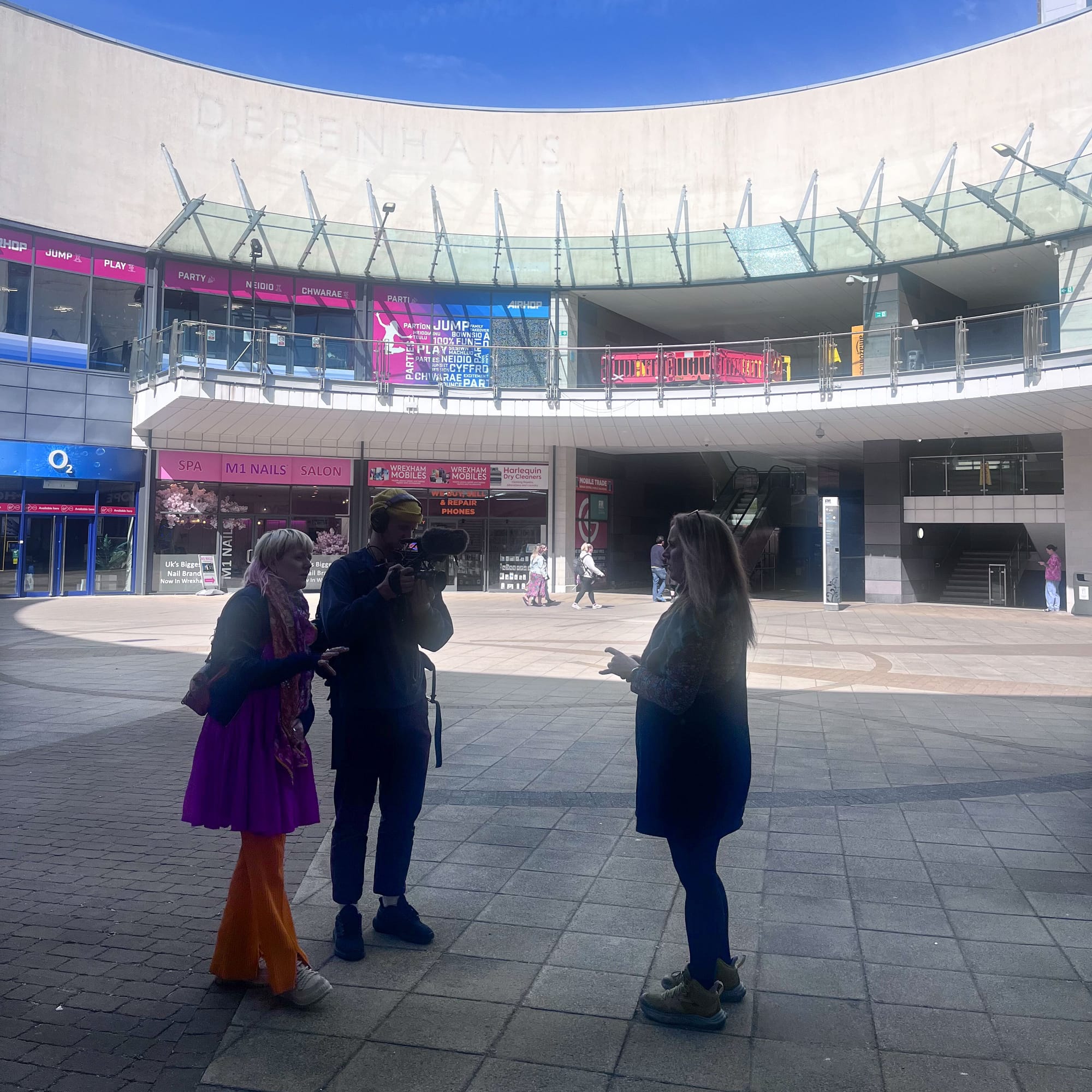
Now it feels like the set of a zombie film – hollowed out, half-dead, but somehow still clinging on. Community radio drifted through the air, broadcast to almost no one. Unit after unit stands vacant. But in several of the now empty shops, people have begun reclaiming the space and former chains have been transformed into community hubs: a homeware shop supporting the rehabilitation of offenders, a large charity shop, and best of all, occupying what was once a Burger King, a peace cafe, where we had lunch. Even in the shell of a failed development, the community is finding ways to make it useful again.
The Peace Kitchen is more than a cafe. It’s a wellbeing hub serving food from around the globe, offering pay-what-you-can meals, and a welcoming, vibrant space for the local and refugee community alike. I had a meal that had been made by the community using food that had been grown at their local growing project. There was world music playing, a swap shop where you could take things for free if you didn’t have the means to pay for it. Otherwise, if you could afford it, there was the option to make a donation.
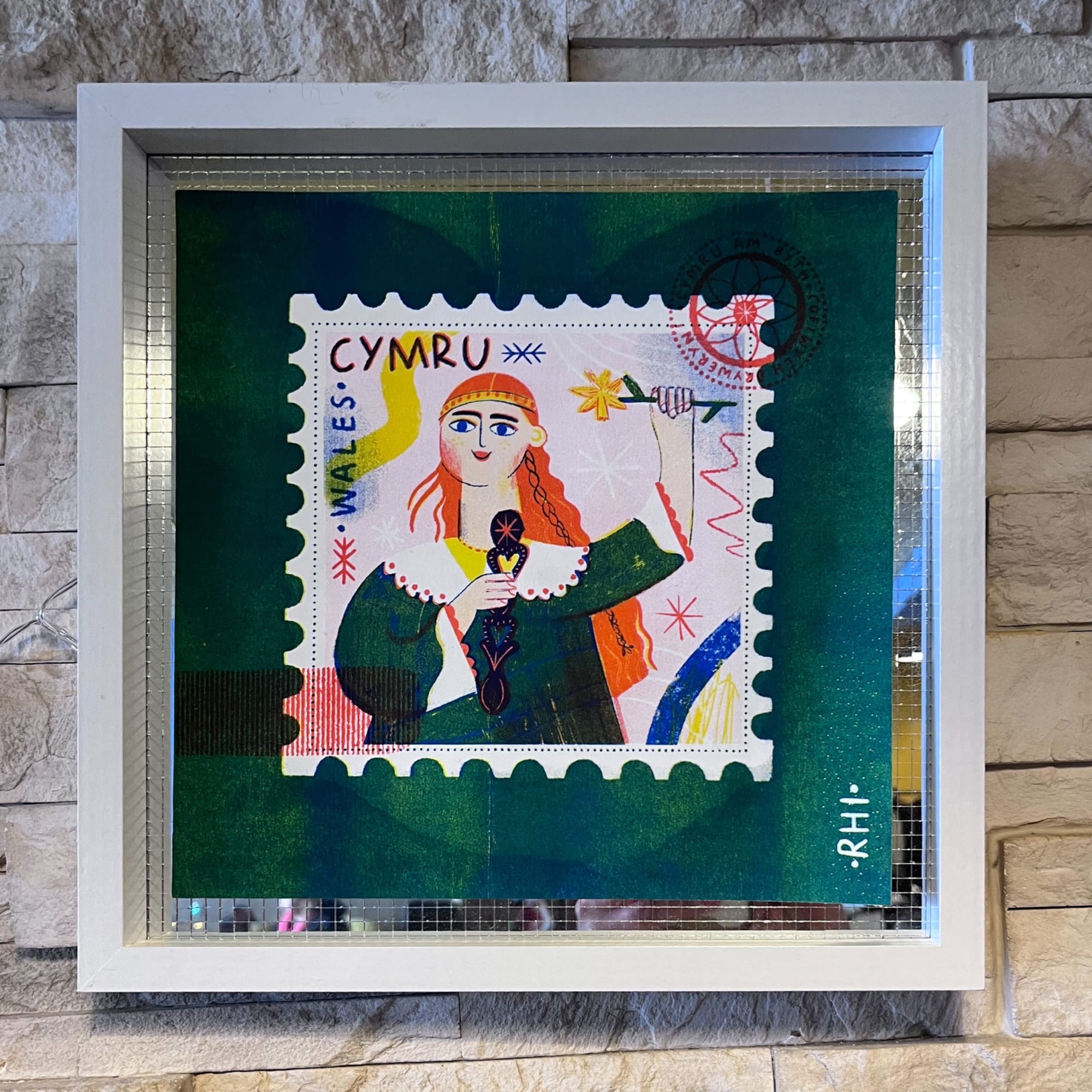
The people there were from all corners of the world. I met an illustrator, Rhi Moxon, who had painted some of the murals in the town. We spoke at length about her work when she lived in China, what it was like being an artist in a town like Wrexham, finding space to work and finding space like this for community.
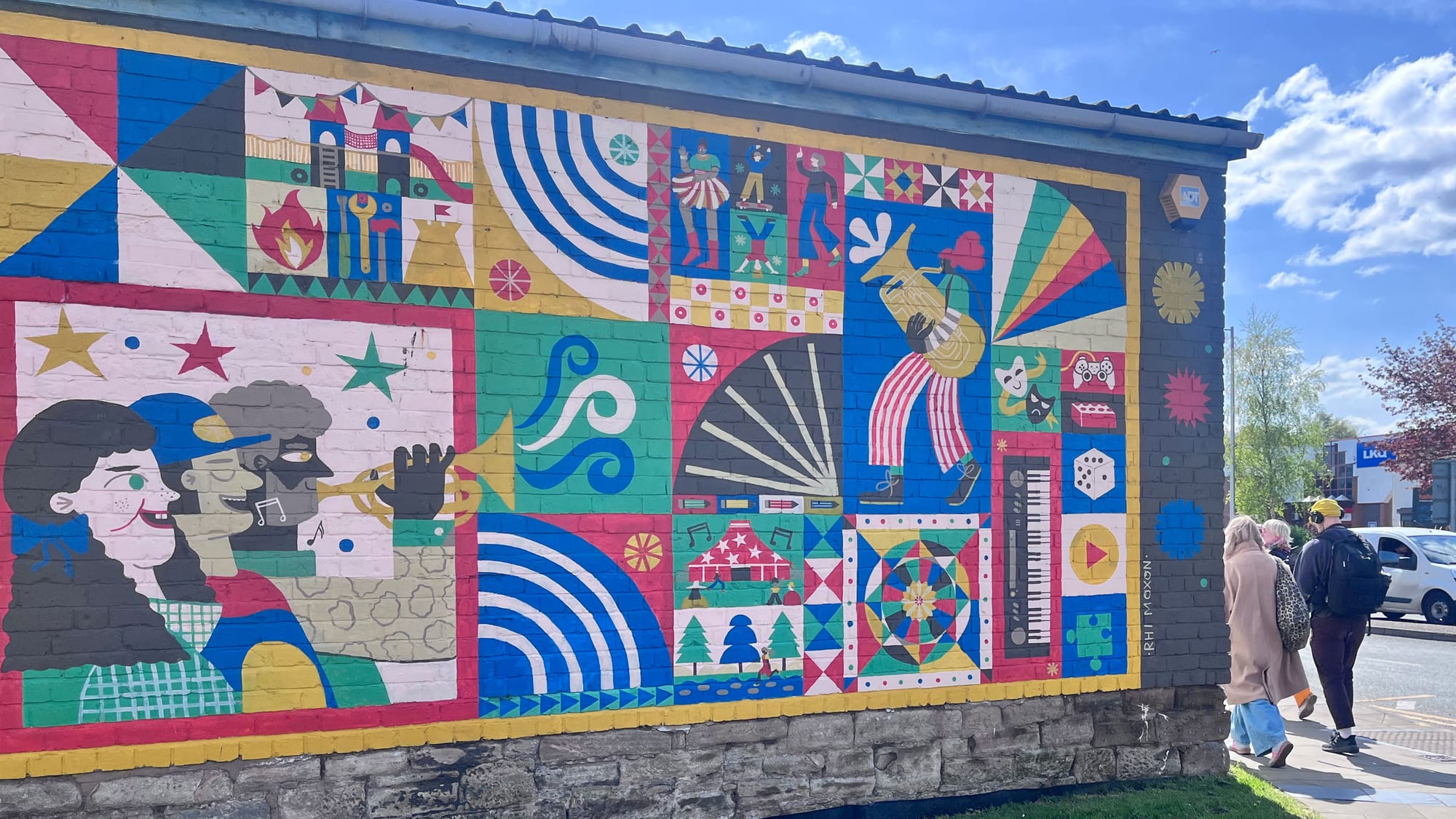
Spending time there left a lasting impression. It made me think about how those people who are on the sharp end of shocks to our social and economic systems, those also at the frontline of the environmental and cost of living crises, are already building the new world out of old ways: turning hollowed out spaces for individual mass consumption into places for mutual aid, shared resources, care, community.
It should come as no surprise, while many people living in the isolated comfort of a class-divided society can feel completely powerless despite their relative privilege, there are many others in our society who have far less, but who commit far more time into building the new world they want. They aren’t waiting for governments or markets to fix everything that’s broken. They’re quietly piecing together something better from the wreckage of the old, not necessarily under the pretense that it's better for the Earth, but simply because it's better for us to live together.
In my time in the climate movement, one of the things we were often trying to stitch back together is the idea that fighting for peace and tackling the climate crisis are not mutually exclusive: they go hand in hand. Peace and ecological sustainability, as with equality and ethics, have always been part of the same story. They are different faces of the same coin.
I was alarmed to hear that many people in Wrexham were afraid of the backlash they might receive by supporting the migrant and refugee community. There was a general fear that even mentioning in public this part of their work they could be singled out and targeted. There were concerns over the threat of violence, of being put on far right lists. Welsh flags can be found strung up on lampposts across Wrexham – as in many parts of Wales – the stunts synonymous with identitarianism, nationalism, and exclusion. It shouldn’t come as a surprise that Wales has joined England in suffering from a predatory right-wing politics that goes after the communities hit the hardest by neoliberal policy and austerity.
With so many issues now siloed, and public services increasingly organised around rigid, top-down thinking, rather than a holistic understanding of people’s lives, it feels as though we’re stuck in an Enlightenment mindframe: breaking the world down into even smaller parts in the hope that understanding each piece will somehow make sense of the whole.
So, when we set out to join the dots, we’re not really inventing a new way of seeing. We're simply making sense of the world in the ways that people do naturally (and as our Tracey points out, what people have always done) when given time, space and the community to connect together what has been pulled apart. That’s what In Real Life democracy does best: it gives us the breathing space to build trust with each other and recognise what we’re capable of when we work together.
It’s increasingly clear to me that the main opponent facing us is the systemic separation, categorisation, and compartmentalisation of society, cleaving apart human beings who want to be in relationship with one another. If we’re to face up to this, we not only have to commit ourselves to a relationship reset with each other, but with all living things, to repair the bonds between us and the places we live. If we want to be part of the solution then we can begin by taking back the spaces late stage capitalism is discarding and turn them into environments where we host ourselves, join the dots on the many issues we face, and repair the bonds between.
Elsewhere in Absurdity...
With the occasional attempt by the England men’s Football team to unite at least part of the nation over too early yet again 🙄, a reminder that it’s only a year ’til the women do a better job in Brazil. And all four UK countries are still in with a shout of qualifying!
Back In Real Life Charlie continues his tour of rabble-rousing tradition, and after last weekend’s visit to the Durham Miners Gala is off to the Tolpuddle Martyrs Festival in Dorset.
Clare was also in Dorset this weekend, at our Sophie’s music festival, Butterstock.
For the past six weeks we’ve been blessed with Sophia, who’s been on Absurd Work Experience as part of her Graphic Design degree at Nottingham. We’re all gutted to see her go. In the time Sophia’s been here she’s designed a Humanity Project report that’s been launched in the House of Commons, illustrated the next Absurd Publication, collaged the Fête of Britain’s Insta and made a typeface called Provoke! Here’s hoping 🤞🏴 we’ve got the translation right, Soph 💚💚💚: