Ffair Cymru: Conversations and Contradictions
From Swansea to the Southbank in a weekend, Part One. (First published in Byline Times June 2026 edition)

It is well documented that the beloved Welsh poet and playwright, Dylan Thomas, had conflicting feelings about the town of his birth, Swansea. Famously referring to his post-industrial coastal home in South West Wales as an “ugly, lovely town”, many might argue that Thomas’s depiction still rings true today.
Swansea has always been a place of contradictions. One turn onto High Street and you’re passing shuttered shopfronts, dilapidated indoor markets and people sleeping rough. Drift down toward Wind Street and the pubs are buzzing, loud with laughter and raucous late night activity. At the marina, you will find yachts and new developments, while up in Townhill, the deep-rooted challenges facing the town are hard to ignore.

Between the contradictions, what is clear is that Swansea is a town where people feel let down by status quo politics. No matter who you talk to, it won’t take long for them to tell you that very little ever changes around here. According to the Welsh Index of Multiple Deprivation, of the 22 small areas that have been persistently among the most deprived in Wales, 7 are in Swansea, making up almost a third (32%) of the total. Traditionally a Labour stronghold, it’s now a competitive battleground, with Plaid Cymru and Reform claiming all but 1 Sennedd seats in the recent elections. Labour managed to just hold on to the remaining seat.
Ffair Cymru – our Welsh counterpart to The Fête of Britain – popped up in Swansea the weekend before the elections to get people talking across these contradictions. What was evident from the get go was, that while Swansea might be a town left behind by politics, it is a town held together by its strong sense of community and local organisations doing the hard graft to support people in the area. Its strength – and ‘loveliness’ – lies in its people and their quiet determination. Again and again, we heard the same thing from those we met: whatever their differences, people in Swansea look out for one another.
A full day of culture, arts, food, workshops, stuff for kids and parents, soapboxes to spotlight the density of community organisers, the Ffair – created in partnership with Climate Cymru and the Swansea community – set out to showcase everything that’s great about this seaside town caught between two opposing realities.

“I love Swansea,” Ekemini told me, a member of The CAE, a lived experience-led organisation empowering asylum seekers, refugees, and migrants in Wales to overcome systemic barriers and achieve economic independence. “It’s quiet and slow and people support each other here.”
At the same time, there is a clear divide that’s tough to ignore. One attendee told me:
“It’s hard to get people from the different parts of Swansea together, the town is split right down the middle politically. I live in Townhill, and people there don’t really come over to this side. That’s why days like this matter, one that’s free, fun for the kids, and a chance to actually talk to each other about what we want. It’s needed now more than ever.”
From the moment doors opened on 2nd May at the two venues, Urban HQ and Volcano Theatre, attendees moved between rooms filled with workshops, films, spoken-word performances, and installations – each room offering a different way to share ideas, and actively imagine the future of Wales together.

At Urban HQ, participants got hands-on with Mioe Creative Productions’ Build Your City workshop, a playful yet revealing exercise in designing society, followed by the Common Cause Foundation guiding a thoughtful exploration of shared values.
“Real engagement with communities matters. People want to be heard, not just consulted and ignored,” an attendee at the Build Your City workshop explained. “There’s a growing frustration that councils overlook everyday realities, from dumped rubbish to potholes, making the streets feel neglected. At the same time, politically, many are really worried, seeing far-right agendas strain relationships with our neighbours.”
Elsewhere, the Chinese in Wales Association introduced visitors to Tai Chi and a traditional tea ceremony, while Climate Cymru’s Imagine Action Training helped participants rethink how we communicate about climate change and Women4Resources hosted intergenerational conversations about climate justice, centering the voices of women and girls.
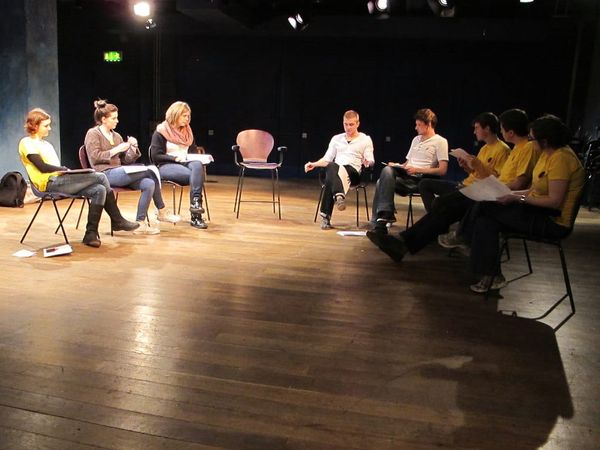
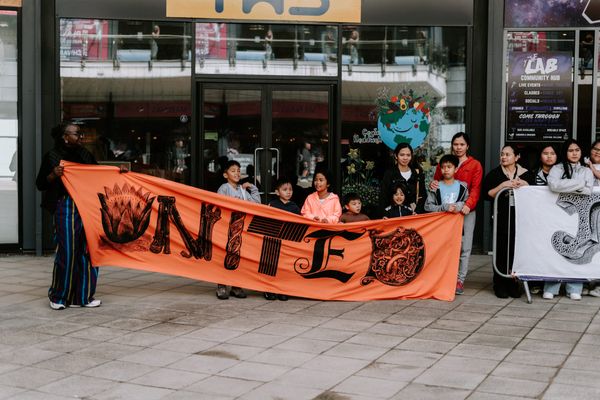
At Volcano Theatre, Humanity Project’s Recipes of Love workshop brought people together over food and conversation, while banner making, graffiti lessons, writing-as-resistance workshops and The CAE’s ‘Tell your climate story’ drop-in, motivated people to connect to the current moment through creativity.

Liz, an NHS-worker said:
“A fairer Wales to me is an inclusive Wales where everyone can be heard. We’ve always been a multi-cultural society here and welcomed people from different places, even going back to when the mines opened and lots of people came here from Italy and Spain. I think we need to continue this important tradition, and the way we do that is by speaking to one another, not shutting each other out.”
Live performances ran throughout the day, weaving music, poetry, and spoken word into the action. Across both venues, conversations tackled big questions covering flooding in South Wales, to immigration, the cost of living and access to politics. Workshops like The Citizens Agenda by Bylines Network gave attendees the chance to shape discussions themselves, exploring how democracy could evolve through local independent media and what truly matters at a local level.

Ruth Campbell from Climate Cymru told me:
“Across Wales, there’s a long tradition of love, care and shaping our futures collectively. Welsh communities have always known the power of solidarity and every day at Climate Cymru, we get to work with people coming together to shape a better future in the place they live. We’ve been really excited to head to Swansea to support local people and organisations to host the day. A day for people to explore our shared story of care and community empowerment, at a time we all know it’s needed.”
There’s still a lot to be done to bring these conversations across difference to life. But with each place the Fête travels, there’s a glimmer of something bigger beneath the surface: a growing network of determined people laying the foundations for real lasting change to happen. It’s a reminder that community organising isn’t just quiet, behind-the-scenes work; it’s an art form in itself and it deserves to be celebrated.
As Dylan Thomas put it:
“What should Swansea become? It should, I think, generate its own species and become what it is now – a town where art is alive.”
Part 2: What we did after Swansea, will be published on Thursday.
A massive thank you again to everyone in Swansea who made Ffair Cymru so amazing. You can read the original version of this article in print in our regular column in the brilliant Byline Times.