Hope is Dead. Long Live Hope.
How do we bridge the gap between optimism and pessimism when hope seems all but lost?
It’s that time of year again. The COP summit, number 31 to be exact, has come to an end and it’s Groundhog Day: The conference has ended in massive disappointment.
And this year, it’s even worse. The negotiations completely fell apart. No agreement was made, despite talks extending longer than they ever have before. I suppose that’s one thing that’s different, bearing in mind every single year we hear the same story: ‘COP talks go into overtime amid standoff over fossil fuels’.
So, Groundhog Day, but longer. (Two good takes worth reading: Ed King, and Roger Hallam.)
Many will argue this COP is a leap forward for that very reason: at least countries are standing up to fossil fuel nations. Others will say it’s too little too late, wringing hands and reiterating how pointless COP has been for years, if not always.
Both of these arguments are true. And both sides are rapidly coming to the same conclusion: the pretence that COP can function as an effective process now seems over. But as this week sees the daily global surface temperature reach six consecutive days at 2C above preindustrial levels for the first time, is this an Emperor’s new clothes moment for hope?
Hoperism vs Doomerism
You will all be familiar with the argument: we need to feel hopeful about the future if we're going to create the one we want.
But we've become so preoccupied with preserving hope that we've lost sight of the importance of speaking truthfully about the risk from climate collapse. There is a compelling case for telling the unvarnished truth, not to paralyse people, but to shock them out of complacency. And there is plenty of evidence to show that it works to make the scale of what we're facing impossible to ignore and move people from awareness into action.
Of course, there is a need to be driven by more than just fear and anger alone. Yet the stubborn optimism of hope feels so stagnant and inauthentic that even I’m beginning to hear myself thinking about it as some kind of methodical psyop to keep us in complacency.
Something I've noticed gaining traction on social media recently is the idea that not having hope is "fascist thinking". That pessimism breeds passivity and seeds ground to the far right. I find this kind of shame-based messaging hard to stomach. In this frame, I certainly sit firmly in camp doomerism. I was in Extinction Rebellion after all, and the term began a renewed popularity during our tenure. It should come as no real surprise either that this very argument played a part in XR UK’s ultimate demise. But, the term doomerism has been used against anyone speaking honestly about how severe the situation is, despite the major impact of Extinction Rebellion and Greta Thunberg on shifting public awareness, action and debate.
Doubled-down optimism then seems determined to hold on to the world we’re leaving behind. It tells us we either smile through our fear and cling on to a world as it burns, or be dismissed as oblivious doomers.
Although I’m really uncomfortable with policing people’s feelings, I also recognise that fear can be incapacitating. I have been there myself, and I’m sure many have or are currently as the crises keep coming day by day. I also recognise that much of this overwhelm is being deliberately cultivated. We’ve become dependent on a pocket device where doom is fed to us on a drip feed, keeping us in a state of distraction, anxiety and nervous system overload.
Perhaps the middle ground between hope and doom then lies in allowing ourselves to simply feel what is actually there. To sit with fear, grief, anger, despair without immediately trying to resolve or escape them. And maybe this is precisely why that middle ground remains so difficult, because we humans are still so uncomfortable with feeling things fully and honestly, whether alone or with others.
We need to find the courage to feel the full weight of what is happening without letting those feelings dictate the limits of what we believe is possible. Instead we police or shame others’ into feeling the ‘right’ things, putting us in conflict with ourselves.
Active Hope
It was Joanna Macy who contextualised the power in this middle ground so well, explaining that it is in the falling apart where we find renewal and the strength to carry on:
“It is good to realize that falling apart is not such a bad thing. Indeed, it is as essential to transformation as the cracking of outgrown shells. Anxieties and doubts can be healthy and creative, not only for the person, but for the society, because they permit new and original approaches to reality.
“What disintegrates in periods of rapid transformation is not the self, but its defenses and assumptions. Self-protection restricts vision and movement like a suit of armor, making it harder to adapt. Going to pieces, however uncomfortable, can open us up to new perceptions, new data, and new responses.”
In Extinction Rebellion we adopted the idea that instead of hope we should have courage, conceived by climate scientist Kate Marvel. I still remind myself of this on my darker days. Courage releases us from the passing over of responsibility of hope, putting us back in a place of agency and power. Regardless of the outcome, having courage means we carry on out of a determined love for the world and each other.
Joanna Macy continues:
“Sharing what is in our heart brings a welcome shift in identity, as we recognize that the anger, grief, and fear we feel for our world are not reducible to concerns for our individual welfare or even survival. Our concerns are far larger than our own private needs and wants. Pain for the world—the outrage and the sorrow—breaks us open to a larger sense of who we are. It is a doorway to the realization of our mutual belonging in the web of life.”
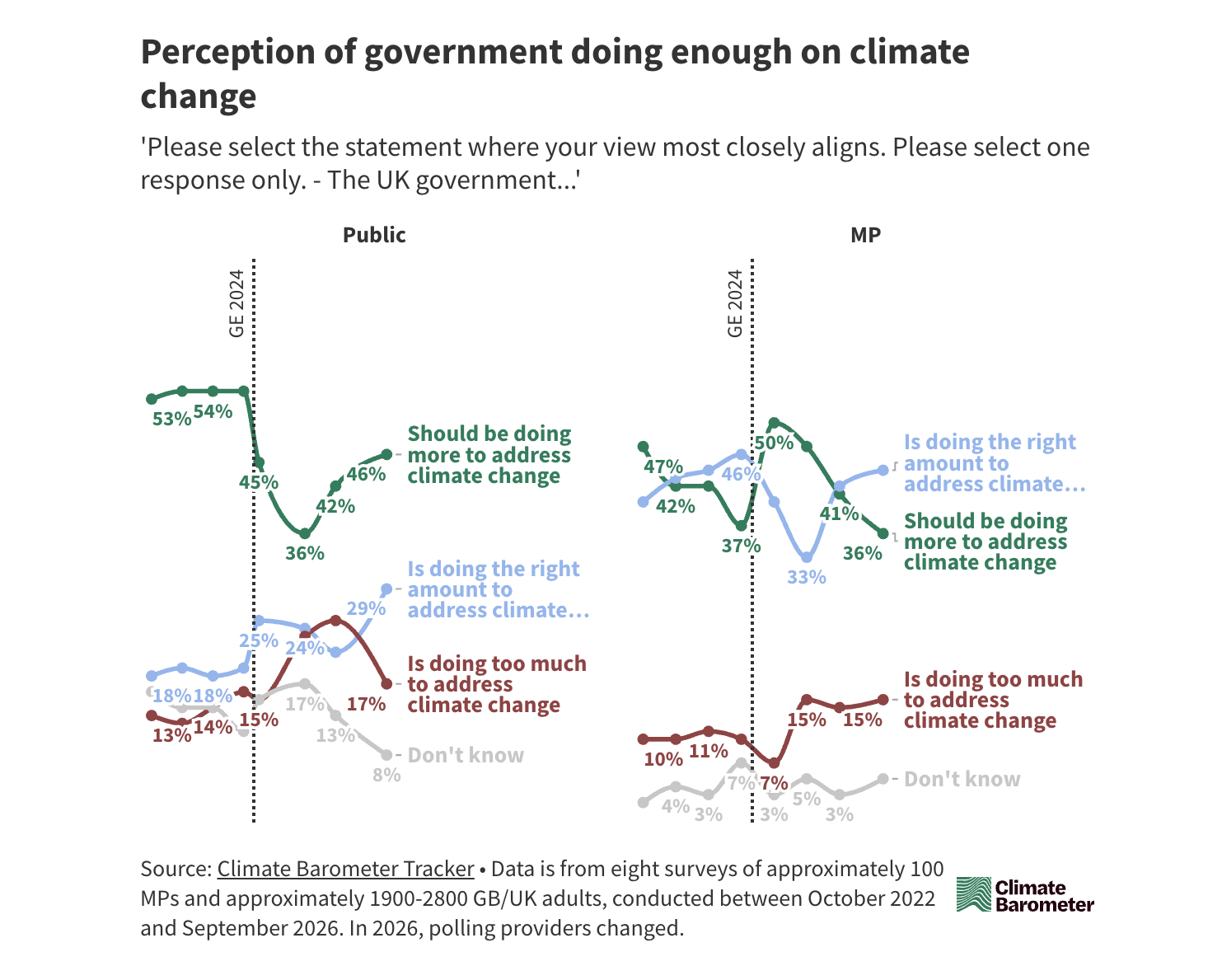
Perhaps then it is about abandoning hope in stuffed shirts at conferences we will never take part in, and finding renewed hope in one another. In our relationships, our communities, our collective care and resistance. After all, research out this week shows that few in the UK want to see the government doing less on climate, and “the view that it’ll cost too much ‘not to tackle climate change now’ is on the rise (56%, up 14% from last year)”. So, having faith in each other then might be the only true power we have left.
But I don’t claim this to be the full answer. All of us are searching for new ways to carry on with courage everyday. I wanted this to open a conversation, one that can be explored further. So I want to ask you:
What does hope mean to you?
Can you hope without courage?
And how do we bridge the gap between optimism and pessimism – not by forcing ourselves into one camp or the other, but by finding the heart to face what is happening, feel it fully, and act together anyway?
Flash Fiction Challenge
A couple of weeks ago in our post 'How to prepare a revolution' we set readers the challenge to write 250 words describing an ordinary Tuesday in a free society, and send it to us. Thanks this week to Stephen Frame for taking up the challenge! Here it is:
Tuesday morning. Busy, busy. Up, dressed, out. Breakfast is tea and chat at the commons café. Offer to wash-up, but they’ve enough hands to the suds. Cycle across town.
Two hours gardening, an hour picking plastic off the beach. Rack them into the UI from my phone. Lunch taken care of, but too busy to sit down, so I scoot the hours across to someone who needs them. Grab a sandwich off a street cart. A quarter hour I owe. The vendor doesn’t need any help, I could take it from the commonwealth, but look where taking almost got us.
So, I pick a job off the UI list. Books to collect from the library, deliver to a bunch of old boys. Rascals, the lot of them. Some dodgy pasts there. Some misdeeds. But they keep themselves quiet these days. Raucous poker sessions aside.
The books are the same-old, same-old. Political thrillers five decades past their sell-by. The librarian rolls her eyes. ‘For the good old boys?’
I shake the parcel of books at her. ‘You got it.’
Drop the books off and a weathered hand grabs my wrist as I make to leave. ‘We could use a fourth at the card table.’
I give a helpless shrug. Busy, busy, like I said. Studies this afternoon. The old boy holds up his tablet. ‘I’ll rack an hour for you.’
They’re going to rook me, but what the hell. A job’s a job, right?
Elsewhere in Absurdity
The crew headed down to the The National Gallery for the Fête of Britain × Hard Art Friday Late! 🎠
Tracey attended House of Dread's Curating Otherwise symposium at the Southbank Centre and joined the The Modern Black Art Club's gallery hop on Saturday visiting the Saatchi Gallery and Tafeta Gallery with 100 other art enthusiasts. 🙌🏽🎨
Charlie went to Antara Haldar’s Foyles book launch for Everyman – a magical realism novelisation of economics. 📚🔮
Clare and Alex are going to be working with the Sheila McKechnie Foundation and doing a 3-way lunchtime seminar on 9th December. In this three-way discussion Katie of SMF with Alex, and Clare will share learnings and case studies from 2026 on social change, community organizing and campaigning. 💪🏼
Get tickets for it here!
Support our friend Alan from Pianos, Pies and Pirouttes as he tried to get the Guinness World Record by playing the piano for more than 130 hours over seven days, in an attempt to raise £10,000 to give more children and adults across Wigan access to music, dance and the arts. Watch the livestream here and you can donate here! 🎹🥧
And don't forget to get your ticket for our subscriber's gathering on 13th January!