Loneliness is upstream from fascism
As the UK sees a growth in far-right activism, perhaps we should question if the men showing up in balaclavas are actually as committed to the cause as they claim to be.

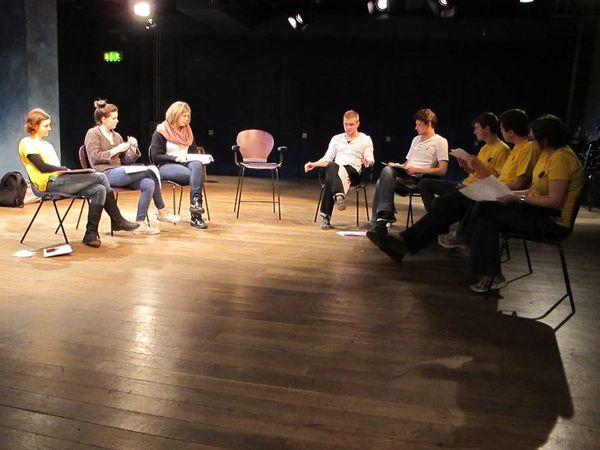
I was recently at a training run by the Ella Baker Foundation titled ‘winning in the face of provocation’. In small groups we listed the possible motivations for people to show up at far right demonstrations. Many of the answers in my group circulated around racist beliefs and patriotic values. I’m not convinced this is the whole picture. While an underlying racism exists, I don’t believe these are the defining factors for the majority of people showing up to these demonstrations.
I was more convinced by the older man in my group who suggested maybe there were some underying motivations for taking part in things like rallies outside asylum hotels. He suggested that the need for a sense of identity and belonging might be more important than someone’s stated beliefs about asylum seekers.
If I am right that the issue is less important than is often assumed, at least at the grass roots level, then the situation we have on our hands starts to look subtly different. It focuses the mind on an epidemic of loneliness, a societal shortage of purpose and a scarcity of places to make contact with people different from us. Yes, there is absolutely a spread of anti-immigrant sentiment and an upsurge in misogyny, among many other expressions of hate and intolerance. But if politics is downstream from culture, perhaps we should also devise a repeatable mantra for ourselves that ‘loneliness is upstream from fascism’.
In The Origins of Totalitarianism, Hannah Arendt wrote that: “terror can rule absolutely only over men who are isolated against each other…This isolation is, as it were, pretotalitarian; its hallmark is impotence insofar as power always comes from men acting together…; isolated men are powerless by definition.”For me this clarifies the work at hand, the most foundational and durable remedy to the slide towards fascism is to work to create a world in which there is an abundance of purpose, social contact and meaning available to everyone. It also clarifies something about the inevitability of the socio-political moment we find ourselves in.
Back in July Clare Farrell wrote on her Substack about money as synthetic trust. In that piece she described “the neoliberal era as a period of unparalleled relational destruction which has literally been designed and enacted on purpose as a political project.” It is no accident that on the other side of crushing the miners strikes, selling off social housing and defunding community services we have a society whose problems are characterised by disconnection and loneliness. It is unsurprising in a country where meaningful, prideful work is hard to come by that people are left craving a mission. It is deeply human to want to be part of something consequential.
Again Arendt writes “only when the most elementary form of human creativity, which is the capacity to add something of one’s own to the common world, is destroyed, isolation becomes altogether unbearable… Isolation then becomes loneliness.”
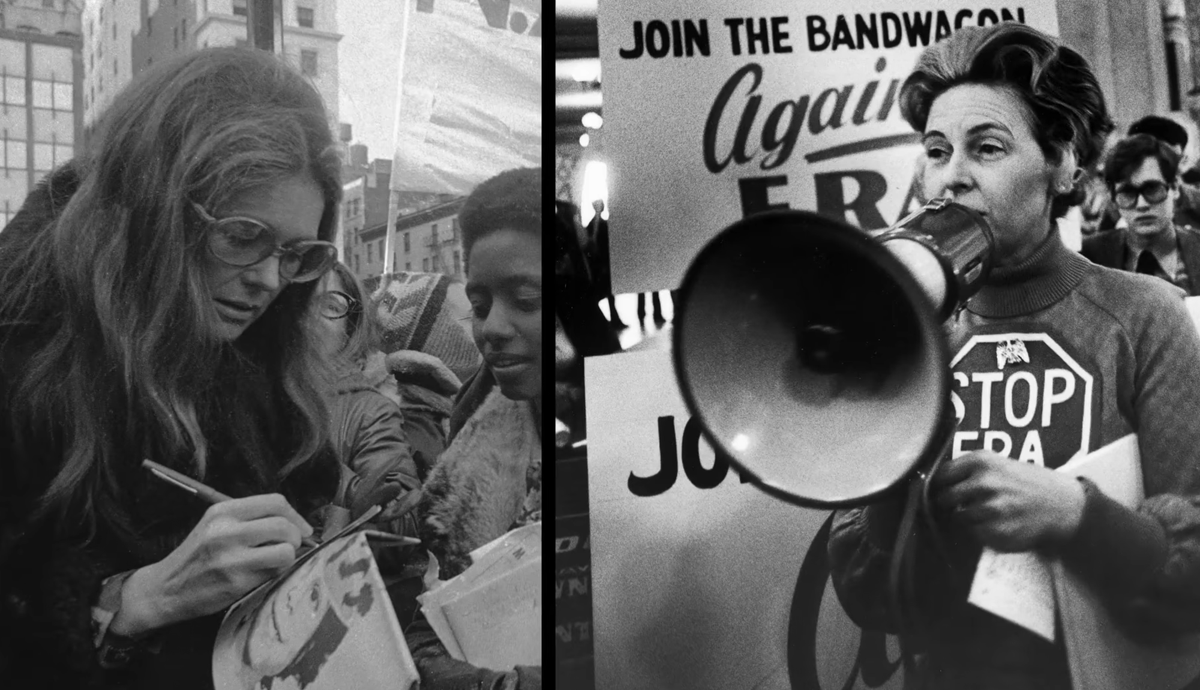
For a couple of years I’ve been recommending the FX mini series Mrs America to anyone who will listen. Cate Blanchett, as the indomitable Phylis Schlafly, plays opposite Rose Byrne as Gloria Steinem in her heyday. The series chronicles the movement to ratify the Equal Rights Amendment in the US and the backlash against it. The anti women’s lib movement was led by a group of housewives, spearheaded by Schlafly defending a woman’s right to stay in the home, who ironically, through their quest to defend women’s place in the home got a taste for campaigning.
Mrs. America Episode 7: Working Girls Highlight
So, if the impulse to join movements is one we can get behind, even if the cause or issue is often not, then the task becomes what we have started to refer to here at Absurd Towers as ‘bigger door, better party’. The job is to create more accessible, inclusive ways for people to be part of something meaningful, to come together in consequential numbers (a bigger door), and in order for people to come through that door in numbers it has to be fun, more fun than what is on offer by the forces of division (a better party).
It means organising spaces shared by people who can agree on enough to work together and know we don’t need to agree on everything to recognise that our interests are broadly aligned. It means giving up the kind of calling out that’s main function is to reinforce our own righteousness, replaced by the more challenging work of actually engaging with people we disagree with respectfully. It means working to create spaces where we can spend time together in real life, because when we are in the room together, it is so much harder to divide us.
On that note, if you’re in or close to London, why not up your dose of social contact this January and come along to our subscriber social? We’re keen to have more IRL contact with those of you on this list so Wednesday 13th of January will be the first of a series of in person gatherings for Absurd Intelligence newsletter readers. You can RSVP here, hope to see you there!
Flash Fiction Challenge
In last week's newsletter on 'How to prepare a revolution' we set readers the challenge to write 250 words describing an ordinary Tuesday in a free society, and send it to us. Thank you Nan McVicker for taking up the challenge! Please find Nan's story, The Future of Education, below:
The Future of Education - Nan McVicker
Carlos stops the bus; 15 children board. Two get off at the library; today is their school's research day. The next stop is the former high school building. 10 kids get off. 2 are enrolled in the Doctorow Computer Tech School, which has 32 students. 3 kids go to the Nebula School, which is scheduled to use the building's science labs today – the students are excited. 5 youngsters are helped down the bus stairs, which are steep for their little legs. They attend the Village Woods School. Most of their learning takes place in the extensive woodlot behind the building, and they have one room inside for storage, reading, and bad weather.
The next stop is the Coveside Marina, where the 5 teenagers hop off. They're learning marine trades, and since the weather is good, they'll spend a few hours aboard the Shipshape School's boats, learning and testing their skills in real world applications.
Now at the end of the morning's 2nd run, Carlos drives to the Farmers' & Growers' market, where he picks up several bins of microwave-ready meals. He'll deliver most to the Community Center, but he keeps one bin on the bus. He'll transfer them to his car, and deliver them to some of the town elders, who don't get out much. He spends a few minutes at each home, chatting, making sure they have all they need. Two arrange rides to medical appointments.
There's time until the afternoon run, so he goes home for lunch.
Elsewhere in Absurdity...
Clive went to see Guy Standing's talk The Precariat and the Commons: Transformative Green Economics at LSE Student Unions Greens.
Charlie went to see Ken Russell’s The Devils.....again!
Don't forget to sign up for the Absurd Newsletter event in January!